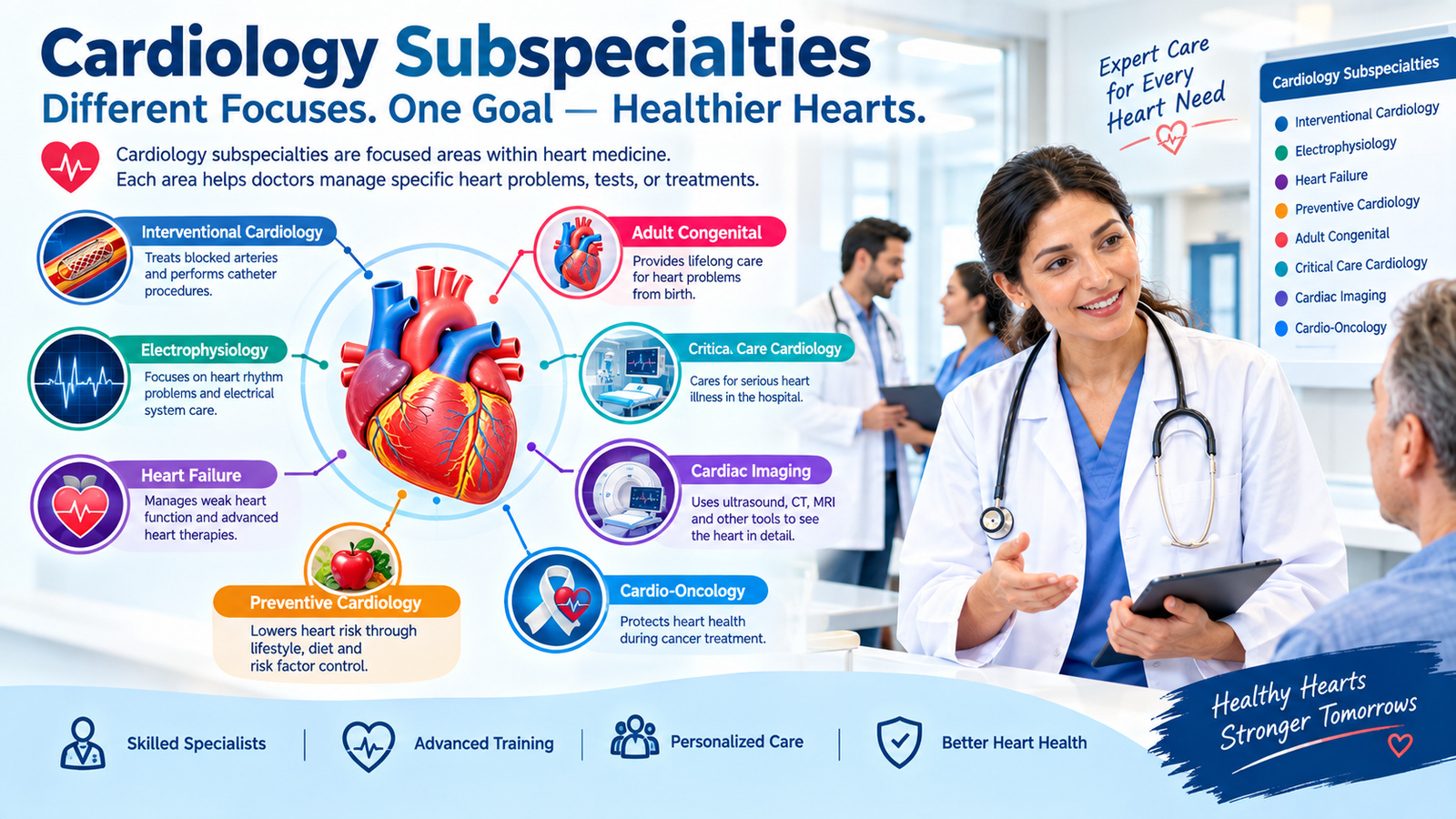
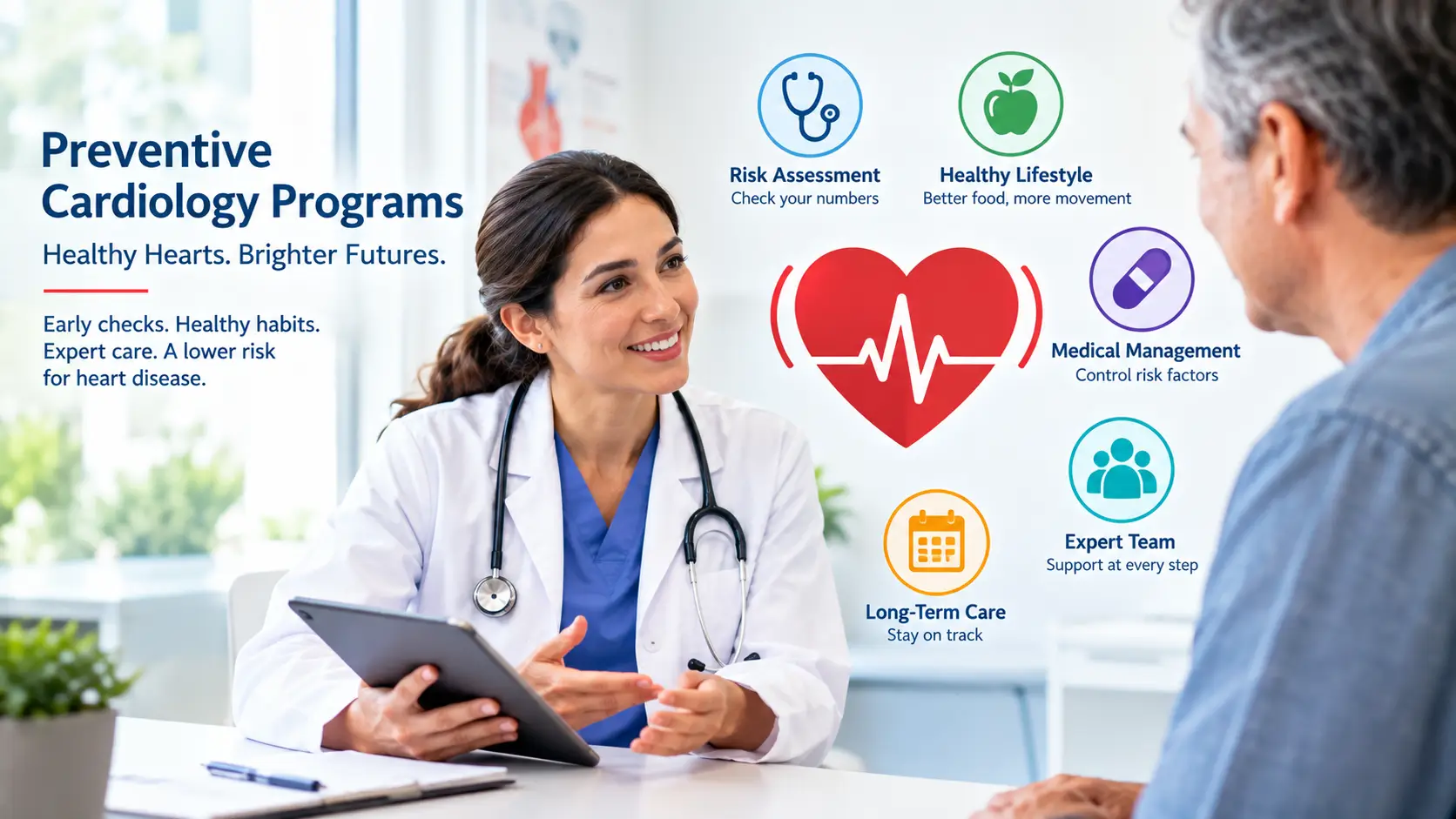

Preventive cardiology programs help lower the risk of heart disease before serious problems start. They combine risk checks, healthy habits, medicines, and follow-up care. Doctors use these programs to build a heart plan based on your health and needs.
What Are Preventive Cardiology Programs? ❤️
Heart disease can build slowly over many years. You may feel fine while risk factors grow. Preventive cardiology focuses on finding those risks early.
Preventive cardiology programs bring several types of heart care together. A team may include cardiologists, nurses, dietitians, and exercise experts. Some programs also work with diabetes, kidney, or mental health specialists.
The goal is simple. The team helps you lower your chance of heart attack, stroke, or other heart problems.
Your care may focus on:
- Blood pressure
- Cholesterol
- Blood sugar
- Weight
- Smoking or nicotine use
- Physical activity
- Sleep
- Family heart history
- Other health conditions
You do not need to have heart disease to seek preventive care. Family history alone may raise your risk. High blood pressure, diabetes, or high cholesterol may also matter.
What happens during preventive care?
Your first visit often starts with a risk review. The doctor asks about your health and daily habits.
You may discuss:
- Foods you eat
- How often you exercise
- Your sleep habits
- Tobacco or nicotine use
- Medicines you take
- Past health problems
- Heart disease in your family
Your doctor may order blood tests. These can check cholesterol and blood sugar.
Some people also need heart tests. These may include an ECG, echocardiogram, stress test, or calcium scan.
For example, imagine a 48-year-old man with high cholesterol. He has no chest pain. His doctor still finds several heart risks.
A preventive visit may help him understand those risks. His care team can then create a plan for long-term heart health.
Who May Need Preventive Cardiology?
Preventive care can help people at different stages of life. You do not need symptoms before discussing heart risk.
Your primary care doctor may suggest a preventive cardiology visit. This may happen when several risk factors appear together.
Common reasons include:
- A strong family history of heart disease
- High blood pressure
- High cholesterol
- Diabetes or high blood sugar
- Overweight or obesity
- Smoking
- Low physical activity
- Poor sleep
- Known artery disease
- A previous heart attack or stroke
Cleveland Clinic also notes that prevention can help people with existing heart disease. The goal may then include preventing another event.
Family history can matter
Genes can affect cholesterol, blood pressure, and other heart risks. A family history can sometimes point to higher risk.
Tell your doctor if close family members had early heart disease. This information can change how your doctor reviews your risk.
Risk does not always cause symptoms
Many heart risk factors cause no clear warning signs. High blood pressure often feels normal. High cholesterol can also have no symptoms.
That is why regular health checks matter.
The American Heart Association’s PREVENT equations can estimate cardiovascular risk. They use factors such as age, blood pressure, cholesterol, smoking, kidney health, and diabetes.
The tool can estimate 10-year and 30-year cardiovascular risk. It applies to adults ages 30 through 79 without known cardiovascular disease.
For example, a 35-year-old woman may feel completely healthy. Her family history and blood pressure may still deserve attention.
Early review can help her and her doctor plan future care.
What Signs Should You Watch For? 🩺
Preventive care often starts before symptoms appear. Still, you should know the warning signs of heart problems.
Possible warning signs include:
- Chest pressure or pain
- Shortness of breath
- Fainting
- Sudden weakness
- Severe dizziness
- Unusual sweating
- Pain spreading to the arm, back, neck, or jaw
- A fast or irregular heartbeat
Symptoms can differ between people. Some people have mild symptoms. Others may have no warning before a serious event.
Women and older adults may have less typical symptoms. They may feel tired, short of breath, or sick to their stomach.
These symptoms do not always mean heart disease. Other conditions can cause similar problems.
Prevention visits are different
A preventive visit usually focuses on risk rather than emergency symptoms. You may feel healthy during the appointment.
The doctor looks for problems that could raise future risk. Blood pressure and cholesterol often receive close attention.
Your doctor may also review your diet and activity level.
For example, a 55-year-old woman may report no chest pain. Her blood pressure remains high during several visits.
Her doctor may recommend more testing and lifestyle changes. Medicine may also become part of her care plan.
The goal is to address risk before a major heart event occurs.
Do not ignore sudden warning signs
Some symptoms need urgent medical care. New chest pressure or severe breathing trouble can be serious.
Call 911 for severe or sudden symptoms that may signal a heart attack or stroke.
Do not drive yourself during a possible emergency. Emergency teams can start care while taking you to the hospital.
Preventive care supports long-term health. It does not replace emergency treatment.
How Do Doctors Check Heart Risk? 📋
Doctors use several tools to understand cardiovascular risk. The exact tests depend on your age and health history.
A first visit may include a physical exam and blood tests. Your doctor may review your cholesterol, blood sugar, blood pressure, and kidney health.
Here are common tests:
| Test | Main purpose | What it checks |
| Blood pressure | Finds pressure problems | Force of blood against artery walls |
| Lipid panel | Checks cholesterol | LDL, HDL, triglycerides |
| A1C test | Checks long-term blood sugar | Average blood sugar |
| ECG | Checks heart rhythm | Electrical activity |
| Echocardiogram | Looks at heart structure | Heart chambers and valves |
| Calcium scan | Looks for artery calcium | Signs of coronary plaque |
Not every person needs every test. Your doctor chooses tests based on your risk.
PREVENT risk assessment
The AHA PREVENT equations offer a newer way to estimate cardiovascular risk. They include cardiovascular, kidney, and metabolic health factors.
The 2026 AHA dyslipidemia guideline supports PREVENT for primary prevention decisions. It also recommends more personalized risk review.
A doctor may sometimes use coronary artery calcium testing. This test can help reclassify risk in selected patients.
The same guideline also recommends measuring lipoprotein(a), called Lp(a), at least once. Lp(a) is a type of blood fat linked with cardiovascular risk.
These tests do not replace a full medical review.
How Are Preventive Cardiology Programs Managed?
Treatment depends on your personal risk. Your plan may include lifestyle changes, medicine, or both.
Doctors may focus on:
- Lowering high blood pressure
- Managing cholesterol
- Controlling blood sugar
- Improving physical activity
- Supporting healthy weight
- Helping you stop tobacco use
- Improving sleep
- Treating other conditions that affect heart risk
The plan should fit your health and daily life.
Lifestyle support
The American Heart Association uses eight major heart health measures. They include diet, activity, nicotine exposure, sleep, weight, cholesterol, blood sugar, and blood pressure.
Adults should aim for at least 150 minutes of moderate activity each week. Another option is 75 minutes of vigorous activity.
Most adults should also aim for seven to nine hours of sleep.
Small changes can make a plan easier to follow. You might start with daily walks. You could also reduce highly processed foods and sugary drinks.
Medicines may be part of prevention
Some people need medicine to lower their heart risk. This may include cholesterol or blood pressure medicine.
Your doctor decides when medicine makes sense. The decision depends on your overall risk and health history.
For example, a patient may have high LDL cholesterol despite healthy eating. The doctor may discuss medicine after reviewing the person’s risk.
Do not start or stop heart medicines without medical advice.
Cleveland Clinic preventive care
Cleveland Clinic describes preventive care as a team-based service. Its team can include cardiologists, dietitians, exercise specialists, primary care providers, and other experts.
Cleveland Clinic also offers preventive care for people with risk factors and existing cardiovascular disease. Its services include risk assessment, lifestyle support, and follow-up care.
How Can You Prevent Heart Disease Every Day? ✅
Prevention works best when healthy habits become part of normal life. You do not need to change everything at once.
Start with a few clear goals.
1. Move more
Try regular walking, cycling, swimming, or another activity you enjoy. Adults can aim for 150 minutes of moderate activity weekly.
Break activity into smaller sessions if needed. Even short periods can help you become more active.
2. Eat for heart health
Build meals around vegetables, fruits, whole grains, beans, nuts, and healthy protein sources.
Limit foods high in added sugar, excess salt, and unhealthy fats.
Mediterranean-style and DASH-style eating patterns are often used in heart health care.
3. Avoid tobacco
Smoking raises cardiovascular risk. Avoiding tobacco is one of the AHA’s Life’s Essential 8 measures.
Ask your healthcare team about tools that can help you quit.
4. Know your numbers
Keep track of blood pressure, cholesterol, and blood sugar when advised.
Ask your doctor what your numbers mean for your personal risk.
5. Protect your sleep
Most adults need seven to nine hours each night. Poor sleep may affect blood pressure and other heart risks.
Try keeping regular sleep and wake times.
6. Keep follow-up visits
Prevention needs regular review. Your risks can change as you age.
Your doctor may adjust your plan when your health changes.
For many people, preventive cardiology programs provide a structured way to stay on track. They combine testing, education, lifestyle care, and follow-up.
When Should You See a Doctor? ⚠️
You can discuss preventive heart care during a routine medical visit. You may not need to wait for symptoms.
Consider asking about prevention if you have:
- A strong family history of heart disease
- High blood pressure
- High cholesterol
- Diabetes
- Tobacco use
- Weight concerns
- Low physical activity
- Poor sleep
- Previous heart disease
- Questions about your long-term heart risk
A primary care provider can often start the risk review. They may refer you to a preventive cardiologist when needed.
Finding a preventive cardiologist near me
Start with your primary care office or health system. Ask whether it offers preventive cardiology services.
You can also search hospital websites for preventive heart programs. Check whether the program offers risk assessment and follow-up care.
Your insurance plan may also provide a list of covered specialists.
Preventive cardiology training and fellowship programs
Doctors who want to focus on prevention can complete additional training. The American College of Cardiology lists U.S. prevention-focused fellowship programs.
The current ACC list includes programs at institutions such as:
| Program | Location | Example focus |
| Hartford Hospital | Hartford, Connecticut | Cardiovascular prevention |
| Emory University | Atlanta, Georgia | Prevention training |
| Mayo Clinic | Rochester, Minnesota | Cardiovascular prevention |
| NYU | New York City | Preventive cardiology |
| Houston Methodist | Houston, Texas | Preventive cardiology |
| Baylor College of Medicine | Houston, Texas | Prevention training |
Requirements vary by program. Some accept internal medicine graduates. Others require cardiology training.
ACC training resources also list preventive cardiovascular medicine as a cardiovascular fellowship competency.
Preventive cardiologist salary
There is no single national salary for preventive cardiologists. Pay can vary by role, location, experience, and employer.
The U.S. Bureau of Labor Statistics reported a May 2025 mean annual wage of $454,940 for cardiologists. This figure covers cardiologists generally, not preventive cardiologists alone.
Students should check each training program for current requirements and funding details.
Q: What are preventive cardiology programs?
A: They are heart care programs focused on lowering future cardiovascular risk. They may include risk checks, lifestyle support, medicines, and follow-up. The exact plan depends on your health needs.
Q: Can I see a preventive cardiologist if I feel healthy?
A: Yes. You do not need heart symptoms to discuss prevention. Family history or risk factors may make an evaluation useful.
Q: What guidelines guide preventive cardiology care?
A: AHA and ACC guidance helps doctors assess and manage cardiovascular risk. Current guidance includes the AHA PREVENT equations for selected adults. The 2026 dyslipidemia guideline also addresses cholesterol, Lp(a), and CAC testing.
Q: Does Cleveland Clinic have preventive cardiology care?
A: Yes. Cleveland Clinic offers preventive cardiology services and team-based care. Its programs include risk assessment, lifestyle support, testing, and follow-up.
Q: Where can I find cardiology fellowship programs in the USA?
A: The American College of Cardiology maintains a list of prevention-focused U.S. fellowship programs. The list includes programs across several states.
Q: How can I become a preventive cardiologist?
A: Training paths vary by program. ACC-listed programs show different entry requirements, including internal medicine or cardiology training.
Q: Is there a PDF for preventive cardiology guidelines?
A: AHA and ACC publish guideline documents and supporting resources online. Doctors should use the current version for clinical decisions. The 2026 dyslipidemia guideline is one current prevention resource.
Conclusion
Preventive cardiology programs focus on lowering heart risk before serious problems develop. They can help you understand blood pressure, cholesterol, blood sugar, family history, and lifestyle risks.
Care may include testing, healthy habit support, medicines, and regular follow-up. AHA tools such as PREVENT can also support risk discussions with healthcare professionals.
Small daily steps can support better heart health. Regular activity, healthy food, good sleep, and tobacco avoidance all matter.
Your needs may change as you age. Regular medical visits can help keep your prevention plan current.
Talk to a cardiologist if you have any heart concerns. Your doctor can help you choose the right next step.
Medically reviewed for accuracy. Always consult a licensed cardiologist for personal advice.