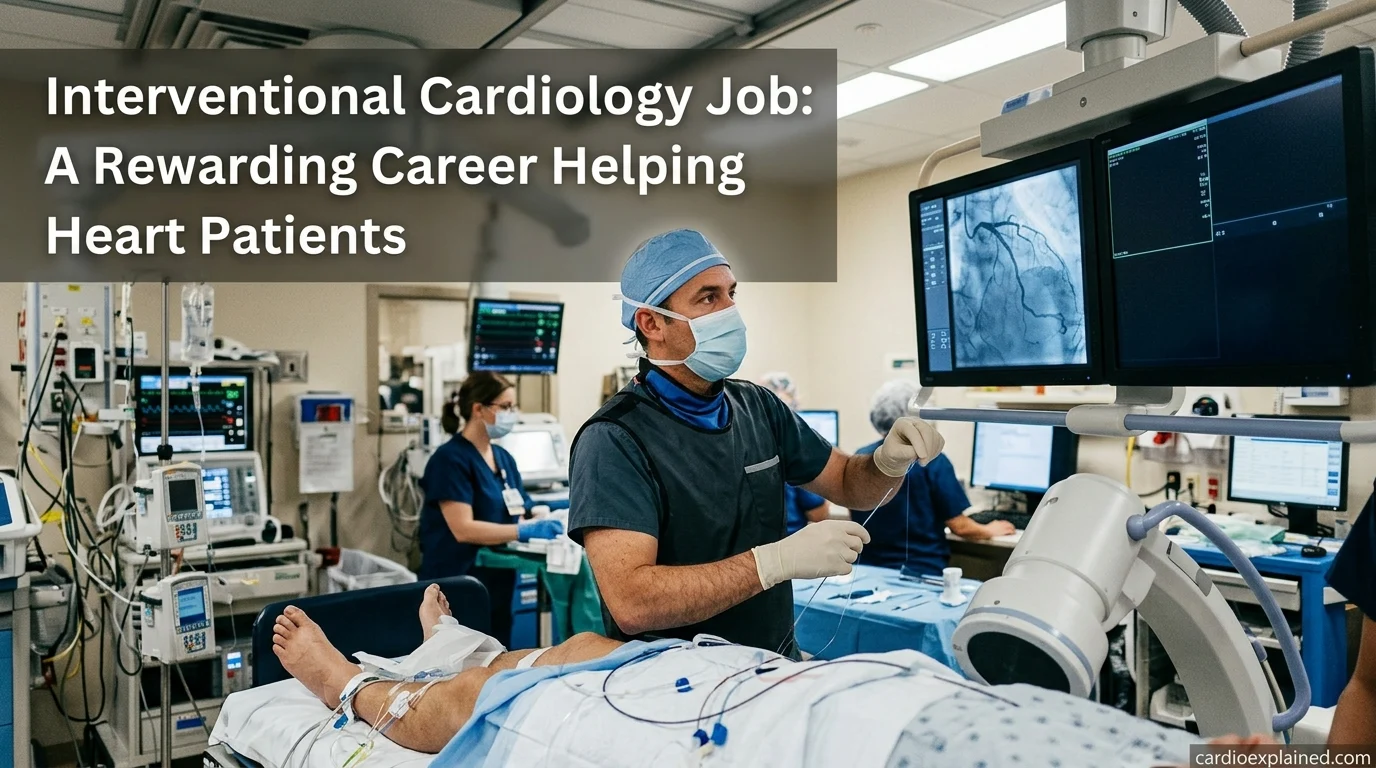

An interventional cardiology job focuses on finding and treating heart problems with small tools and thin tubes called catheters. These doctors help open blocked blood vessels, improve blood flow, and often prevent major heart damage. It is a highly trained career that combines medical skill, quick thinking, and patient care.
Have you ever wondered who helps someone during a heart attack? Many people meet an interventional cardiologist during one of life’s hardest moments. These doctors work fast to restore blood flow and protect the heart. An interventional cardiology job asks for years of training, steady hands, and a caring heart. It also gives the chance to change lives every day. Patients, families, and students often want to know what this career looks like. They also want to learn about training, daily work, and future job options. Knowing these facts can help people understand the role better and may inspire future healthcare workers.
❤️ What Is an Interventional Cardiology Job?
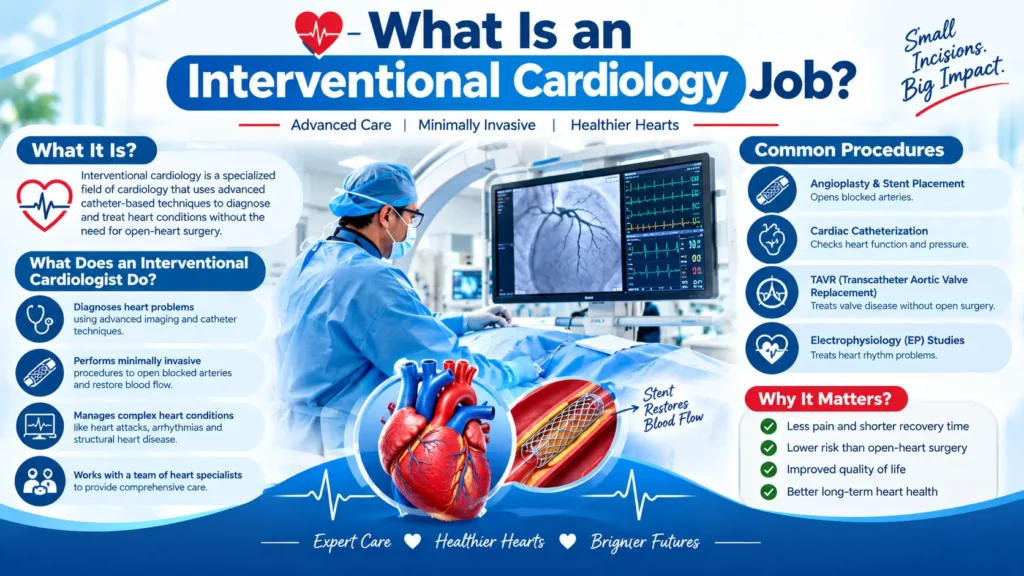
An interventional cardiologist treats heart and blood vessel problems without major surgery. The doctor uses a catheter. A catheter is a thin, flexible tube.
The tube enters through a blood vessel. It often starts in the wrist or groin. The doctor guides it to the heart using live X-ray pictures.
This work helps people with blocked arteries. Arteries carry blood from the heart to the body.
Many heart problems need quick care. Fast treatment may lower heart damage and improve recovery.
Doctors in this field often perform procedures such as:
- 🩺 Coronary angiography. This test uses dye to show blood flow.
- 🩺 Angioplasty. This opens a blocked artery with a small balloon.
- 🩺 Stent placement. A tiny mesh tube keeps the artery open.
- 🩺 Emergency treatment during a heart attack.
- 🩺 Some valve procedures using small tubes instead of open surgery.
The American Heart Association and the American College of Cardiology support fast care for many heart emergencies. These groups also encourage safe, evidence-based treatment.
A Real Patient Story
Many patients feel scared before their first heart procedure.
For example, a man arrives with chest pain after mowing his lawn. Tests show a blocked heart artery. The doctor places a stent within a short time. Blood flow returns. The patient later goes home and begins heart recovery.
Stories like this show why this work matters.
Skills Needed for Success
A doctor in this field needs more than medical knowledge.
Important skills include:
- ✅ Calm thinking during emergencies
- ✅ Good hand control
- ✅ Clear communication
- ✅ Teamwork with nurses and other doctors
- ✅ Care and respect for every patient
These skills help patients feel safe during stressful moments.
📋 Education and Training Path
This career takes many years of study.
Students first complete college. Then they attend medical school. After that, they enter special training called residency.
A residency gives doctors hands-on learning with patients.
Next comes a fellowship. A fellowship is advanced training in one medical area.
Doctors who choose heart care first study general cardiology. They then complete extra fellowship training in catheter-based procedures.
Here is a simple path.
| Step | Typical Time | Main Focus |
| College | 4 years | Science and basic education |
| Medical school | 4 years | Learning medicine |
| Internal medicine residency | 3 years | Adult patient care |
| Cardiology fellowship | 3 years | Heart disease care |
| Interventional fellowship | 1 to 2 years | Catheter procedures |
The full journey often lasts more than 15 years after high school.
Many doctors also earn board certification. This shows they meet high professional standards.
Daily Learning Never Stops
Heart care keeps changing.
Doctors attend classes and conferences. They also study new research.
This helps them give patients safe care based on current medical guidance.
⏱️ Daily Work and Life in This Career

No two days look the same.
Some mornings begin with planned procedures. Other days start with emergency calls.
A doctor may:
- ✅ Review patient records
- ✅ Meet patients before procedures
- ✅ Perform heart procedures
- ✅ Check recovery after treatment
- ✅ Speak with families
- ✅ Work with nurses and heart specialists
Many hospitals have heart teams.
Each team member plays an important role.
Helping Patients Feel Calm
Many patients feel nervous before treatment.
A kind doctor explains each step using simple words.
For example, a woman needs a heart artery opened after weeks of chest pain. She worries about the procedure. The doctor explains what will happen and answers every question. She feels more relaxed before treatment begins.
Simple conversations often reduce fear.
Teamwork Saves Lives
Heart emergencies move quickly.
Doctors work closely with:
- Emergency doctors
- Nurses
- Imaging specialists
- Heart surgeons
- Pharmacists
Good teamwork helps patients receive fast care.
A Busy but Meaningful Career
Some workdays last longer than expected.
Heart attacks can happen during the day or night.
Even with long hours, many doctors enjoy helping patients recover and return home to their families.
One reason many people choose an interventional cardiology job is the chance to make a real difference during life-threatening emergencies.
❤️ Career Growth, Salary, and Job Options
Many doctors choose this field because they enjoy helping people. They also value the many career paths available.
An interventional cardiology job may be found in large hospitals, community hospitals, heart centers, and private medical groups.
Some doctors focus on emergency care. Others perform planned heart procedures during the day.
Interventional Cardiology Job Salary
Pay depends on many factors.
These include:
- 💰 Years of experience
- 💰 State and city
- 💰 Hospital or private practice
- 💰 Call schedule
- 💰 Special skills
The table below shows general salary ranges in the United States.
| Career Stage | Typical Annual Salary | Work Setting |
| Early career | $450,000–$550,000 | Hospital or group practice |
| Mid-career | $550,000–$700,000 | Large health system |
| Senior physician | $700,000–$900,000+ | Leadership or busy practice |
These numbers are estimates. Actual pay may be higher or lower.
Benefits often include:
- ✅ Health insurance
- ✅ Retirement plans
- ✅ Paid vacation
- ✅ Continuing education support
- ✅ Malpractice insurance coverage
Many employers also help with moving costs or student loan programs.
Interventional Cardiology Jobs in the USA
Doctors can find work across the country.
Large cities often have many openings. Smaller towns may also need heart specialists.
Common workplaces include:
- Community hospitals
- Teaching hospitals
- Heart institutes
- Veterans hospitals
- Private cardiology groups
Some jobs focus on planned procedures.
Others include emergency care at any hour.
Each setting offers different work hours and patient needs.
Academic Career Options
Some doctors enjoy teaching future physicians.
Interventional cardiology jobs academic USA often combine patient care, teaching, and research.
Academic doctors may:
- 📚 Teach medical students
- 📚 Train new cardiologists
- 📚 Join clinical research
- 📚 Present new findings at meetings
Research helps improve heart care for future patients.
Teaching hospitals often give doctors chances to grow as educators and leaders.
🩺 Is This Career Right for You?

This career brings both rewards and challenges.
Doctors often work long hours.
Emergency calls may happen at night or on weekends.
Still, many doctors enjoy the work because they help people during serious health problems.
This field may fit people who enjoy:
- ✅ Solving problems
- ✅ Working with their hands
- ✅ Staying calm under pressure
- ✅ Learning new skills
- ✅ Helping others
Students should also enjoy science and teamwork.
Shadowing a doctor can help students learn about daily life before choosing this path.
❓ Frequently Asked Questions
Q: Does an interventional cardiology job pay well?
A: Yes. It is one of the higher-paying medical careers in the United States. Pay varies by experience, location, and employer.
Q: What is the average interventional cardiology job salary?
A: Most doctors earn a high annual income after training. Salary often grows with experience, leadership roles, and procedure volume.
Q: Where can doctors find interventional cardiology jobs in the USA?
A: Jobs are available across the country. Large hospitals, heart centers, private practices, and teaching hospitals often hire these specialists.
Q: What are interventional cardiology jobs academic USA?
A: These positions combine patient care with teaching and research. Doctors help train students while caring for patients.
Q: How long does training take?
A: Training often takes more than 15 years after high school. This includes college, medical school, residency, and fellowships.
Q: Is this career stressful?
A: Yes, it can be. Heart emergencies require quick decisions. Many doctors also find the work meaningful because they help save lives.
Conclusion
An interventional cardiology job offers the chance to care for people during important moments. It takes years of learning, strong teamwork, and steady skills. Many doctors enjoy the mix of patient care, procedures, and lifelong learning. Patients also benefit from fast treatment that may protect the heart and improve recovery. If you have heart concerns, talk to a cardiologist or another licensed healthcare professional. They can guide you toward the right care for your needs.