
The best hospitals for cardiology depend on your heart condition, needs, location, and insurance. Large heart centers may offer advanced tests and complex care.
A strong hospital usually has experienced heart teams, needed services, good quality programs, and clear patient support.
Imagine hearing that you need a heart test or a major heart procedure. You may ask one simple question. Where should I go for care?
Many people search for the best hospitals for cardiology in the USA. The answer depends on your health needs. One hospital may have special programs for heart rhythm problems. Another may focus on heart surgery or rare conditions.
A large hospital is not always the right choice for every patient. Your local heart center may offer the care you need. Travel can also add cost, stress, and time away from family.
This guide explains what to look for before choosing a heart hospital. It also reviews well-known U.S. heart centers. You will learn how hospital size, heart teams, tests, insurance, and location affect your choice.
The goal is simple. You should have useful facts for a better conversation with your doctor.
What Makes a Hospital Strong for Cardiology?
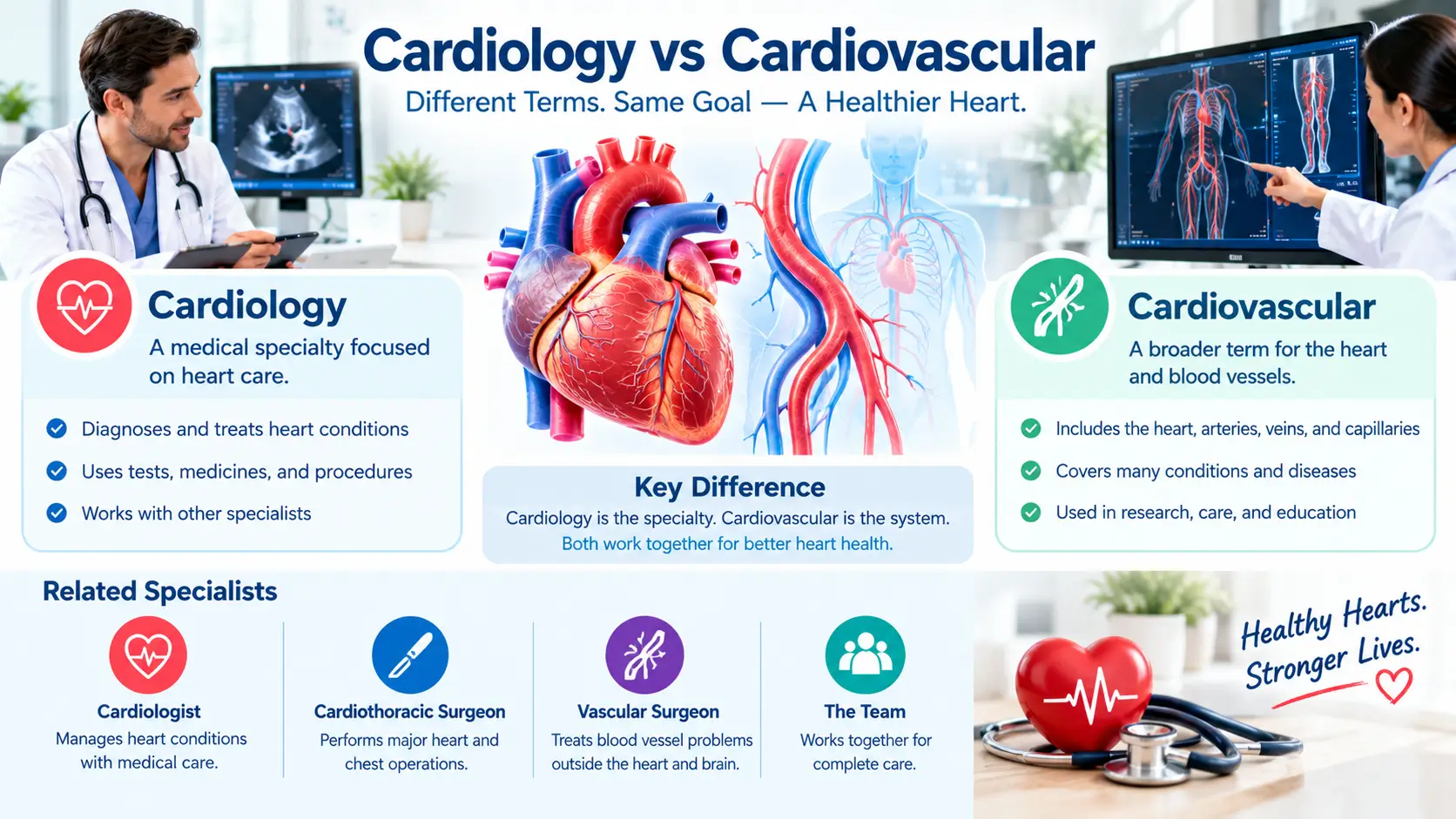
Cardiology is the medical field that treats heart and blood vessel problems. A hospital may have general cardiology or many heart specialties.
Some centers also have cardiac surgery. Others have advanced imaging, heart rhythm care, or transplant programs.
Look for the right heart services
Your needs should guide your search. Ask whether the hospital treats your specific heart problem.
Common services include:
- General cardiology
- Preventive heart care
- Heart rhythm care
- Heart failure care
- Interventional cardiology
- Cardiac surgery
- Valve care
- Structural heart care
- Heart imaging
- Cardiac rehabilitation
- Pediatric cardiology
- Adult congenital heart care
Complex cases may need several specialists. A large heart center can bring these teams together.
For example, a person with severe valve disease may need imaging and surgery. A person with an abnormal rhythm may need an electrophysiology team.
Quality programs can also help you compare hospitals. The American College of Cardiology has HeartCARE Center recognition. In 2026, the ACC reported 100 recognized hospitals nationwide.
This recognition reflects quality improvement, patient-centered care, and ongoing performance work. It does not mean every recognized hospital fits every patient’s needs.
Why experience can matter
Experience can matter when a patient needs a complex procedure. High-volume centers may see many unusual cases.
Still, volume is only one part of the decision. The right specialist, access, follow-up, and insurance also matter.
A hospital near your home may provide excellent routine care. You may only need a larger center for a complex procedure.
Which Hospitals Are Known for Heart Care in the USA?
Many people ask for one list of the best hospitals for cardiology in the USA. There is no single hospital that fits every patient.
Rankings also change by year and by method. A hospital may rank highly for one service but not another.
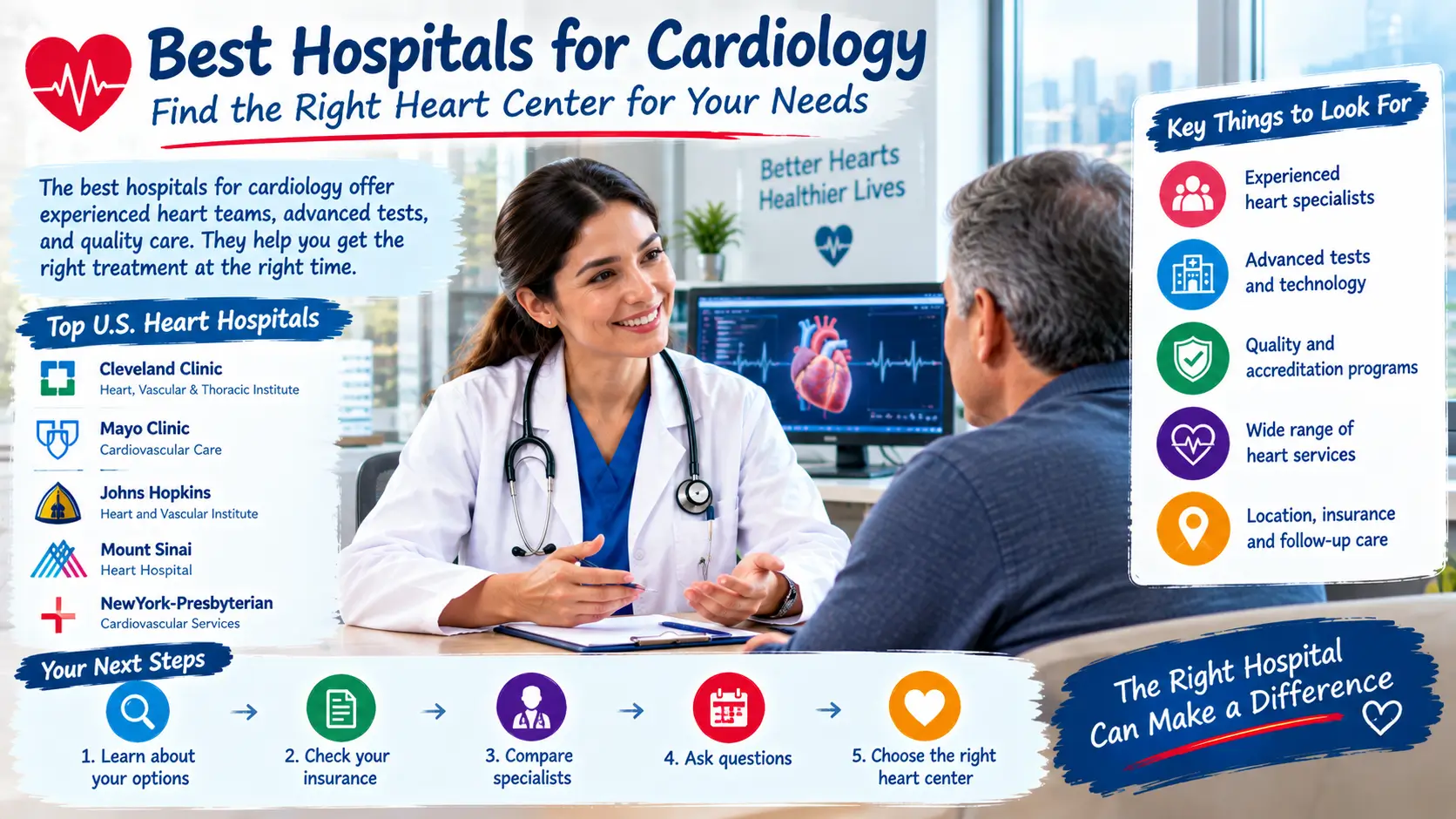
Instead of one winner, consider several well-known heart centers. Each has broad cardiovascular programs and different strengths.
Cleveland Clinic
Cleveland Clinic has a large Heart, Vascular & Thoracic Institute.
Its program includes cardiovascular medicine, thoracic surgery, and vascular surgery. The center also offers care for complex heart and blood vessel conditions.
Patients can seek diagnosis, treatment, or a second opinion. The hospital also provides heart care across different locations.
Mayo Clinic
Mayo Clinic has cardiovascular medicine programs in Minnesota, Arizona, and Florida.
Its heart team treats common and complex cardiovascular conditions. Mayo also offers many specialty clinics and heart procedures.
The system uses a team approach for many heart conditions. This can help when several heart specialists need to review one case.
Johns Hopkins Hospital
Johns Hopkins Hospital is part of the Johns Hopkins Heart and Vascular Institute.
Its services include heart failure, valve care, rhythm care, cardiac surgery, and vascular medicine. It also has programs for adult congenital heart disease.
The institute supports research, education, and patient care. It also offers remote cardiovascular visits for some patients.
Mount Sinai Fuster Heart Hospital
Mount Sinai Fuster Heart Hospital is part of The Mount Sinai Hospital.
Its heart programs cover rhythm disorders, heart failure, valve disease, imaging, and vascular care. The center also provides cardiac surgery and transplant-related services.
Mount Sinai reports its national U.S. News ranking on its current heart care pages. Rankings can change, so patients should check the current source.
NewYork-Presbyterian
NewYork-Presbyterian provides adult and pediatric heart care.
Its services include general cardiology, advanced imaging, rhythm care, surgery, and transplant services. Its heart locations include Weill Cornell Medicine and Columbia University Irving Medical Center.
This can be useful for patients who need different levels of heart care. Location and specialist access should still guide your choice.
A note about global and Europe rankings
Searches for top heart hospitals in the world or Europe can show different lists. Those lists may use different measures and time periods.
A global ranking does not automatically identify the right hospital for a U.S. patient. Insurance, travel, records, language, and follow-up can affect your care.
For most U.S. patients, start with your diagnosis and local options. Then consider a larger center if your doctor suggests it.
What Heart Problems May Need a Specialized Hospital?
Not every heart problem needs a major academic medical center. Many people receive excellent care close to home.
Specialized centers may help when a condition is rare, severe, or hard to treat.
Common reasons to seek advanced heart care
A cardiologist may suggest a larger heart center for:
- Complex valve disease
- Advanced heart failure
- Difficult rhythm problems
- Rare heart diseases
- Complex coronary disease
- Congenital heart disease
- Aortic disease
- Heart transplant evaluation
- Complex heart surgery
- Advanced structural heart procedures
Someone with mild high blood pressure may not need a national heart center.
However, complex valve treatment may require care at a specialized heart center.
A patient example
Maria has a new valve problem. Her local cardiologist explains the diagnosis.
The doctor recommends a second opinion because surgery may be needed. Maria asks about a large heart center.
The new team reviews her scans and medical history. They explain several possible treatment paths.
This does not mean her local doctor gave poor care. A second review can add useful information.
Another patient example
James has stable heart failure and lives far from a major city. His local cardiology team manages his medicines.
He may not need frequent travel to a national center. Local follow-up can be easier for routine care.
If his condition changes, his doctor may refer him to a larger center. This can give him access to advanced heart services.
How Do Hospitals Check and Treat Heart Problems?
A hospital may use many tests before choosing a treatment. The exact plan depends on symptoms, medical history, and exam findings.
Common heart tests
| Test | What it checks | Common use |
| ECG or EKG | Heart rhythm and electrical activity | Chest symptoms or rhythm concerns |
| Echocardiogram | Heart structure and pumping | Valve or heart failure evaluation |
| Stress test | Heart response during activity | Some chest pain and blood flow concerns |
| Heart imaging | Heart vessels or structure | Detailed heart assessment |
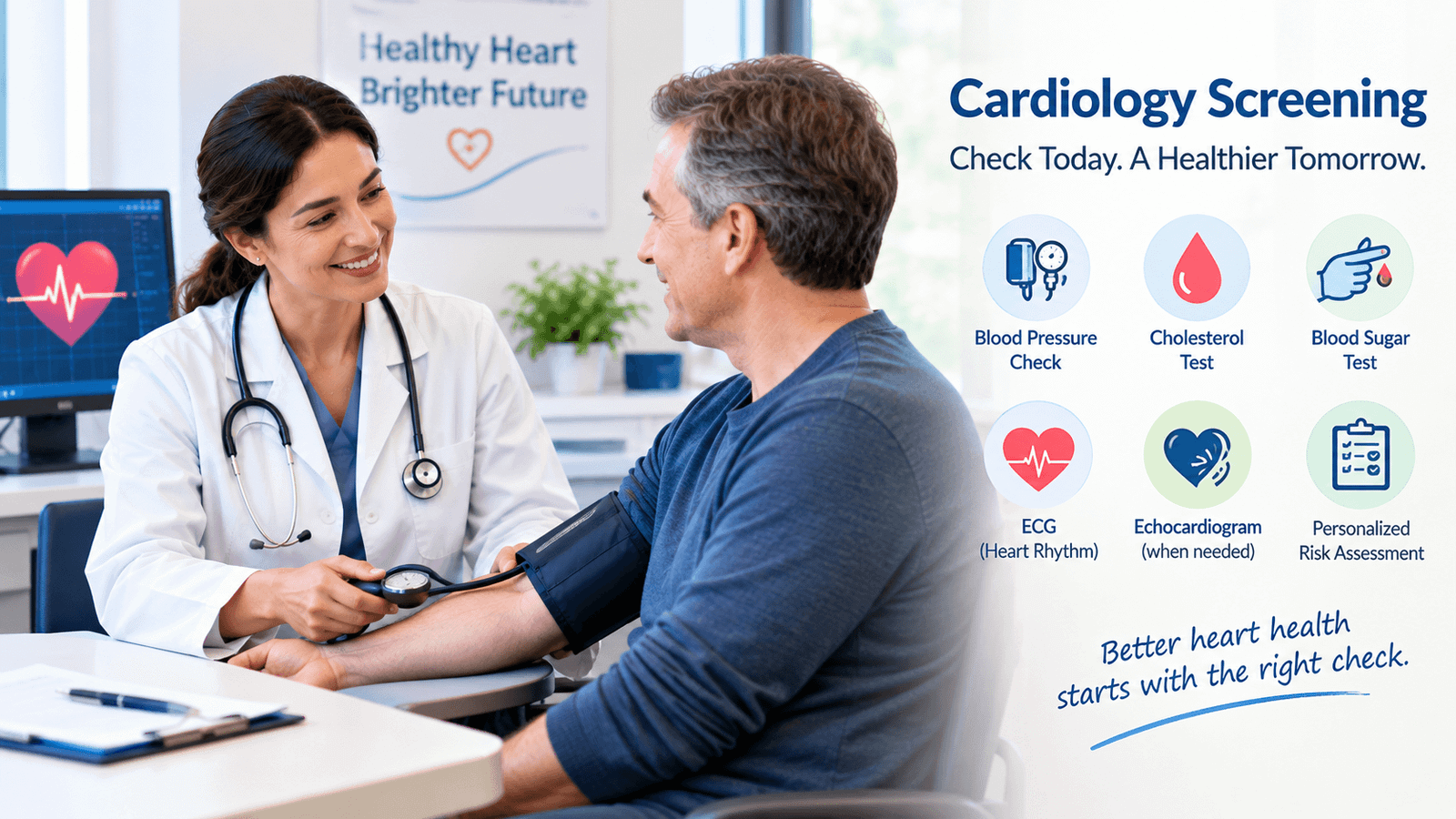
An ECG records the heart’s electrical signals. An echocardiogram uses sound waves to create heart images.
Doctors may also use CT, MRI, catheterization, or other tests. These tests can answer different questions.
Treatments can vary
Treatment may include medicines, lifestyle changes, procedures, or surgery.
A hospital may offer advanced procedures for certain heart conditions. These can include catheter-based valve procedures, rhythm ablation, or bypass surgery.
The right treatment depends on the person. Doctors consider the condition, risks, goals, and overall health.
What about heart surgery?
Cardiac surgery means surgery involving the heart or nearby blood vessels. It may treat valves, blocked arteries, aortic problems, or other conditions.
Some patients need surgery quickly. Others may have time to seek another opinion.
Ask the team about the goal of surgery, other options, expected recovery, and follow-up care.
How Can You Choose the Right Cardiology Hospital?
Choosing a hospital can feel difficult. A simple checklist can make the process easier.
Start with your medical need
First, learn the name of your heart condition. Ask your cardiologist what specialty you may need.
Then ask these questions:
- Does the hospital treat my condition?
- Does it offer the needed test or procedure?
- Does it have the right heart specialist?
- Does my insurance cover the hospital?
- How far would I need to travel?
- Where will follow-up care happen?
- Can the hospital review my previous records?
- Can I get a second opinion there?
These questions can help you compare hospitals without relying only on rankings.
Think about access and cost
A famous hospital may be far from your home. Travel may require hotel stays, time off work, or family support.
Insurance rules can also affect where you can receive care. Ask your health plan about network status before scheduling.
Some hospitals require referrals for certain services. Others may allow patients to request appointments directly.
Ask about the care team
A hospital name matters, but the care team matters too.
Ask who will manage your care. You may see a general cardiologist, interventional cardiologist, electrophysiologist, or heart surgeon.
Each specialist has a different focus. The right match depends on your heart problem.
Consider quality information
Look for clear quality data when possible. ACC programs can show a hospital’s participation in quality work.
You can also review hospital outcomes, patient services, and accreditation information. Ask your doctor how those facts apply to your case.
Do not choose a hospital from one ranking alone. Rankings can change with each new report.
How Can You Prepare for a Cardiology Hospital Visit?
Good preparation can make a heart visit easier. It can also help the doctor understand your health history.
Bring useful medical information
Take a list of your medicines and doses. Include vitamins and over-the-counter products.
Bring recent test results when available. These may include ECGs, imaging reports, and blood tests.
Also bring your insurance information and identification.
Write down your questions
Many patients forget questions during a stressful visit. Writing them down can help.
Useful questions include:
- What heart problem do I have?
- What tests do I need?
- Why do I need this test?
- What treatment choices do I have?
- What are the possible risks?
- What happens if I wait?
- Do I need a second opinion?
- Can I receive follow-up care near home?
A family member or caregiver can also take notes. Some hospitals may allow another person to join the visit.
Use telehealth when available
Some heart centers offer virtual visits. These visits can help patients who live far away.
Johns Hopkins, for example, offers telemedicine cardiovascular services. Not every condition can be handled online.
Ask the hospital whether virtual care fits your needs. You may still need an in-person exam or testing.
When Should You Seek Urgent Heart Care?
Some heart symptoms need emergency care. Do not wait for a hospital ranking when symptoms are severe.
Call 911 for possible heart attack signs
Seek emergency help for symptoms such as:
- Chest pressure or pain
- Trouble breathing
- Fainting or severe weakness
- Sudden sweating with chest symptoms
- Pain spreading to the arm, jaw, neck, or back
- New severe symptoms that worry you
Heart attack symptoms can vary. Some people may have less typical symptoms.
Do not drive yourself if you think you are having a heart attack. Call 911 and follow emergency instructions.
What about non-emergency symptoms?
Make a timely medical appointment for ongoing symptoms. These may include repeated shortness of breath or unusual tiredness.
New swelling, racing heartbeat, or repeated chest discomfort also deserves medical review.
Your primary doctor can help decide where to start. They may refer you to a cardiologist when needed.
Frequently Asked Questions
Q: What are the best hospitals for cardiology in the USA?
A: There is no single best hospital for every heart condition. Cleveland Clinic, Mayo Clinic, Johns Hopkins, Mount Sinai, and NewYork-Presbyterian have major heart programs. Your diagnosis and care needs should guide the choice.
Q: What is the best hospital for cardiology in NYC?
A: New York has several major heart centers. Mount Sinai and NewYork-Presbyterian both offer broad cardiovascular services. Compare the specialist, hospital service, insurance, location, and follow-up plan.
Q: Can I find a good heart hospital near me?
A: Yes. Many U.S. hospitals provide strong cardiology services close to home. Start with your insurance network and ask your doctor about local options.
Q: Are the top 10 heart hospitals in the world always best for U.S. patients?
A: Not always. Global lists use different methods and may not match your needs. Travel, cost, insurance, specialist access, and follow-up can change the choice.
Q: How do I compare the top 50 cardiovascular hospitals in 2026?
A: Review the source, ranking method, year, and heart services. Also check whether the hospital treats your exact condition. ACC quality programs can provide another useful point of comparison.
Q: Are European heart hospitals an option for U.S. patients?
A: They can be, especially for research or special care. Most patients should first compare suitable U.S. centers. Insurance, travel, and follow-up can make international care harder.
Q: Should I travel to a famous hospital for cardiology?
A: Travel may make sense for rare or complex heart problems. Local care may work well for routine heart needs. Ask your cardiologist whether travel could add value for your case.
Conclusion
Choosing among the best hospitals for cardiology can feel overwhelming. Start with your heart condition and the care you may need.
Large heart centers may offer many specialists and advanced services. Local hospitals may also provide excellent care and easier follow-up.
Compare heart services, specialist experience, insurance, travel needs, and quality information. Do not rely on one ranking alone.
A second opinion can help when a diagnosis or major treatment feels uncertain. Your cardiologist can help you decide when another review makes sense.
If you have severe chest symptoms, seek emergency care right away. Do not delay urgent care while comparing hospitals.
Talk to a cardiologist about your options and your personal heart care needs.
Medically reviewed for accuracy. Always consult a licensed cardiologist for personal advice.