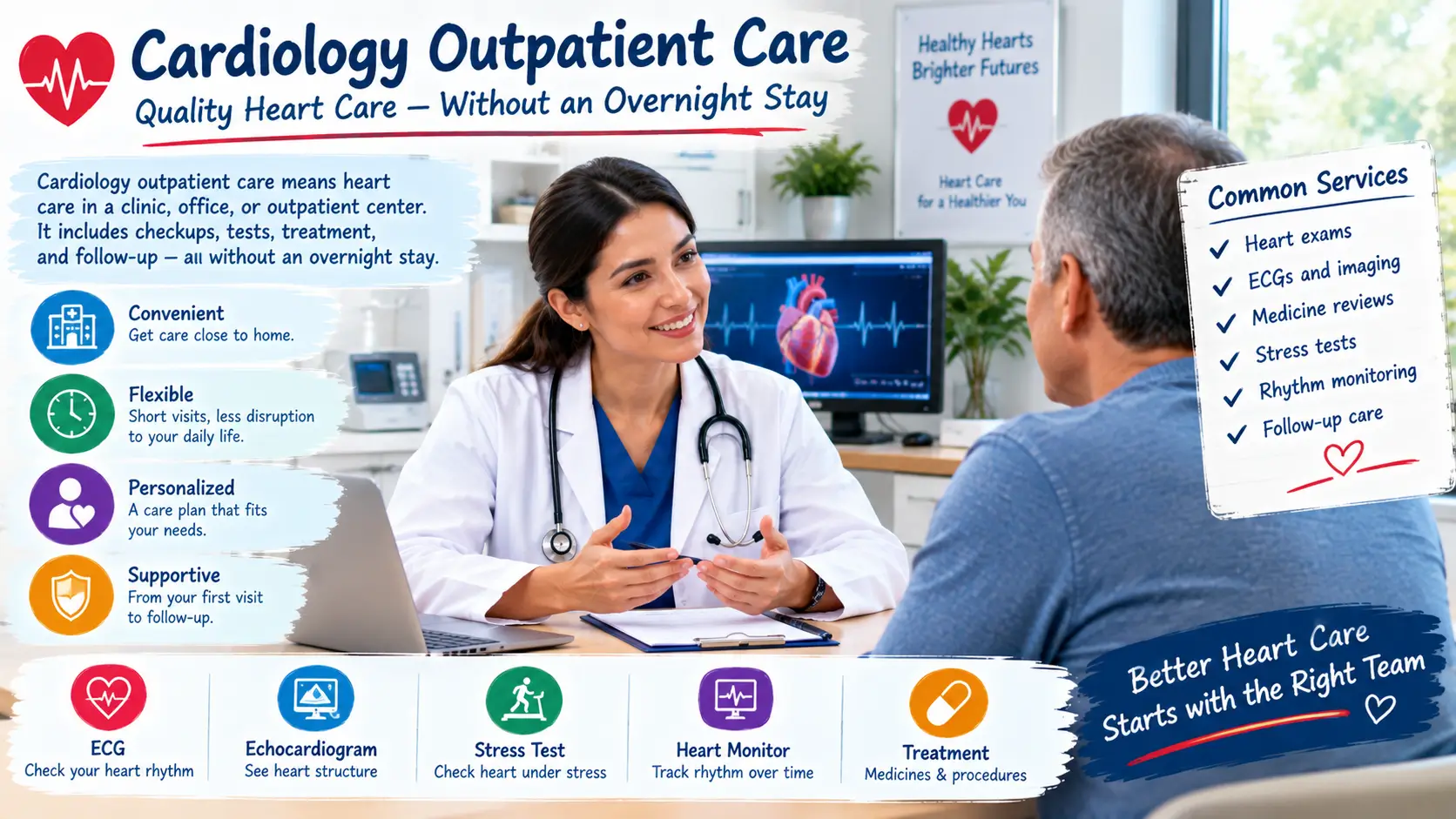

Cardiology outpatient care provides heart care without an overnight hospital stay. It may include heart exams, tests, medicine reviews, follow-up visits, and some procedures.
Have you ever had a heart test and wondered why you went home afterward?
That is common with cardiology outpatient care.
Many heart visits happen in a clinic, office, or outpatient center.
Patients can often return home the same day.
A visit may start with questions about symptoms and health history.
The care team may check blood pressure, pulse, and heart sounds.
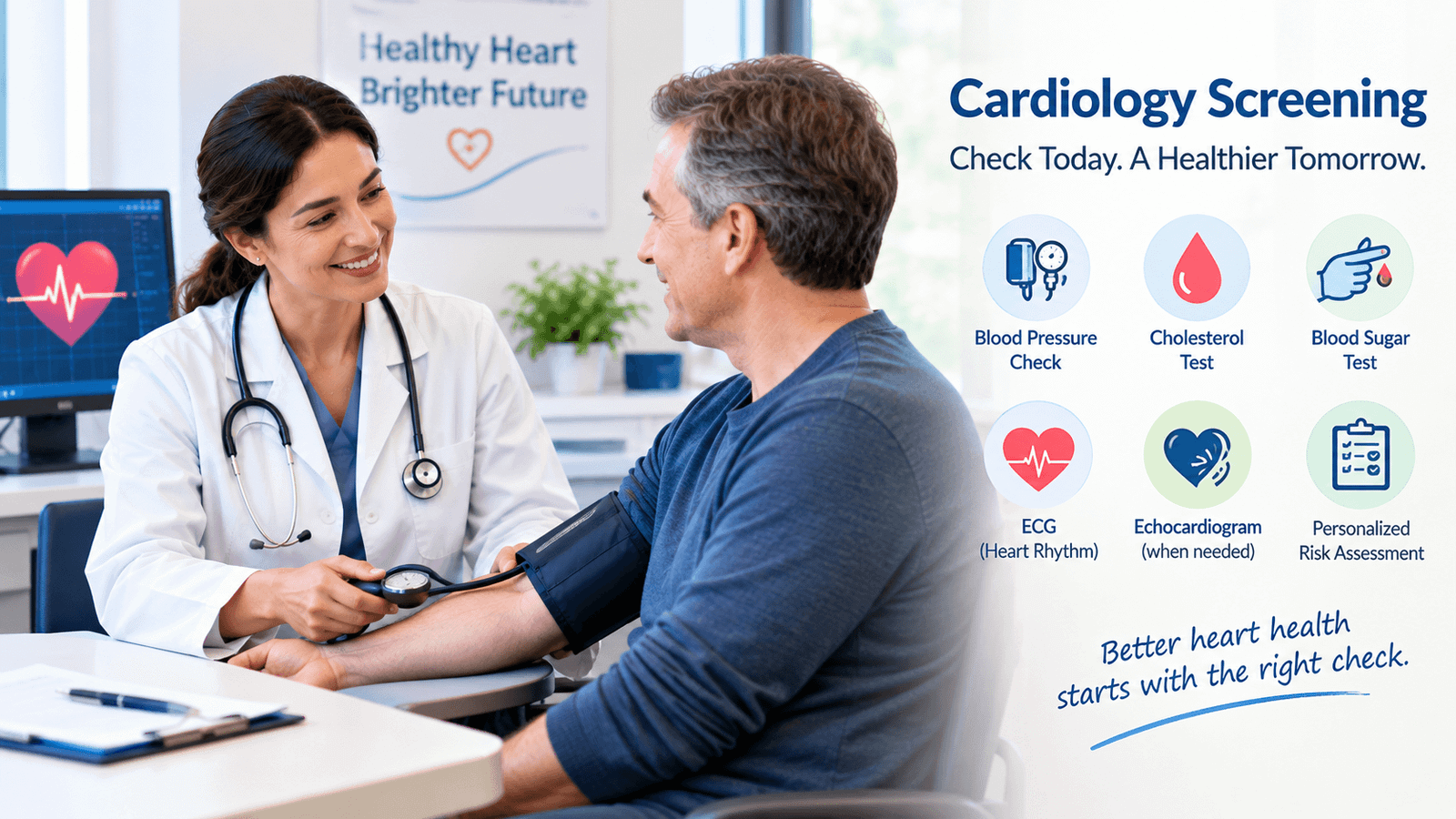
They may order an ECG, echo, stress test, or heart monitor.
The right test depends on your symptoms and health needs.
Outpatient care can also follow a hospital stay.
Follow-up visits may check medicines, symptoms, and recovery.
Some heart procedures can now happen without overnight hospital care.
Your medical team decides if that setting is safe for you.
This guide explains what to expect during an outpatient heart visit.
It also covers tests, treatment, preparation, clinics, and warning signs.
What Is Cardiology Outpatient Care?
Cardiology outpatient care means heart care without an overnight hospital stay.
You may visit a clinic, doctor’s office, or outpatient center.
The visit may last from a short checkup to several hours.
Outpatient care covers many heart needs.
A cardiologist can review symptoms and earlier test results.
The team can also monitor a known heart condition.
The American College of Cardiology includes outpatient care in its training guidance.
It covers consultations, testing, risk checks, treatment, and follow-up.
It also includes long-term care for heart failure and high blood pressure.
Common outpatient services
A cardiology visit may include:
- A heart and health history.
- Blood pressure and pulse checks.
- An ECG or EKG.
- An echocardiogram.
- A stress test.
- A heart rhythm monitor.
- Medicine review.
- Follow-up after hospital care.
- Lifestyle and risk advice.
An ECG records the heart’s electrical activity.
It can show whether your rhythm is fast, slow, or uneven.
MedlinePlus says an ECG can happen in an outpatient clinic.
An echocardiogram uses sound waves to make heart pictures.
It can help doctors check heart structure and movement.
Some clinics also offer rhythm and heart failure services.
Others provide interventional cardiology or cardiac imaging.
Available services depend on the clinic and your health needs.
Why Might Someone Need an Outpatient Cardiology Visit?
Many concerns can lead to a cardiology visit.
Your primary care doctor may also refer you to a cardiologist.
Common reasons include chest discomfort, palpitations, and shortness of breath.
High blood pressure and high cholesterol may also need heart care.
An unusual ECG can lead to a specialist visit.
Common heart conditions
Outpatient cardiology teams may manage:
- Coronary artery disease.
- High blood pressure.
- Heart failure.
- Atrial fibrillation.
- Other heart rhythm problems.
- Heart valve disease.
- Cardiomyopathy.
- Peripheral artery disease.
- Some congenital heart conditions.
Some conditions need regular follow-up.
Heart failure may require ongoing checks and medicine changes.
Rhythm problems may need repeated ECGs or heart monitoring.
The ACC outpatient care guidance includes chronic heart disease management.
It also covers risk checks and follow-up planning.
A simple patient example
Imagine a patient who feels a racing heartbeat twice each week.
The episodes stop after several minutes.
A cardiologist may ask about timing, triggers, and other symptoms.
The doctor may order an ECG or longer heart monitor.
The monitor can record heart rhythm during daily activities.
The next visit can review the recorded results.
Another patient may have high blood pressure for years.
Regular visits can track blood pressure and treatment.
The doctor may discuss food, exercise, sleep, and medicines.
Why follow-up visits matter
Outpatient care often continues after hospital treatment.
A follow-up visit can check symptoms and medicine side effects.
It can also help spot changes that need more care.
What Symptoms May Lead to Outpatient Cardiology Care?
Symptoms can vary from person to person.
Some people have mild symptoms that come and go.
Others may have no clear symptoms at all.
Common symptoms include chest discomfort, shortness of breath, and palpitations.
Dizziness, fainting, swelling, and tiredness can also matter.
Lower exercise ability may also need medical review.
Chest discomfort
Chest discomfort can have many causes.
Some causes involve the heart, while others do not.
A cardiologist may ask when discomfort starts.
They may ask whether activity, rest, or food changes it.
The doctor may then choose tests based on your symptoms.
Do not assume chest discomfort is harmless.
Sudden pressure with sweating or breathing trouble needs urgent attention.
Call 911 when heart attack signs appear.
Palpitations
Palpitations can feel like pounding, fluttering, or skipped beats.
They may last seconds, minutes, or longer.
An ECG can sometimes capture the rhythm problem.
If symptoms come and go, a longer monitor may help.
Your doctor may ask you to record when symptoms happen.
This can connect symptoms with heart rhythm findings.
A patient example
A patient may feel dizzy after standing up quickly.
That symptom does not always come from a heart problem.
Still, a medical review can help find the cause.
The care team may check blood pressure and heart rate.
They may review medicines and other health conditions.
Further heart tests may follow when needed.
How Does an Outpatient Cardiology Team Check Your Heart?
Your first visit often starts with a conversation.
The doctor asks about symptoms, health history, and family history.
They may review medicines and earlier test results.
A physical exam may follow.
The team can check blood pressure, pulse, breathing, and heart sounds.
Testing depends on your symptoms and risk.
Doctors do not need every test for every patient.
Common tests
| Test | What it checks | What to expect |
| ECG or EKG | Heart electrical activity | Small sensors on your skin |
| Echocardiogram | Heart structure and movement | Ultrasound images |
| Stress test | Heart during activity | Exercise with monitoring |
| Heart monitor | Heart rhythm over time | Wearable device |
MedlinePlus says stress tests check how the heart works under stress.
Many use a treadmill or stationary bicycle.
The team monitors heart rhythm and blood pressure during testing.
Some patients cannot exercise enough for a treadmill test.
A medicine-based stress test may then be an option.
What happens after testing?
Your cardiologist reviews the results with you.
They may compare them with older results.
The next step depends on what the tests show.
You may need more testing, medicine changes, or routine follow-up.
Some people may need a procedure or hospital care.
Your doctor should explain why that step is needed.
How to prepare
Before your appointment, bring a list of your medicines.
Include vitamins and over-the-counter products.
Bring recent test results when another clinic has them.
Write down your symptoms before the visit.
Include when they start, how long they last, and possible triggers.
This can help your cardiologist understand the pattern.
What Treatment Can Happen During Outpatient Cardiology Care?
Treatment depends on your condition and test results.
Many visits focus on medicine and lifestyle care.
Some visits also involve procedures or specialist referrals.
Medicine management
Your cardiologist may review your current medicines.
They may check doses, timing, and possible side effects.
Never stop a heart medicine without medical advice.
Some medicines help control blood pressure or cholesterol.
Others help manage heart rhythm or heart failure.
Your doctor chooses treatment based on your health needs.
Procedures in outpatient settings
Some cardiovascular procedures can happen without an overnight stay.
The right setting depends on the procedure and your medical risk.
The ACC reports a shift toward outpatient cardiovascular procedures.
Some procedures now occur in ambulatory surgery centers.
Cardiac catheter ablation is one example in current Medicare policy.
An outpatient procedure is not right for every patient.
Your doctor considers your health, procedure type, and recovery needs.
Cardiac rehabilitation
Cardiac rehabilitation is supervised care for heart recovery.
It may follow a heart attack, surgery, or another heart condition.
The American Heart Association says rehab can happen in outpatient settings.
Programs may include exercise, nutrition, and stress support.
A medical team helps set safe activity goals.
The AHA also notes that many insurers cover eligible cardiac rehabilitation.
Coverage rules can vary, so check your plan first.
How Can You Prepare for Better Outpatient Heart Care?
Good preparation can make a cardiology visit easier.
It can also help your doctor understand your health needs.
Before the appointment
Use this simple checklist:
- Write down your main symptoms.
- List all medicines and supplements.
- Bring your insurance information.
- Bring recent test reports when available.
- Write down your questions.
- Ask about special test instructions.
- Bring someone if you need support.
Ask whether you should avoid food before a test.
Some tests may have special preparation rules.
Follow the instructions from your clinic.
During the visit
Tell your doctor about all symptoms.
Do not leave out symptoms because they seem small.
Mention changes in exercise ability, sleep, or swelling.
Ask what each test checks.
You can also ask when you should expect results.
If a medicine causes problems, speak up.
Your doctor may adjust the plan or review other choices.
After the visit
Follow your care plan as instructed.
Take medicines as prescribed unless your doctor changes them.
Keep follow-up appointments when recommended.
Healthy habits may also support heart health.
These can include activity, healthy food, good sleep, and avoiding tobacco.
Your doctor can suggest goals that fit your health.
Where Can You Find Cardiology Outpatient Clinics?
Cardiology outpatient services are available across the United States.
The right clinic depends on your location and care needs.
The PASF searches include clinics in Utah and Montana.
These examples show how local heart services can differ.
St. George Cardiology Clinic
St. George Cardiology Clinic is part of Intermountain Health in Utah.
Its listed services include cardiology and cardiac imaging.
It also lists heart failure and interventional cardiology care.
The clinic serves patients in southern Utah.
Its provider team includes cardiologists and advanced practice providers.
IHC cardiologists in Provo
Intermountain Health lists cardiology providers near Provo, Utah.
The listings include office visits and video visits.
Some providers have hospital affiliations with nearby facilities.
Patients can review provider details through the health system.
Availability and services can change over time.
Billings Clinic Cardiology
Billings Clinic lists a Cardiology Clinic in Billings, Montana.
Its provider directory includes cardiology and electrophysiology specialists.
It also lists heart failure and interventional cardiology providers.
The system lists cardiology services in other Montana communities.
This can help patients who live far from a large city.
How to choose a local clinic
Check the clinic’s services before making an appointment.
Ask whether it treats your specific heart concern.
Also check insurance, referral rules, and appointment availability.
A nearby clinic may be enough for routine follow-up.
A complex condition may need a specialized heart center.
Your primary care doctor can help with that decision.
When Should You Seek Urgent or Emergency Heart Care?
Outpatient care is not for every heart symptom.
Some symptoms need immediate medical attention.
Call 911 for possible heart attack signs.
These may include chest pressure, pain, or discomfort.
Shortness of breath can also occur.
Other warning signs may include sweating, nausea, or lightheadedness.
Pain can spread to the arm, back, neck, jaw, or stomach.
Symptoms can differ between people.
Do not wait for an outpatient appointment
Do not wait for a scheduled visit during a possible emergency.
Emergency teams can start care quickly.
They can also decide which hospital treatment you may need.
A patient may think chest pressure is simple heartburn.
Another person may think sudden breathing trouble will pass.
Those assumptions can delay emergency care.
Call 911 when symptoms could signal a heart attack.
Do not drive yourself when emergency symptoms are present.
For non-emergency concerns, contact your medical office.
They can advise whether you need a cardiology visit.
They may also help arrange testing or a referral.
FAQ About Cardiology Outpatient Care
Q: What does cardiology outpatient mean?
A: It means heart care without an overnight hospital stay.
Visits may include exams, tests, medicine reviews, and follow-up care.
Some procedures can also happen in outpatient settings.
Q: Is St George Cardiology Clinic an outpatient clinic?
A: Yes, St. George Cardiology Clinic provides clinic-based heart services.
Its listed services include cardiology, imaging, heart failure, and interventional care.
It is part of Intermountain Health in Utah.
Q: Where can I find IHC cardiologists in Provo?
A: Intermountain Health lists cardiology providers in Provo, Utah.
The system lists clinic visits and video visits for some providers.
Services and provider availability can change.
Q: Does Billings Clinic have outpatient cardiology?
A: Yes, Billings Clinic lists a Cardiology Clinic in Billings, Montana.
Its directory includes general cardiology and several heart specialties.
Patients can check current providers and appointment options.
Q: What tests are common during an outpatient cardiology visit?
A: ECGs, echocardiograms, stress tests, and heart monitors are common.
The doctor chooses tests based on symptoms and medical history.
You may not need every test.
Q: Can cardiology procedures happen without an overnight stay?
A: Yes, some procedures can happen in outpatient settings.
The right setting depends on the procedure and your health.
Your care team decides whether outpatient care is appropriate.
Q: Is outpatient cardiology safe for everyone?
A: No, the right setting depends on each person’s condition.
Some patients need hospital care or closer monitoring.
Doctors consider symptoms, risk, and the planned treatment.
Conclusion
Cardiology outpatient care can make heart testing and follow-up easier.
Many patients receive exams, tests, and treatment without staying overnight.
Common services include ECGs, echocardiograms, stress tests, and rhythm monitoring.
Your symptoms and health history guide the care plan.
The right clinic should also match your heart needs and location.
Local clinics may offer routine care and specialist services.
Some complex conditions may need a larger heart center.
Always follow your cardiologist’s advice about tests and medicines.
Ask questions when you do not understand your care plan.
Do not delay emergency care for serious symptoms.
Call 911 for possible heart attack warning signs.
Talk to a cardiologist if you have ongoing heart concerns.
Medically reviewed for accuracy. Always consult a licensed cardiologist for personal advice.