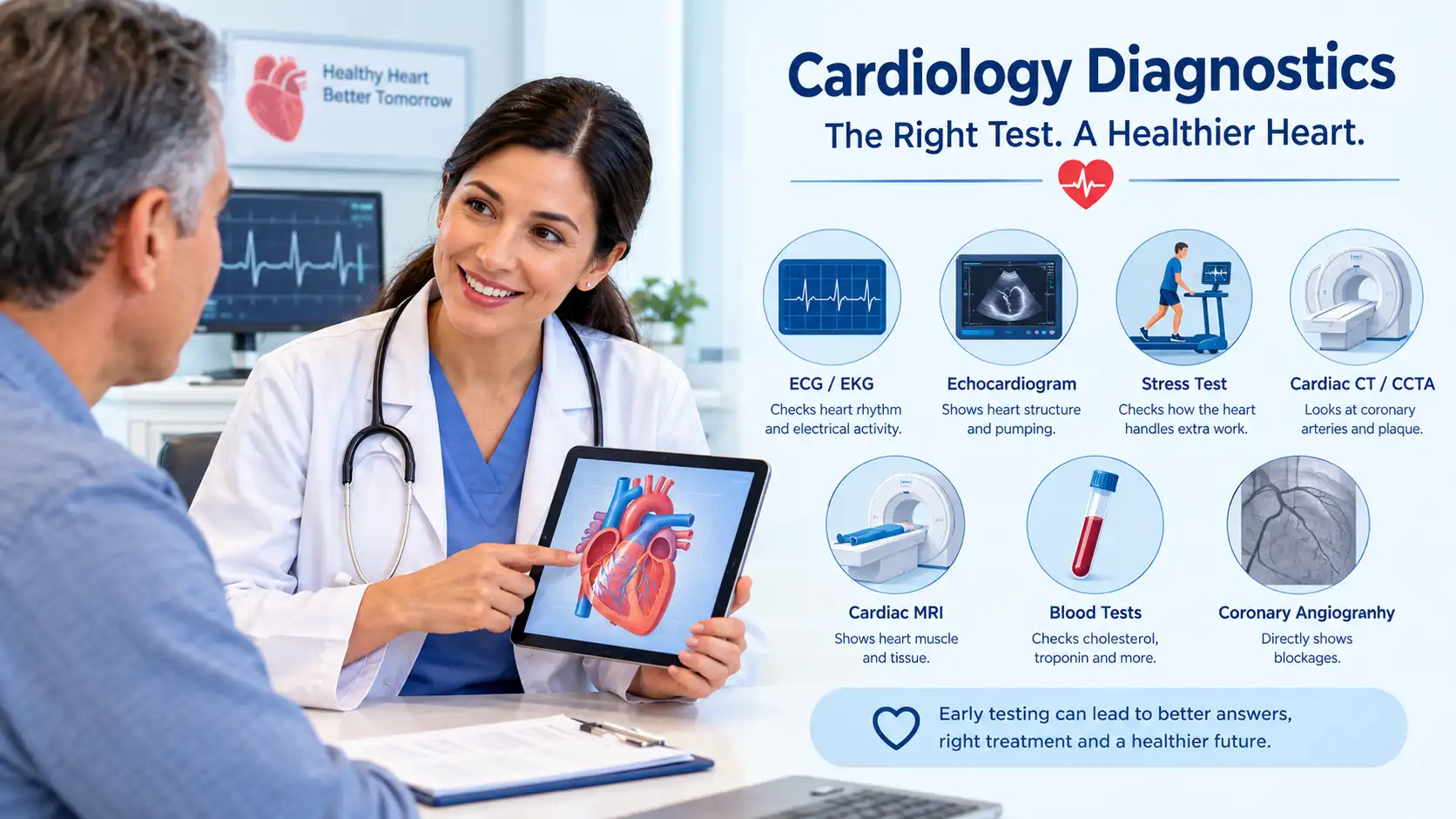

Cardiology diagnostics means the tests doctors use to find and understand heart problems. These tests can check heart rhythm, blood flow, heart muscle, valves, and blood vessels. Doctors choose tests based on symptoms, health history, and risk.
Why Heart Testing Matters
Have you ever felt chest pressure and wondered what it meant? Many people worry when a heart test is suggested. That worry is normal. The good news is that most heart tests give doctors useful clues without major discomfort.
Cardiology diagnostics can help doctors look for heart rhythm problems, weak heart muscle, valve disease, and blocked arteries. Some tests are quick. Others take more time or use special images. Your doctor chooses the test that best fits your symptoms and health history.
This guide explains common heart tests in plain language. You will learn what each test does and why doctors use it. You will also learn which tests may check for a blockage or heart attack. Finally, you will learn when symptoms need urgent care. Some tests take minutes, while others need special preparation. Knowing the purpose of each test can help you feel calmer. It can also help you ask better questions.
What Is Heart Testing?
Heart testing includes many tests used to check how the heart works. Some tests record electrical signals. Others make pictures of the heart. Some measure blood flow or look for signs of heart muscle damage.
Doctors may start with simple checks. These can include blood pressure, pulse, listening to the heart, and an ECG. An ECG records the heart’s electrical activity. It can show heart rate and rhythm. It may also help detect several heart problems.
A basic cardiac diagnosis list may include:
- Electrocardiogram, or ECG
- Echocardiogram
- Exercise or other stress tests
- Holter or event monitoring
- Cardiac CT
- Cardiac MRI
- Coronary calcium scan
- Blood tests
- Coronary angiography
Doctors do not order every test for every person. Cardiology diagnostics uses these choices to answer focused questions.
What Doctors Want to Learn
A heart test may answer one main question. For example, an ECG can check rhythm. An echo can show heart structure and pumping. A stress test can show how the heart performs during increased work.
The American Heart Association and American College of Cardiology support a risk-based approach. Doctors first estimate the chance of a heart problem. Then they choose tests that answer the main question.
For example, a patient with brief palpitations may need rhythm monitoring. A patient with chest pressure may need an ECG and blood tests. Another patient may need imaging after an abnormal first test.
Causes and Risk Factors That May Lead to Testing
Heart tests may be needed for many different reasons. Some people have symptoms. Others have risk factors that raise concern about heart disease.
Common risk factors include high blood pressure, high cholesterol, diabetes, smoking, and excess body weight. Family history can also matter. Age and past heart problems may affect testing choices.
A doctor may order tests for chest pressure or shortness of breath. Fainting, swelling, or a racing heartbeat may also prompt testing. These symptoms can have many causes. Testing helps doctors sort through those possible causes.
Why Chest Pain Needs Careful Testing
Chest pain can come from the heart, lungs, muscles, stomach, or other causes. Heart-related pain may feel like pressure, squeezing, burning, or heaviness. It may also spread to the arm, shoulder, jaw, back, or upper belly.
The AHA and ACC recommend structured assessment for acute chest pain. Doctors may use an ECG and high-sensitivity troponin blood testing early. Troponin is a protein that can rise when heart muscle is injured.
Not every chest pain case needs the same tests. Doctors consider symptoms, risk, exam findings, and earlier results. They may choose no urgent extra test for some low-risk patients. Higher-risk cases may need more testing.
Testing for Heart Rhythm Problems
Some people feel skipped beats, fluttering, or a fast heartbeat. These symptoms may come and go. A short ECG may miss an episode.
Doctors may then use a Holter monitor or event monitor. These devices record heart activity for longer periods. They can help catch rhythm problems that happen outside the clinic.
Symptoms and Signs to Watch For
Heart symptoms can be mild or strong. They can also differ between people. Some heart problems cause no clear symptoms at first.
Common symptoms that may lead to testing include:
- Chest pressure, pain, or tightness
- Shortness of breath
- Fast, slow, or uneven heartbeat
- Dizziness or fainting
- Unusual tiredness
- Swelling in the legs or ankles
- Reduced ability to exercise
Women may also have nausea, unusual fatigue, or shortness of breath. Back, shoulder, or jaw discomfort can also occur. The AHA advises calling 911 for possible heart attack symptoms.
A patient may feel nervous after noticing a racing heart. That does not mean the cause is dangerous. Still, repeated or new symptoms deserve medical review.
Cardiology Diagnostics: Common Tests and How Doctors Use Them
There are many types of heart tests. Each test answers different questions. No single test is best for every person.
| Test | What it checks | Common use |
| ECG/EKG | Electrical activity | Rhythm and heart injury clues |
| Echocardiogram | Structure and pumping | Valves and heart function |
| Stress test | Heart under added work | Symptoms and blood flow |
| Cardiac CT/CCTA | Heart and coronary arteries | Artery disease and plaque |
| Cardiac MRI | Detailed heart images | Muscle and tissue problems |
| Coronary angiography | Coronary artery blood flow | Direct blockage assessment |
ECG or EKG
An ECG is quick and painless. Small sticky patches attach to your skin. The machine records electrical signals from your heart.
Doctors use ECGs to look for rhythm problems and signs of heart injury. The test does not send electricity into your body.
Echocardiogram
An echocardiogram uses sound waves to make moving heart pictures. It can show heart size, shape, pumping, and valve function. Doppler imaging can also show blood flow through the heart.
Some echoes use exercise or medicine to make the heart work harder. This is called a stress echo.
Stress Testing
During an exercise stress test, you may walk on a treadmill or use a bike. Staff watch your heart rate, rhythm, blood pressure, and ECG.
Some people cannot exercise enough for a standard test. Doctors may use medicine instead. Stress testing can help assess symptoms and possible coronary artery disease.
Cardiac CT and CCTA
A cardiac CT uses X-rays to create detailed heart images. Coronary CT angiography, or CCTA, can show the coronary arteries. These are the vessels that supply blood to the heart.
For some people with stable chest pain, CCTA can help look for coronary artery disease. The best test depends on risk, symptoms, past tests, and other factors.
Cardiac MRI
Cardiac MRI uses strong magnets and radio waves to create detailed heart images. It can help doctors study heart muscle and certain tissue changes.
Blood Tests
Blood tests can check cholesterol, blood sugar, kidney function, and other health markers. Troponin blood tests are especially important when doctors suspect heart muscle injury.
A blood test alone cannot show every heart blockage. Doctors combine blood results with symptoms and other tests.
What Test Checks for a Heart Blockage?
A heart blockage usually means narrowing in a coronary artery. Plaque can build inside these arteries and reduce blood flow.
There is no single test that is best for every patient. Doctors choose based on symptoms and risk.
For some stable chest pain cases, CCTA can show the coronary arteries and possible narrowing. Stress imaging can show whether reduced blood flow affects the heart during stress. The AHA/ACC guideline supports testing based on clinical risk. It also considers the question the test must answer.
Coronary angiography can directly show blockages inside coronary arteries. It uses a thin tube, contrast dye, and X-ray images.
Which Test Is Best for Heart Blockage?
The answer depends on the person. CCTA, stress imaging, and coronary angiography have different roles.
A younger patient with stable symptoms may be considered for CCTA. Another patient may benefit more from stress imaging. A patient with high-risk findings may need invasive angiography.
Your doctor also considers kidney health, prior tests, radiation exposure, and other factors. This helps reduce unnecessary testing.
What Tests Check for a Heart Attack?
Doctors usually use more than one test when a heart attack is suspected. An ECG can show electrical changes linked with a heart attack. Blood tests can look for troponin, which may rise after heart muscle injury.
Doctors may repeat ECGs and troponin tests over time. This helps them see how results change. The ACC recommends high-sensitivity troponin testing within structured chest pain pathways.
Other tests may include an echocardiogram or coronary angiography. These tests can help show heart function or blocked arteries.
The AHA notes that heart attack diagnosis can include blood tests and imaging tests. These may include ECG, echo, coronary angiography, CT, MRI, stress testing, or PET.
Treatment and Management After Testing
Heart tests do not treat a condition by themselves. They help doctors decide what care may be needed.
Treatment depends on the problem found. Some people may need lifestyle changes and regular follow-up. Others may need medicine. Some may need a procedure.
For high blood pressure, treatment may include medicine, food changes, exercise, and weight management. High cholesterol may also need lifestyle changes or medicine.
An abnormal rhythm may need monitoring or medicine. Some rhythm problems may need a procedure. Valve problems may need follow-up or treatment based on severity.
Coronary artery disease may be managed with medicines and lifestyle care. Some people may need procedures to improve blood flow.
A patient with an abnormal stress test may need another test. That does not automatically mean a major heart problem exists. Doctors review the whole picture before choosing the next step.
Ask your doctor what each result means. You can also ask why a test is needed. Knowing the purpose can make the process less stressful.
Prevention and Healthy Heart Habits
Some heart risks can be reduced through daily habits. These habits support heart health but cannot remove every risk.
Helpful steps may include:
- Avoid tobacco and nicotine products.
- Follow your treatment plan for blood pressure.
- Keep cholesterol at a healthy level.
- Manage blood sugar if you have diabetes.
- Choose more vegetables, fruits, whole grains, and lean foods.
- Stay active within your doctor’s advice.
- Aim for a healthy weight when appropriate.
- Get enough sleep.
- Keep regular medical visits.
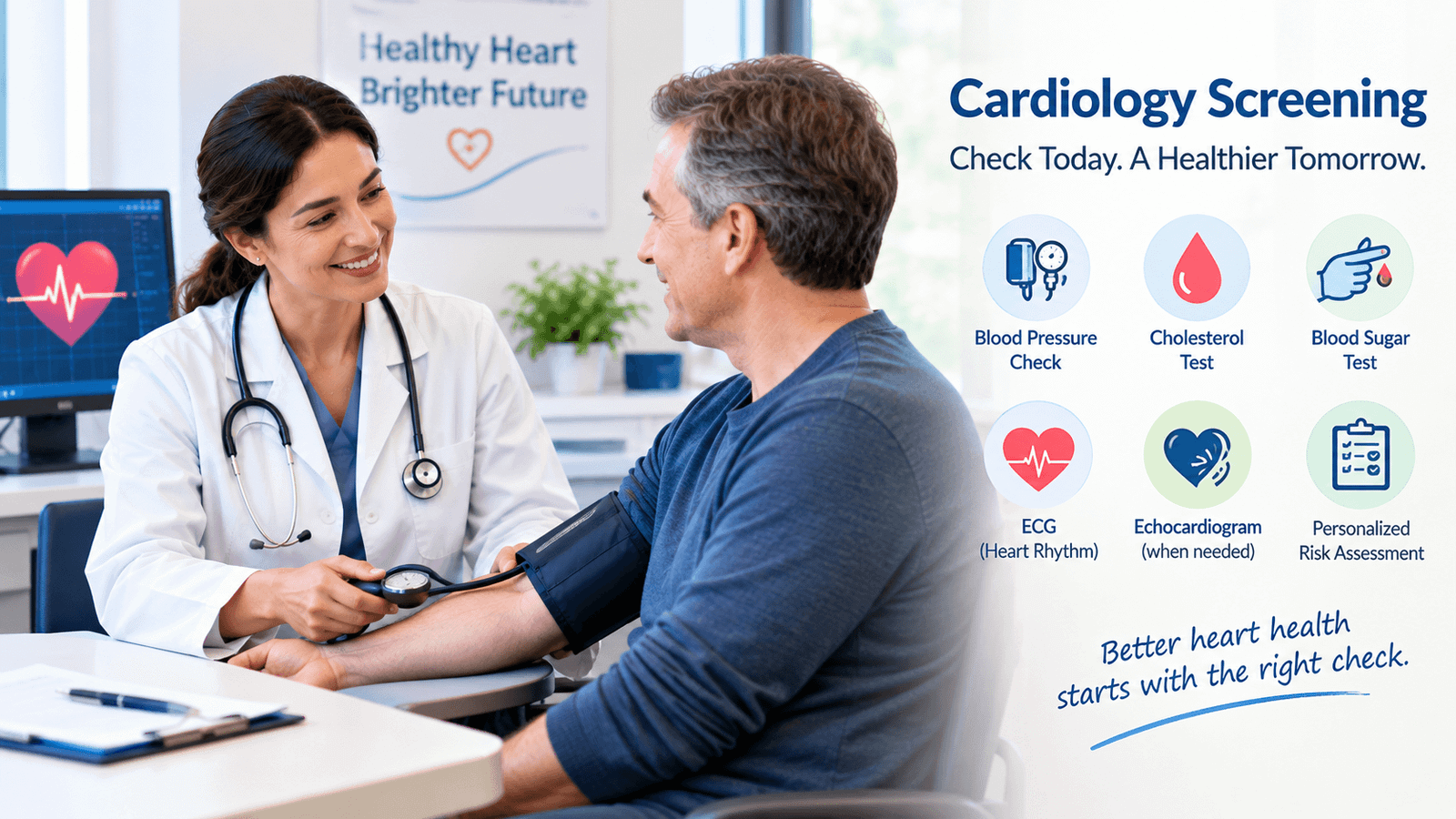
Your doctor may check blood pressure during routine care. Cholesterol and blood sugar checks may also help.
These checks can help find risks before symptoms appear.
A patient who has a family history of heart disease may feel worried. That history does not mean heart disease is certain. It does mean you should discuss your risk with your doctor.
Preventive testing should match your risk. More testing is not always better. Doctors consider the possible benefit, risk, cost, and chance of finding useful information.
When to See a Doctor: Heart Red Flags
Some symptoms need urgent action. Do not wait for a routine appointment when symptoms could signal a heart attack.
Call 911 if you have chest pressure or discomfort with signs such as:
- Trouble breathing
- Cold sweat
- Nausea or vomiting
- Fainting or severe weakness
- Pain spreading to the arm, jaw, back, or shoulder
The AHA advises emergency care for possible heart attack symptoms.
You should also contact a doctor for new or repeated symptoms. These may include unexplained shortness of breath, fainting, frequent palpitations, or swelling.
What to Bring to a Heart Visit
Bring a list of medicines and supplements. Write down when symptoms start and what you were doing. Note how long symptoms last and what makes them better or worse.
Bring past heart test reports when available. Tell your doctor about family heart history. These details can help guide testing.
Frequently Asked Questions
Q: What is a cardiac diagnosis list?
A: A cardiac diagnosis list includes possible heart conditions doctors may identify. Examples include rhythm problems, coronary artery disease, valve disease, and heart failure. Doctors use tests and clinical findings to identify the cause.
Q: What are the main types of heart tests?
A: The main types include ECG, echo, stress tests, blood tests, CT, MRI, and angiography. Each test checks a different part of heart health. Your doctor chooses based on your symptoms and risk.
Q: Can a blood test detect a heart blockage?
A: No, a blood test cannot directly show a coronary artery blockage. Troponin can show heart muscle injury, but it does not map artery narrowing. Doctors may need imaging or other tests to assess a blockage.
Q: Is an ECG enough to diagnose a heart problem?
A: No, an ECG does not find every heart problem. It mainly records electrical activity and rhythm. Doctors may need an echo, monitor, imaging test, or blood test.
Q: How long does a heart test take?
A: It depends on the test. An ECG usually takes only a few minutes. Imaging and monitoring tests can take longer, especially when preparation is needed.
Q: Are heart tests safe?
A: Many heart tests are low risk and painless. Some tests use radiation, contrast dye, medicine, or a catheter. Your care team should explain the benefits and possible risks before testing.
Q: When should I ask about cardiology diagnostics?
A: Ask your doctor when you have new, repeated, or unexplained heart symptoms. Seek emergency help for possible heart attack symptoms. Your doctor can decide which test fits your situation.
Conclusion
Cardiology diagnostics helps doctors understand what may be happening inside your heart. ECGs check electrical activity. Echo tests show heart structure and pumping. Stress tests, CT, MRI, blood tests, and angiography answer other questions.
No single test works for every person. Doctors choose tests based on symptoms, risk, medical history, and earlier results. This approach can help avoid both missed problems and unnecessary tests.
Chest pressure, breathing trouble, fainting, or severe weakness can need urgent care. Call 911 when symptoms may signal a heart attack.
If your doctor recommends testing, ask what the test checks and why. Clear answers can make the process easier.
Talk to a cardiologist if you have any heart concerns. Your results should be interpreted with your medical history.
Medically reviewed for accuracy. Always consult a licensed cardiologist for personal advice.