
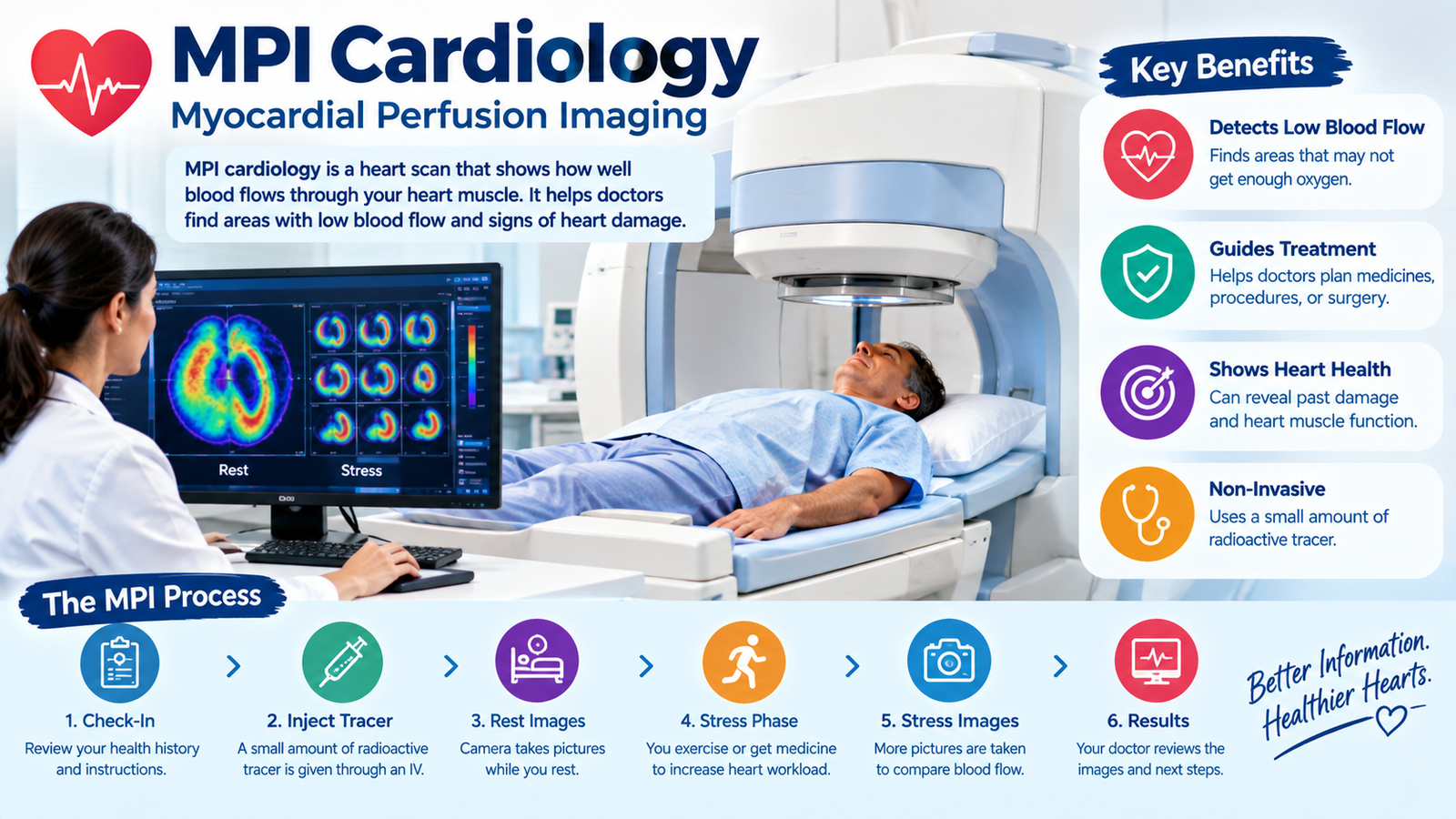

MPI cardiology refers to myocardial perfusion imaging, a heart scan that shows blood flow through heart muscle. It can compare blood flow at rest and during stress. Doctors use it to find low blood flow and signs of heart damage.
Have you ever felt chest pressure while walking, climbing stairs, or doing housework? Your doctor may want to know how your heart handles extra work. A nuclear heart scan can help answer that question.
MPI cardiology is another name for testing blood flow through the heart muscle. The test can use SPECT or PET imaging. Both methods use a small radioactive tracer to create heart pictures. A stress test may add exercise or medicine to increase heart workload.
This test can help doctors find areas with poor blood flow. It can also show old heart damage in some cases. The results may help guide medicine, more testing, or other care.
Many patients feel nervous before their first scan. Knowing each step can make the visit feel easier. This guide explains the test, preparation, results, risks, and costs.
What Is MPI in Cardiology?
MPI means myocardial perfusion imaging. “Myocardial” means heart muscle. “Perfusion” means blood flow. Imaging means making pictures of the heart.
The test shows how blood reaches different parts of your heart muscle. Doctors often compare images taken at rest with images taken during stress. Areas that receive less blood during stress may need more testing.
The American Heart Association says MPI can help show reduced blood flow. It can also show heart muscle damage from a past heart attack.
SPECT and PET scans
SPECT and PET are the two main MPI methods. With SPECT, a special camera tracks a radioactive tracer to create images of blood flow. PET uses a different tracer and can provide more detailed information about blood flow and heart function.
| Test type | What it does | Common use |
| SPECT MPI | Shows heart blood flow | Finds reduced flow and old damage |
| PET MPI | Shows heart blood flow | Assesses blood flow and heart disease |
| Stress MPI | Compares flow during stress | Looks for stress-related flow changes |
MPI does not directly show the coronary arteries. Instead, it shows how well blood reaches heart muscle. This difference matters when doctors choose the next test.
For example, a patient may have chest pressure during walks. The doctor may order stress imaging after reviewing symptoms and other tests. The scan can help show whether blood flow changes during stress.
What does an MPI test diagnose?
MPI can help evaluate coronary artery disease. This disease occurs when plaque narrows the heart arteries. Reduced blood flow can cause chest pain, especially during activity.
Doctors may also use MPI after some heart treatments. It can help assess blood flow after bypass surgery or another procedure. CMS coverage guidance lists several clinical uses for nuclear heart imaging.
Causes, Risk Factors, and How the Test Helps
Poor heart blood flow often relates to coronary artery disease. Plaque can build inside the artery walls over time. This buildup can reduce the space available for blood to move.
Common risk factors include:
- High blood pressure
- High cholesterol
- Diabetes
- Smoking
- Older age
- Family history of heart disease
- Limited physical activity
- Excess body weight
These factors do not mean that you have blocked arteries. Your doctor looks at your full health picture before ordering a test.
Why might a doctor order MPI?
Doctors may consider MPI when symptoms suggest reduced heart blood flow. They may also use it when other test results leave questions. The AHA/ACC chest pain guideline lists stress imaging for some patients.
MPI may help answer questions such as:
- Does blood flow fall during stress?
- Is there evidence of an old heart injury?
- How well does the heart muscle work?
- Could symptoms relate to coronary artery disease?
- Does more testing need to follow?
The test is not needed for every person with chest pain. Doctors choose tests based on symptoms, risk, past results, and the clinical question.
CMS also states that Medicare coverage depends on medical need. Testing only because of risk factors may not qualify as covered screening.
A patient with stable chest discomfort may receive MPI after an office visit. Another patient may need a different test based on their symptoms. Your doctor can explain why one test fits your situation.
Symptoms and Signs That May Lead to MPI
MPI does not treat symptoms. It helps doctors study possible causes of heart symptoms.
Chest discomfort is a common reason for heart testing. Some people describe pressure, squeezing, heaviness, or burning. Symptoms can also occur in the arm, back, neck, jaw, or upper belly.
Other possible symptoms include:
- Shortness of breath
- Unusual tiredness
- Dizziness
- Reduced ability to exercise
- Fast or irregular heartbeat
- Sweating with activity
Women and older adults may have less typical symptoms. Diabetes can also affect how heart symptoms appear. Tell your doctor about any new or changing symptoms.
What happens during stress?
Exercise makes the heart work harder. The heart then needs more blood and oxygen. A stress MPI test compares blood flow before and during that extra demand.
If you cannot exercise enough, doctors can use medicine instead. The medicine raises blood flow or changes heart workload. This approach is called pharmacologic stress testing.
The American Heart Association says stress testing can use exercise or medicine. The choice depends on whether you can exercise safely.
A patient who cannot walk on a treadmill may receive medicine through an IV. The team watches heart rate, blood pressure, and symptoms. This process helps the team keep the test safe.
When symptoms need urgent care
A scheduled scan is different from emergency heart care. Severe or new chest pressure needs urgent attention. Do not wait for a planned MPI test.
Call 911 for possible heart attack signs. These can include severe chest pressure, trouble breathing, fainting, or sudden sweating. Fast care can matter when a heart attack is possible.
MPI Cardiology Diagnosis: Tests and Procedure
The exact process depends on the scan type and stress method. Most tests include heart monitoring, an IV, tracer injections, and imaging.
First, the team reviews your medicines and health history. They may ask you to avoid caffeine for a set time. They may also give food and drink instructions.
The American Heart Association notes that some SPECT tests require several hours without food. Caffeine may also need to be avoided for about 24 hours. Follow your testing center’s instructions.
Step-by-step procedure
- The team checks your heart rate and blood pressure.
- They place small sticky pads on your skin.
- These pads record your heart rhythm with an EKG.
- A small IV goes into your arm.
- The team gives the radioactive tracer through the IV.
- A camera takes pictures while you rest.
- Exercise or stress medicine may then raise heart workload.
- The team takes another set of heart pictures.
SPECT cameras detect signals from the tracer. A computer turns those signals into heart images. PET scanners use a different tracer and imaging system.
A SPECT test may take about an hour. Timing varies by center and test design. Some studies require separate rest and stress visits.
What do myocardial perfusion scan results mean?
A normal scan usually shows similar blood flow during rest and stress. An area with less flow during stress may suggest reduced blood supply.
An area with low flow during both phases may have another explanation. It can reflect old scar tissue or another heart problem. Doctors may need other tests before making a final decision.
Your report may say “normal,” “abnormal,” or “equivocal.” Equivocal means unclear. Your doctor may compare the scan with symptoms and other tests.
A patient may receive an abnormal result without needing an emergency procedure. Results guide the next step rather than making every decision alone.
Treatment Options After an Abnormal MPI
An abnormal scan does not automatically mean you need surgery. Your doctor looks at the scan with your symptoms and medical history. The next step depends on the amount and location of reduced blood flow.
Treatment may include lifestyle changes, medicines, or more testing. Some people need no immediate procedure.
Medicines and lifestyle care
Doctors may prescribe medicines that lower heart risk. These can include drugs for blood pressure or cholesterol. Some patients may also receive medicine for chest pain.
Lifestyle care can support heart health. Helpful steps may include:
- Stop smoking if you smoke.
- Choose more vegetables, fruits, and whole grains.
- Stay active within your doctor’s advice.
- Control blood pressure and cholesterol.
- Manage diabetes when present.
- Take prescribed medicines as directed.
- Keep follow-up visits.
Procedures and further testing
A doctor may order another test when MPI does not answer the main question. The choice can include CT imaging, stress echocardiography, or heart catheterization.
Heart catheterization uses a thin tube to study the heart arteries. Doctors may use it when symptoms and test results suggest significant artery disease.
The AHA/ACC chest pain guideline supports stress imaging for selected patients. It also notes that testing should match the clinical question.
For example, one patient may have mild findings and stable symptoms. Their doctor may focus on medicines and risk reduction. Another patient may have more concerning findings and need an artery-focused test.
MPI Stress Test Side Effects and Safety
Most people tolerate nuclear heart imaging well. The test uses a small amount of radioactive material. The body removes the tracer over time.
Exercise stress can cause temporary tiredness, breathlessness, or chest discomfort. These effects usually stop after the stress ends. The healthcare team watches you throughout the test.
Medicine-based stress can cause temporary flushing, headache, nausea, or shortness of breath. The exact effects depend on the medicine used.
The AHA reports that SPECT testing is generally safe. Rare problems can include irregular heartbeat, low blood pressure, or heart attack.
Tell your team if you are pregnant or may be pregnant. Also tell them if you are breastfeeding. The team can explain whether testing should wait.
When MPI may not be the right test
Doctors do not order MPI for every heart complaint. Another test may answer your question better.
CMS guidance also warns against duplicate testing without a medical reason. The goal is to obtain information that can affect care.
Myocardial Perfusion Scan Cost in the United States
The price of an MPI scan varies widely across the United States. Insurance plans also use different deductibles and copays.
Your bill can depend on several factors:
| Cost factor | Why it matters |
| SPECT or PET | Different scanners and tracers have different costs |
| Stress method | Exercise and medicine can change facility charges |
| Hospital or clinic | Facility prices can differ |
| Insurance plan | Deductibles and copays affect your share |
| Location | Prices vary between regions |
Ask the center for an estimate before your appointment. Ask what the estimate includes.
If you have Medicare, coverage depends on medical need and applicable coverage rules. CMS lists myocardial perfusion imaging codes and medical-need requirements.
How to Prepare for an MPI Test
Preparation can help your test run smoothly. Follow the exact instructions from your testing center.
Common instructions may include:
- Avoid caffeine for the time your center gives you.
- Follow food and drink limits.
- Ask which medicines you should take.
- Wear comfortable clothing for exercise testing.
- Bring your medication list.
- Tell staff about pregnancy or breastfeeding.
- Arrive early for check-in.
Do not stop a prescription medicine unless your healthcare team tells you. Some medicines can change stress test results.
After many SPECT tests, you can return to normal activities. Drinking water may help your body clear the tracer. Your care team will give instructions for your specific scan.
When to See a Doctor
Talk with a doctor if you develop new chest symptoms. A clinician can decide whether MPI or another test fits your needs.
Do not wait if symptoms are severe. Call 911 for possible heart attack symptoms.
Seek emergency help for:
- Severe or persistent chest pressure
- Trouble breathing
- Fainting or near-fainting
- Sudden cold sweating
- New severe weakness
- Chest pain with jaw, arm, or back pain
A patient may have mild symptoms that appear only during exercise. Another patient may have sudden symptoms while resting. Both situations deserve medical attention, but emergency symptoms need faster care.
Your doctor may review your symptoms, EKG, blood tests, and risk factors. These details help guide the choice of heart testing.
Frequently Asked Questions
Q: Can MPI detect a heart blockage?
A: MPI can suggest reduced blood flow from a narrowed heart artery. It does not directly show the artery itself. Another imaging test may be needed to see the artery.
Q: Is an MPI stress test painful?
A: The IV can cause a brief pinch. Exercise may cause tiredness or temporary chest symptoms. Medicine-based stress can also cause short-lived effects.
Q: How long does a stress MPI test take?
A: Many SPECT studies take about an hour. Some tests take longer because they need rest and stress images. Your center can give the exact schedule.
Q: Can I drive home after MPI testing?
A: Many people can drive after routine MPI testing. However, stress medicines or symptoms may change that advice. Ask your testing team before leaving.
Q: What does an equivocal MPI result mean?
A: It means the scan does not give a clear answer. Your doctor may compare it with other tests. More imaging may sometimes help.
Q: Is MPI cardiology the same as a regular stress test?
A: No. A regular stress test may monitor your heart during exercise. MPI adds heart images that show blood flow patterns.
Q: Does an abnormal myocardial perfusion scan always mean heart disease?
A: No. An abnormal scan needs review with your symptoms and other results. Your doctor decides whether more testing or treatment makes sense.
Conclusion
MPI can show how well blood reaches your heart muscle. It can compare blood flow during rest and stress. Doctors may use the results when coronary artery disease is suspected.
The test can use SPECT or PET imaging. Exercise or medicine can create the stress phase. Most people tolerate the test well with close medical monitoring.
Your result does not tell the whole story by itself. Doctors review symptoms, health history, and other test results together.
If your doctor recommends MPI, ask what question the test should answer. Ask how you should prepare and when results will be ready. MPI cardiology can help your care team study heart blood flow. Talk to a cardiologist if you have any heart concerns.
Medically reviewed for accuracy. Always consult a licensed cardiologist for personal advice.