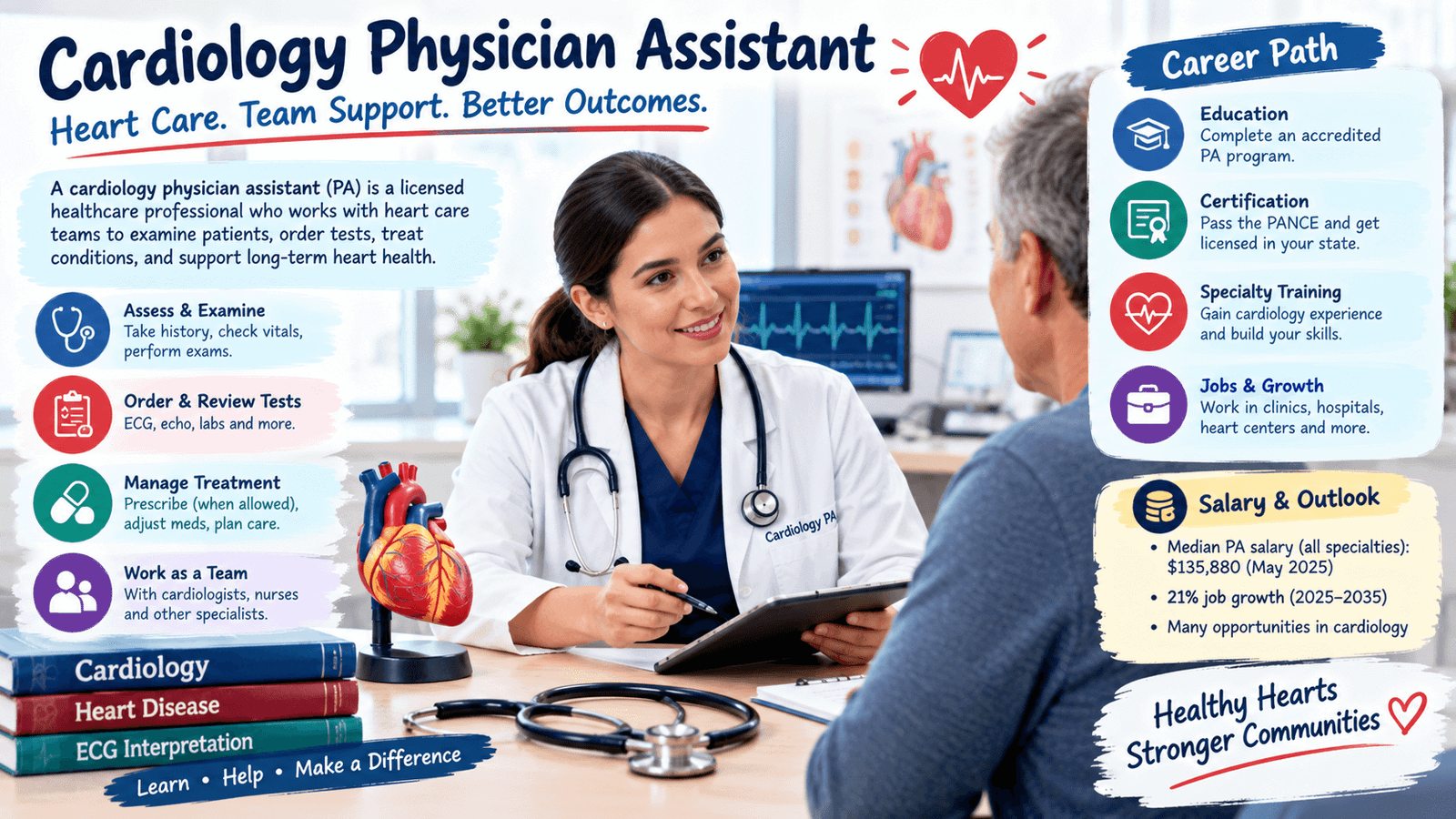

A cardiology physician assistant is a licensed clinician who works with a heart care team. They can examine patients, order tests, treat problems, and help manage care. Their exact duties depend on state law, training, and the practice where they work.
A cardiology physician assistant can be your first clinical contact. Imagine you visit a heart clinic for chest pressure or follow-up care.
A PA may greet you and review your history. They may check your heart and lungs. A physician may also review your care as part of the team.
This role can help patients receive timely heart care. It can also give students a path into a heart-focused medical career.
A cardiology physician assistant may work in a clinic, hospital, heart center, or procedure unit. Some work with adults, while others focus on special heart care settings.
You may also wonder about school, certification, jobs, or salary. Those details matter when planning a PA career.
The sections below explain the role in simple terms. They also cover training, daily work, patient care, and career choices.
What Does a Cardiology Physician Assistant Do?
A PA is a licensed medical professional. PAs can practice in many medical specialties. Cardiology is one area where they may build focused experience.
PAs often work with physicians and other health workers. Their exact duties can change by state and workplace.
Common tasks may include:
- Taking a patient’s medical history.
- Performing a physical exam.
- Checking blood pressure and other vital signs.
- Ordering or reviewing medical tests.
- Explaining test results in simple terms.
- Creating or following a treatment plan.
- Prescribing medicines when state law allows.
- Teaching patients about heart health.
- Helping with medical procedures.
- Following patients after treatment.
A cardiology PA may see patients before a physician enters the room. The PA can gather key details and start the visit.
The PA may ask about chest pain, breathing trouble, swelling, or tiredness. They may also ask about medicines and past heart problems.
Some PAs work in outpatient clinics. Others work in hospitals, emergency settings, or procedure areas.
PA Meaning in Cardiology
PA usually means physician assistant or physician associate. Both terms describe the same profession in the United States.
The American Academy of Physician Associates uses the term physician associate. Many patients and job listings still use physician assistant.
Their work also involves team care. A physician, PA, nurse, and other staff may share patient care.
A Simple Patient Example
Maria visits a heart clinic after weeks of shortness of breath. The PA reviews her symptoms and medicines.
Next, the PA examines her and explains the care plan. The PA may order tests after the visit.
A physician may then review the findings with the care team. Maria receives a clear plan for follow-up.
This example shows how a PA can be part of a larger heart care team. It does not mean every clinic follows the same workflow.
How Do You Become a Cardiology PA?
Becoming a PA takes formal education, clinical training, certification, and state licensure. There is no single shortcut for entering the profession.
Most students first complete college coursework and meet program prerequisites. Each PA school sets its own admission rules.
Next, students attend an accredited PA program. These programs include classroom study and supervised clinical training.
Students learn subjects such as anatomy, medicine, diagnosis, treatment, and patient care. Clinical rotations expose students to different areas of medicine.
After graduation, eligible students can apply for the PANCE. This is the Physician Assistant National Certifying Examination.
Passing the PANCE supports national PA certification. A new PA must then meet state licensing rules.
Cardiology PA Requirements
Requirements can vary by program and state. Still, the main path has several common steps.
- Complete the required college education.
- Meet the PA program’s admission requirements.
- Graduate from an ARC-PA accredited PA program.
- Pass the PANCE.
- Apply for state licensure.
- Complete ongoing certification and CME requirements.
ARC-PA sets accreditation standards for PA education programs. Its current standards support broad medical education for entry-level practice.
Cardiology Training After PA School
PA school gives students broad medical training. A PA can then seek a cardiology job or further specialty training.
Some PAs learn through supervised work in a cardiology practice. Others may complete a structured postgraduate program.
Cardiology learning can include heart rhythm care, heart failure, blood pressure care, and imaging. It can also include hospital care and procedures.
A student named James may want a heart-focused career. He can choose a PA program first, then build cardiology experience.
He does not need to choose every cardiology focus before PA school. His clinical rotations and later work can shape his interests.
What Symptoms and Problems Can a Cardiology PA See?
A cardiology PA may see people with many heart-related concerns. The exact patient mix depends on the workplace.
A clinic may see patients with high blood pressure or high cholesterol. Another clinic may focus on heart failure or rhythm problems.
Common symptoms can include:
- Chest pain or pressure.
- Shortness of breath.
- Fast or irregular heartbeat.
- Dizziness or fainting.
- Leg or ankle swelling.
- Unusual tiredness.
- Reduced ability to exercise.
These symptoms can have many causes. A symptom alone cannot confirm a heart condition.
A PA may ask when symptoms started and what makes them better or worse. They may also ask about family history and medicines.
Common Cardiology Problems
Heart teams may care for conditions such as:
- High blood pressure.
- Coronary artery disease.
- Heart failure.
- Atrial fibrillation.
- Other heart rhythm problems.
- Heart valve disease.
- High cholesterol.
- Some forms of chest pain.
The PA’s role can change with each condition. Some patients need long-term follow-up.
Others may need urgent hospital care or a procedure. The PA works within the care team’s plan and state rules.
Another Patient Example
David has a fast heartbeat that comes and goes. He visits a cardiology office for evaluation.
The PA asks about the timing and pattern of his symptoms. The PA may review medicines and order an ECG.
An ECG records the heart’s electrical activity. The results can help the care team decide what comes next.
This does not mean the PA can confirm every cause alone. Heart symptoms often need a full medical review.
How Does a Cardiology PA Check Patients?
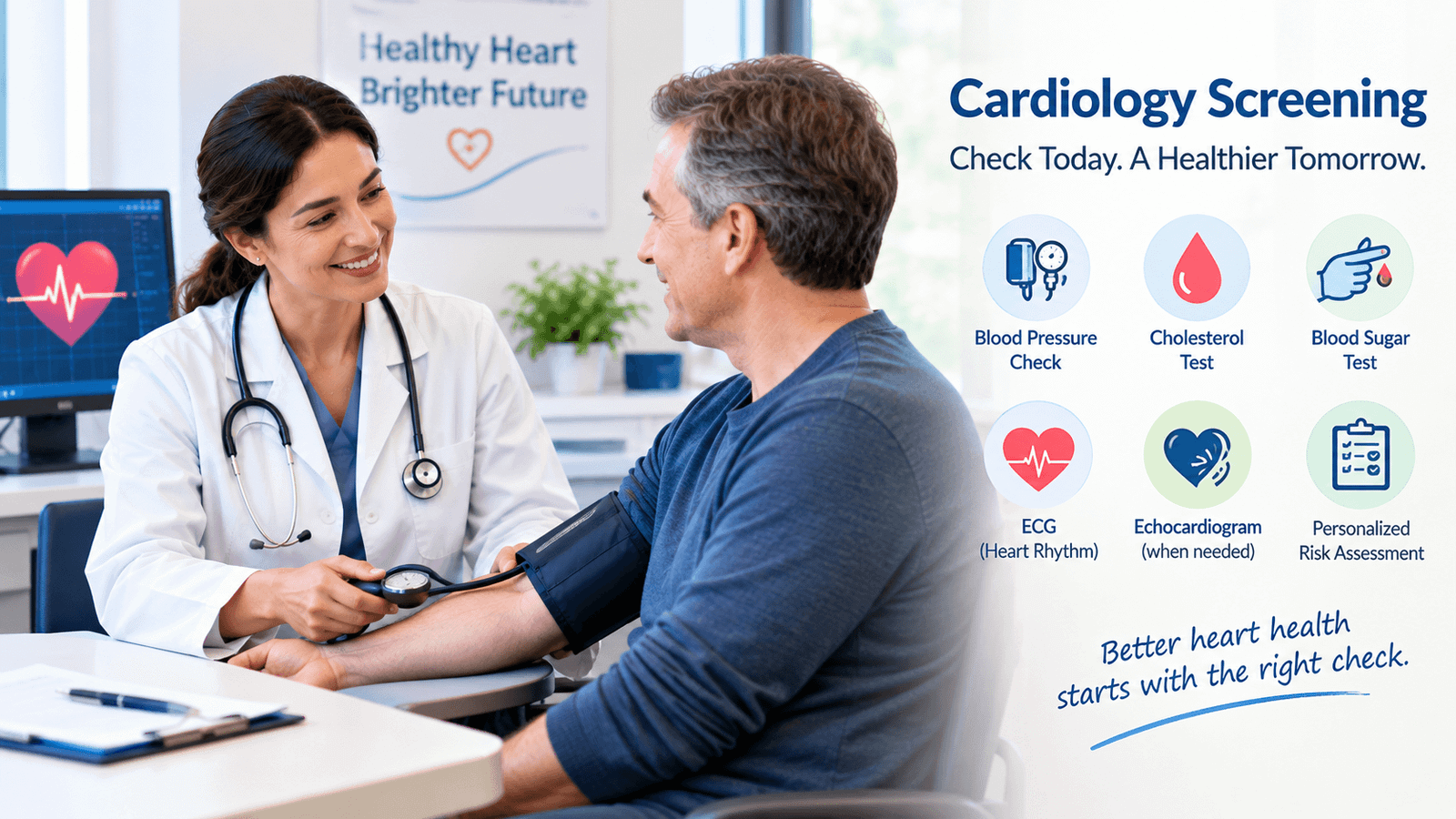
Heart care often starts with a detailed history and physical exam. The PA may ask about symptoms, past illnesses, family history, and medicines.
The PA may also check blood pressure, pulse, breathing, and heart sounds. These steps can help guide the next test.
The care team may use several tests. The right test depends on the patient’s symptoms and medical history.
| Test | Main purpose | What it may show |
| ECG | Records heart signals | Rhythm and electrical changes |
| Echocardiogram | Uses sound waves | Heart structure and movement |
| Stress test | Checks the heart during activity | Changes linked with exertion |
| Blood tests | Measures substances in blood | Clues about heart or health problems |
A cardiology PA may order or review tests within the legal scope of practice. A physician or other specialist may also review results.
What Happens During a Heart Visit?
A first visit may begin with questions about your symptoms. Bring a list of medicines, allergies, and major health problems.
The PA may perform a physical exam. They may then explain which tests could help.
You can ask why a test is needed. You can also ask when and how you will receive results.
Why Team Care Matters
Heart care can involve several health professionals. Each person may handle a different part of the patient’s care.
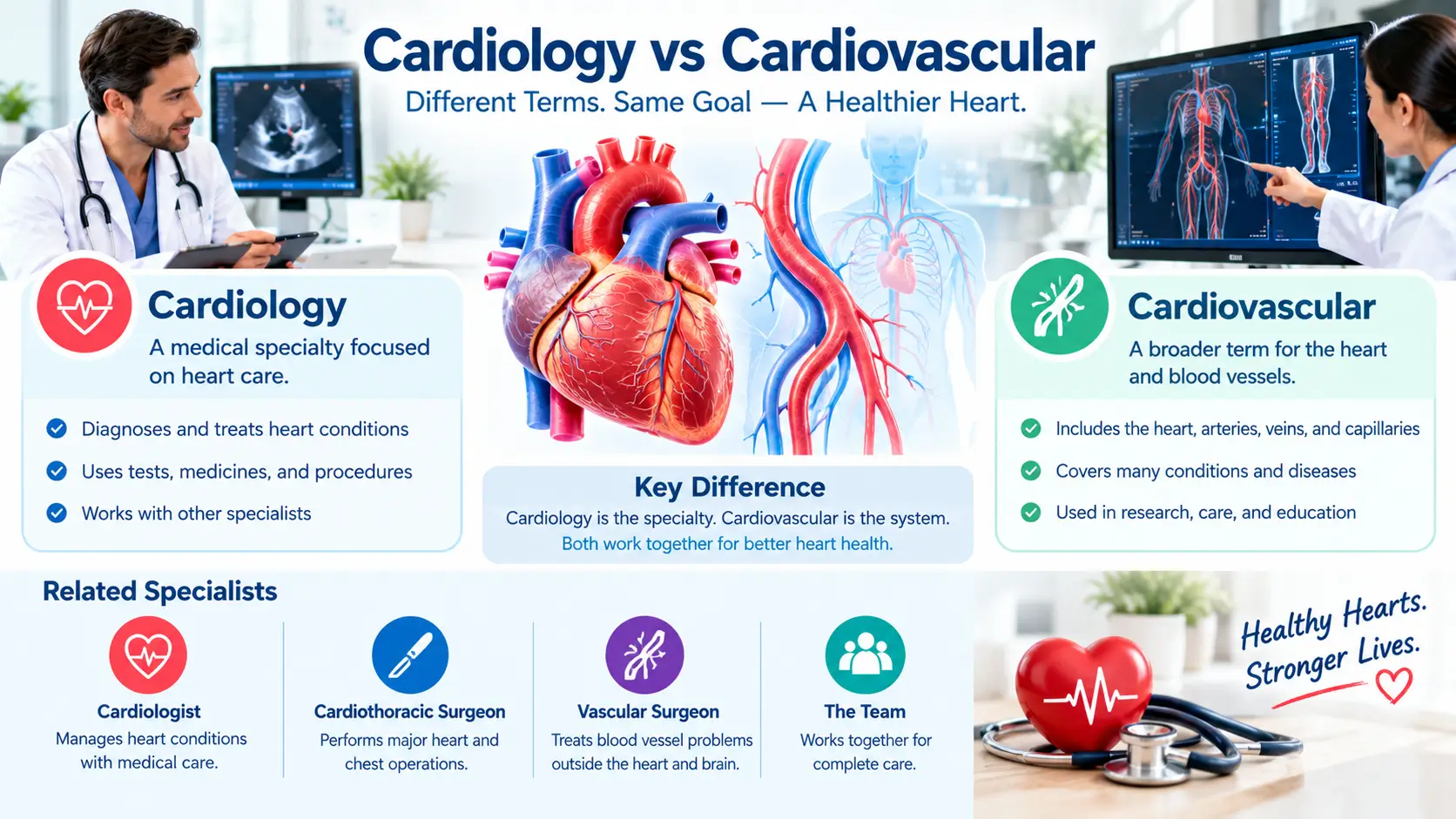
A PA may manage follow-up visits. A cardiologist may handle complex cases or procedures.
Nurses, technicians, pharmacists, and other staff may also support care. Team roles vary by clinic and state.
The American College of Cardiology and American Heart Association publish heart care guidance. Clinicians may use it with patient needs and local rules.
What Treatment and Management Can a Cardiology PA Provide?
Treatment depends on the patient’s condition and care plan. A PA may help start, adjust, or monitor treatment within their legal scope.
Treatment can include medicine, lifestyle changes, procedures, or follow-up care. Some patients need more than one approach.
Medicines
A PA may prescribe medicines when state law and workplace rules allow. Common heart medicines include drugs for blood pressure or cholesterol.
Other medicines may help control heart rhythm or reduce certain risks. Patients should take medicines only as directed by their care team.
Never stop a heart medicine without medical advice. Some medicines can cause problems when stopped suddenly.
Follow-Up Care
Many heart problems need regular visits. A PA may check symptoms, blood pressure, medicine effects, and test results.
The PA may also help patients understand lifestyle changes. These can include activity, food choices, sleep, and smoking cessation.
Procedures and Hospital Care
Some cardiology PAs assist with procedures. Their exact role depends on training, state law, and the medical center.
They may help prepare patients before a procedure. They may also support care after the procedure.
Hospital-based PAs can follow patients during admission. They may help with daily assessments and discharge planning.
How Can You Prepare for a Career in Cardiology?
Students who want cardiology should build strong basic medical knowledge. Good communication skills also matter because patients need clear explanations.
PA school covers broad medicine before specialty interests become more focused. Students can use clinical rotations to learn about different fields.
School and Study Tips
Start by checking accredited PA programs. Review each school’s prerequisites, costs, schedule, and admission rules.
Then plan your college courses carefully. Keep records of grades and required experience.
During PA school, focus on core medical subjects. Learn how symptoms connect with tests and treatment choices.
You can also read cardiology books and trusted medical resources. These can support study but should not replace supervised clinical learning.
Certification and Continuing Education
After graduation, a PA can seek PANCE eligibility. NCCPA sets national certification rules.
Certification does not end the learning process. Certified PAs must complete ongoing CME and certification requirements.
NCCPA currently uses a 10-year certification maintenance cycle. Each two-year cycle includes 100 CME credits.
PAs must also meet the recertification exam requirement. NCCPA offers PANRE and PANRE-LA options for eligible PAs.
State license rules can add other requirements. Students and working PAs should check their state board.
Finding Cardiology PA Jobs
Cardiology jobs can appear in many care settings. Search terms can include cardiology PA, cardiovascular PA, and heart clinic PA.
Jobs may involve outpatient care, hospital work, or procedures. Some roles focus on one cardiology area.
Read the job description closely. Check the schedule, duties, required experience, and license rules.
Ask about physician support and the patient population. Those details can shape your daily work.
Salary and Career Outlook
People often search for cardiology physician assistant salary information. There is no single national salary for every cardiology PA.
The U.S. Bureau of Labor Statistics reports pay for physician assistants broadly. In May 2025, the median annual wage was $135,880.
Pay can vary by setting, location, experience, and employer. Cardiology-specific offers may also differ from the national PA figure.
BLS projects 21% employment growth for physician assistants from 2025 to 2035. It also projects about 11,500 openings each year during that period.
These numbers describe the PA occupation as a whole. They do not guarantee a specific cardiology salary or job.
When Should You See a Doctor About Heart Symptoms?
A PA can provide medical care, but serious symptoms may need urgent attention. Do not wait for a routine visit during a medical emergency.
Call 911 for signs that may point to a heart attack. These can include chest pressure, severe breathing trouble, or other sudden symptoms.
The American Heart Association also advises urgent action for possible stroke signs. Sudden weakness, speech trouble, or facial drooping can be warning signs.
Do Not Wait for a Routine Appointment
Seek emergency help for sudden or severe symptoms. Do not drive yourself if emergency services are needed.
Possible warning signs include:
- Severe chest pressure or pain.
- Trouble breathing.
- Fainting or sudden loss of consciousness.
- Sudden weakness on one side.
- Sudden trouble speaking.
- Sudden confusion.
- New severe symptoms that feel unusual.
Symptoms can vary from person to person. Some heart attacks may cause less typical symptoms.
If symptoms worry you, contact a healthcare professional. Emergency symptoms need faster action than routine concerns.
FAQ About Cardiology PAs
Q: What is the PA abbreviation in cardiology?
A: PA means physician assistant or physician associate. Both terms refer to the same profession in the United States. A PA can provide medical care within state laws and workplace rules.
Q: What schooling does a cardiology PA need?
A: A PA must graduate from an accredited PA program. The student then needs certification and state licensing. Cardiology experience usually develops during clinical training or later employment.
Q: What are the main cardiology PA requirements?
A: Common requirements include accredited PA education, PANCE certification, and state licensure. Individual schools and states may add other requirements. Always check current rules before applying.
Q: Is there a cardiology PA certification?
A: National PA certification comes through NCCPA. Cardiology-focused experience does not replace national PA certification. Some PAs may pursue extra specialty training or credentials later.
Q: How much does a cardiology physician assistant make?
A: There is no single national cardiology-only salary figure. BLS reports a $135,880 median annual wage for all physician assistants in May 2025. Location, employer, experience, and practice setting can change pay.
Q: Where can I find cardiology PA jobs?
A: Look at hospital systems, heart clinics, medical groups, and PA job boards. Search for both cardiology and cardiovascular PA roles. Review each listing for license and experience requirements.
Q: Can a cardiology PA diagnose heart problems?
A: PAs can diagnose and treat illness within their scope and state laws. Complex cases may involve a cardiologist or other specialists. A PA does not replace a full medical evaluation when symptoms are serious.
Conclusion
A cardiology physician assistant can play an important role in heart care. PAs can examine patients, order tests, manage treatment, and provide follow-up care.
The career starts with an accredited PA program. Certification and state licensure are also part of the path.
Salary varies by job, location, experience, and employer. National PA wage data can provide useful context, but it is not cardiology-specific.
Patients can also benefit from understanding the PA’s role. A PA may be one part of a larger heart care team.
If you have heart symptoms, seek the right level of care. Talk to a cardiologist or healthcare professional about your concerns.
Medically reviewed for accuracy. Always consult a licensed cardiologist for personal advice.