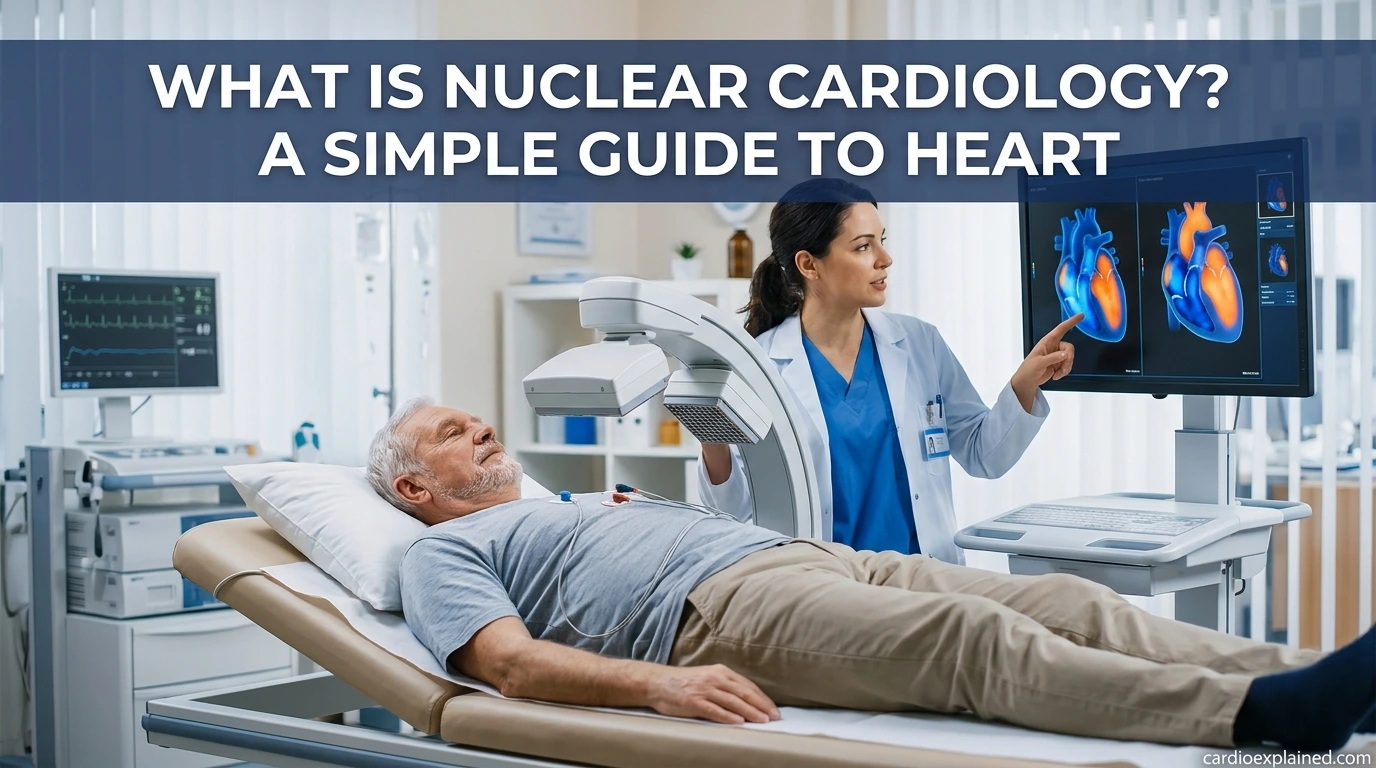

What is nuclear cardiology? Nuclear cardiology is a heart imaging test that uses a small amount of safe radioactive material to show how blood flows through your heart. It helps doctors find heart disease, check heart function, and plan the best care for each person.
Have you ever felt chest pain or shortness of breath? Maybe your doctor wants to learn more about your heart. Many people worry when they hear about special heart tests. That is normal. The good news is that what is nuclear cardiology has a simple answer. It is a safe imaging test that helps doctors see how well your heart works.
The test gives more than a picture. It shows how blood moves through your heart muscle. This helps doctors spot problems that other tests may miss. Many people have this test before heart treatment. Others have it to find the cause of chest pain or tiredness. Learning how the test works can help you feel calmer before your visit.
❤️ What Is Nuclear Cardiology?
Nuclear cardiology is a type of heart imaging. It uses a very small amount of radioactive tracer. A tracer is a safe material that gives off tiny signals. A special camera picks up those signals and creates clear images of your heart.
The test helps doctors see if your heart gets enough blood. It also shows how well your heart pumps blood. These details help doctors make better care plans.
Many hospitals and heart centers across the United States use this test every day. Heart specialists often choose it when they need more details than a regular electrocardiogram (ECG) or ultrasound can provide.
The radioactive tracer leaves your body over time. In many cases, you pass it through your urine within a day or two. Doctors use only a very small amount. They follow safety rules from trusted medical groups such as the American Heart Association (AHA) and the American College of Cardiology (ACC).
Why Doctors Recommend This Test
A doctor may suggest this test for several reasons.
- 🩺 Check the cause of chest pain.
- 🩺 Look for blocked heart arteries.
- 🩺 See how well blood reaches the heart muscle.
- 🩺 Measure how well the heart pumps.
- 🩺 Check the results of heart treatment.
- 🩺 Learn if heart muscle has lasting damage after a heart attack.
The test gives helpful answers without surgery. That is why many doctors use it before deciding on other treatments.
Who May Need Nuclear Cardiology?
Your doctor may recommend this test if you have signs of heart disease.
Common reasons include:
- ✅ Chest discomfort during activity.
- ✅ Shortness of breath.
- ✅ Feeling very tired without a clear reason.
- ✅ An abnormal stress test.
- ✅ A family history of heart disease with new symptoms.
Some people also need the test after a heart attack. Others have it before major surgery to check heart health.
A Real-Life Example
Mark is 61 years old. He noticed chest pressure while walking his dog. His ECG looked almost normal. His doctor wanted more answers. A nuclear cardiology test showed one part of his heart was getting less blood during exercise. His care team then started treatment before the problem became more serious.
Stories like Mark’s happen every day. The test often helps doctors find hidden heart problems early.
🩺 How Does What Is Nuclear Cardiology Help Doctors?
The answer starts with blood flow. A healthy heart needs a steady blood supply. When arteries become narrow, less blood reaches the heart muscle. Nuclear cardiology helps doctors see those changes.
The test usually has two parts. One shows your heart at rest. The other shows your heart during stress. Stress may come from exercise or from medicine that makes your heart work harder for a short time.
Doctors compare both sets of images. This helps them learn if blood flow changes during activity.
The Main Steps
Most nuclear cardiology tests follow these steps.
- A healthcare worker places a small IV into your arm.
- The tracer enters your bloodstream.
- You wait while the tracer reaches your heart.
- A special camera takes detailed pictures.
- You exercise on a treadmill or receive stress medicine.
- More pictures show your heart during stress.
- A heart doctor studies both image sets.
The full visit often lasts several hours because of waiting times between images. The camera itself does not hurt. Many people say the hardest part is simply waiting.
What the Images Can Show
The images give doctors important information.
| Finding | What It May Mean | How It Helps |
| Normal blood flow | Healthy circulation | Heart disease is less likely |
| Reduced blood flow during stress | Narrow heart artery | More testing or treatment may help |
| Reduced blood flow at rest and stress | Old heart muscle damage | Guides long-term care |
| Weak pumping action | Lower heart function | Helps plan medicines or other treatment |
Doctors do not rely on this test alone. They also review your symptoms, medical history, blood pressure, blood tests, ECG results, and other heart exams.
Safe Technology With Years of Use
Many people feel nervous because the test includes radiation. That concern is understandable. The amount used is small and carefully controlled.
Medical teams follow national safety standards. They choose the lowest dose that still gives clear images. For many patients, the benefit of finding heart disease early is much greater than the small radiation risk.
Another Patient Story
Linda is 54 years old. She often felt out of breath while climbing stairs. Her regular heart tests looked normal. Her doctor ordered a nuclear cardiology scan. The images showed reduced blood flow during activity. She later received treatment that helped lower her symptoms and reduce her heart risk.
Many patients say they feel relieved after getting clear answers. Even when the test finds a problem, early treatment often leads to better care.
📋 Signs That May Lead to a Nuclear Cardiology Test
Doctors do not order this test for everyone. They usually suggest it when symptoms or other test results raise concern.
Many heart problems start with mild signs. Some people notice them only during exercise. Others feel them while resting.
Common Symptoms
Watch for these symptoms:
- ❤️ Chest pain or pressure
- ❤️ Shortness of breath
- ❤️ Fast or uneven heartbeat
- ❤️ Feeling very tired
- ❤️ Dizziness or lightheadedness
- ❤️ Pain that spreads to the arm, jaw, or back
These symptoms do not always mean heart disease. Many other health problems can cause them. Your doctor will look at your full health history before choosing the right test.
Risk Factors Doctors Consider
Some people have a higher chance of heart disease.
Common risk factors include:
- ✅ High blood pressure
- ✅ High cholesterol
- ✅ Diabetes
- ✅ Smoking
- ✅ Obesity
- ✅ Little physical activity
- ✅ Family history of heart disease
- ✅ Older age
If you have several risk factors, your doctor may recommend more heart testing even if your symptoms seem mild.
A Real-Life Example
Sandra is 67 years old. She has diabetes and high blood pressure. She noticed mild chest pressure while shopping. Her doctor wanted to check her heart before the symptoms became worse. A nuclear cardiology test helped rule out a major blockage and guided her treatment plan.
Many patients feel better after getting clear answers. Knowing what is happening often reduces worry.
⏱️ How Doctors Check Your Heart With Nuclear Cardiology
Doctors use several steps to decide if this test is right for you. They do not depend on one test alone.
The what is nuclear cardiology question often comes up before patients schedule their appointment. Understanding each step can make the experience less stressful.
Before the Test
Your healthcare team will explain how to prepare.
They may ask you to:
- 📋 Avoid caffeine for 24 hours.
- 📋 Stop eating for several hours.
- 📋 Wear comfortable clothes.
- 📋 Bring a list of your medicines.
- 📋 Ask whether you should take your usual medicines.
Always follow your doctor’s instructions. Preparation may differ based on your health.
During the Test
Most people find the test easy to complete.
A healthcare worker places an IV into your arm. The tracer enters your bloodstream. You then wait while it reaches your heart.
Next, the imaging camera takes pictures. The camera moves around your chest. It does not touch you tightly or cause pain.
After the first images, your heart works harder.
This usually happens in one of two ways:
- Walking on a treadmill.
- Receiving medicine that briefly increases heart workload.
Once your heart reaches the target level, another small tracer dose may be given. The camera then takes another set of pictures.
After the Test
Most people go home the same day.
Your doctor may suggest drinking extra water. This helps your body remove the tracer faster.
Many patients return to normal activities right away. Your doctor will tell you if any special steps are needed.
How Long Does It Take?
The visit often lasts two to four hours.
The scan itself usually takes less time. Most of the visit involves waiting between imaging sessions.
🩺 Understanding Your Nuclear Cardiology Results
After your test, a heart specialist studies the images.
The doctor compares blood flow during rest and stress. This helps show how well your heart works.
Possible Results
Your report may show:
- ✅ Normal blood flow
- ✅ Reduced blood flow during stress
- ✅ Reduced blood flow during both rest and stress
- ✅ Changes in heart pumping strength
Each result tells a different story.
A normal scan often means your heart receives enough blood.
Reduced blood flow during stress may suggest a narrowed artery.
Reduced blood flow at both rest and stress may point to old heart muscle damage from a past heart attack.
A weak pumping result may help explain symptoms like tiredness or shortness of breath.
Your Doctor Looks at the Whole Picture
Doctors never depend on one scan by itself.
They also review:
- Blood pressure
- Blood tests
- ECG results
- Medical history
- Family history
- Current symptoms
- Physical examination
This complete review helps doctors make the safest decision.
Comparing Nuclear Cardiology With Other Heart Tests
| Test | Main Purpose | What It Shows |
| Electrocardiogram (ECG) | Records heart rhythm | Electrical activity |
| Echocardiogram | Uses sound waves | Heart structure and movement |
| Nuclear cardiology scan | Shows blood flow | Blood supply and pumping function |
| CT heart scan | Creates detailed images | Heart anatomy and calcium buildup |
Each test answers different questions.
Many patients need only one test. Others may benefit from more than one, depending on their symptoms.
The American Heart Association (AHA) and American College of Cardiology (ACC) support choosing heart tests based on each person’s needs. Your doctor will recommend the test that best fits your situation.
✅ How Nuclear Cardiology Helps Guide Treatment
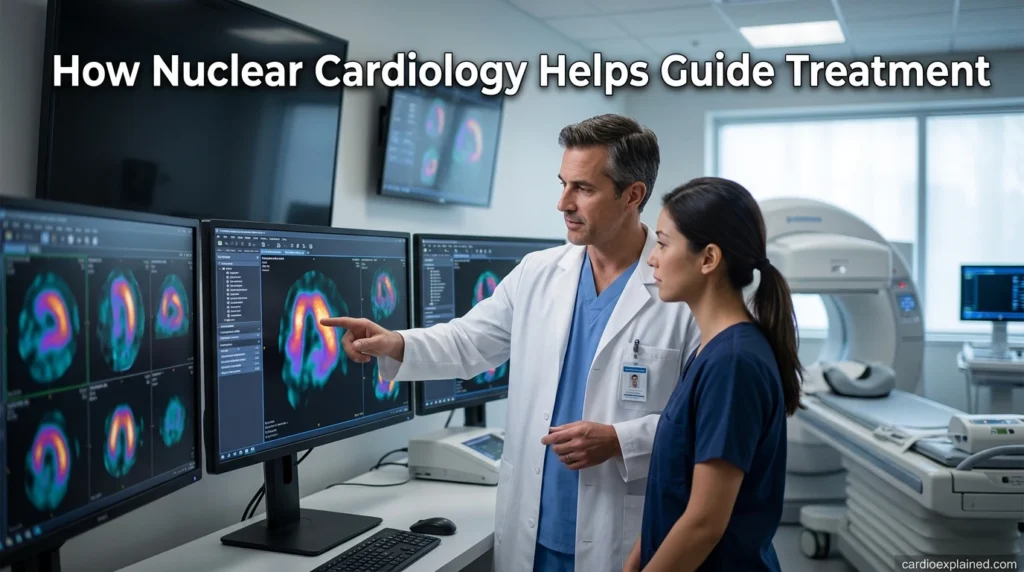
A nuclear cardiology test does not treat heart disease. It gives doctors helpful information. They use those details to choose the best care plan.
The right treatment depends on your symptoms, test results, and overall health.
If Your Results Are Normal
A normal result often means your heart gets enough blood.
Your doctor may recommend:
- ✅ Regular checkups
- ✅ Heart-healthy eating
- ✅ Daily physical activity
- ✅ Managing blood pressure
- ✅ Keeping cholesterol in a healthy range
You may not need more heart testing unless your symptoms change.
If the Test Shows Reduced Blood Flow
Your doctor may suggest more treatment.
Options may include:
- Medicines to improve blood flow
- Medicine to lower blood pressure
- Cholesterol-lowering medicine
- More heart tests
- A heart procedure if needed
Some people may need a procedure called angioplasty. This opens a narrowed heart artery. Others may need heart bypass surgery if several arteries are blocked.
Your doctor will explain the safest option for you.
If Heart Damage Is Found
The test may show damage from a past heart attack.
Even then, many people live active lives with good care.
Treatment may include:
- Medicines
- Regular exercise plans
- Cardiac rehabilitation, also called a supervised heart recovery program
- Healthy lifestyle changes
- Regular follow-up visits
A Patient Example
James is 70 years old. He became tired after short walks. His scan showed reduced blood flow in one part of his heart. His cardiologist adjusted his medicines instead of rushing into surgery. A few months later, James felt stronger and could enjoy longer walks with his family.
Every patient is different. Your care plan should match your personal needs.
❤️ Healthy Habits That Protect Your Heart
You cannot control every heart problem. Still, healthy habits can lower your risk.
Small daily changes often make a big difference over time.
Eat Heart-Friendly Foods
Choose foods such as:
- 🥗 Fruits
- 🥗 Vegetables
- 🥗 Whole grains
- 🥗 Beans
- 🥗 Fish
- 🥗 Nuts
Try to limit:
- Sugary drinks
- Fried foods
- Foods high in salt
- Foods with lots of saturated fat
Stay Active
Most adults benefit from regular exercise.
Walking, swimming, or cycling are good choices.
Ask your doctor before starting a new exercise plan if you have heart symptoms.
Keep Health Numbers Under Control
Work with your doctor to manage:
- Blood pressure
- Blood sugar
- Cholesterol
- Body weight
Regular checkups help find problems early.
Avoid Smoking
Smoking damages blood vessels.
Quitting smoking can improve heart health at almost any age.
If quitting feels hard, ask your healthcare team for support.
Manage Stress
Long-term stress may affect heart health.
Simple habits can help:
- Take slow, deep breaths.
- Spend time with family.
- Get enough sleep.
- Enjoy relaxing hobbies.
Good mental health supports a healthy heart.
⚠️ When Should You See a Doctor?
Do not ignore new heart symptoms.
Make an appointment if you notice:
- Chest discomfort during activity
- Shortness of breath
- Fast or irregular heartbeat
- Unusual tiredness
- Dizziness that happens often
These symptoms do not always mean heart disease. Still, they deserve medical attention.
Call Emergency Services Right Away
Seek emergency care if you have:
- ⚠️ Severe chest pain
- ⚠️ Chest pain lasting several minutes
- ⚠️ Trouble breathing
- ⚠️ Fainting
- ⚠️ Pain spreading to the arm, jaw, neck, or back
Quick treatment may save heart muscle and even save your life.
Do not drive yourself if symptoms are severe. Call emergency medical services.
❓ Frequently Asked Questions
Q: Is what is nuclear cardiology a safe test?
A: Yes. Doctors consider nuclear cardiology safe for most people. The radioactive tracer uses a very small dose. Your healthcare team follows strict safety guidelines to keep exposure as low as possible.
Q: Does a nuclear cardiology scan hurt?
A: No. Most people feel only a small pinch when the IV is placed. The camera does not cause pain. Many patients say the test is easier than they expected.
Q: How long does a nuclear cardiology test take?
A: Most visits last between two and four hours. Waiting between image sessions takes much of that time. The actual scanning usually takes much less time.
Q: Can I eat before the test?
A: It depends on your doctor’s instructions. Many people need to avoid food for several hours. You may also need to avoid caffeine before the test.
Q: Will the radiation stay in my body?
A: No. Your body removes the tracer over time. Drinking water after the test may help remove it faster. Most of the tracer leaves within one or two days.
Q: Can nuclear cardiology detect blocked arteries?
A: Yes, it can help detect reduced blood flow caused by narrowed or blocked heart arteries. The test does not always show the exact blockage. Your doctor may order other tests if more detail is needed.
Q: Who should not have a nuclear cardiology test?
A: Some people may need a different test. Pregnancy, certain medical conditions, or allergies may affect the choice. Always tell your healthcare team about your health history before the test.
Final Thoughts
Understanding what is nuclear cardiology can help you feel more prepared if your doctor recommends this test. It uses safe imaging to show how well blood flows through your heart and how well your heart pumps. These details help doctors find heart problems early and choose the right treatment for each person.
Many people feel nervous before their first heart scan. That feeling is normal. Asking questions and knowing what to expect can make the experience easier. If you have chest pain, shortness of breath, or other heart concerns, talk to a cardiologist. Early care may help protect your heart and your future health.