
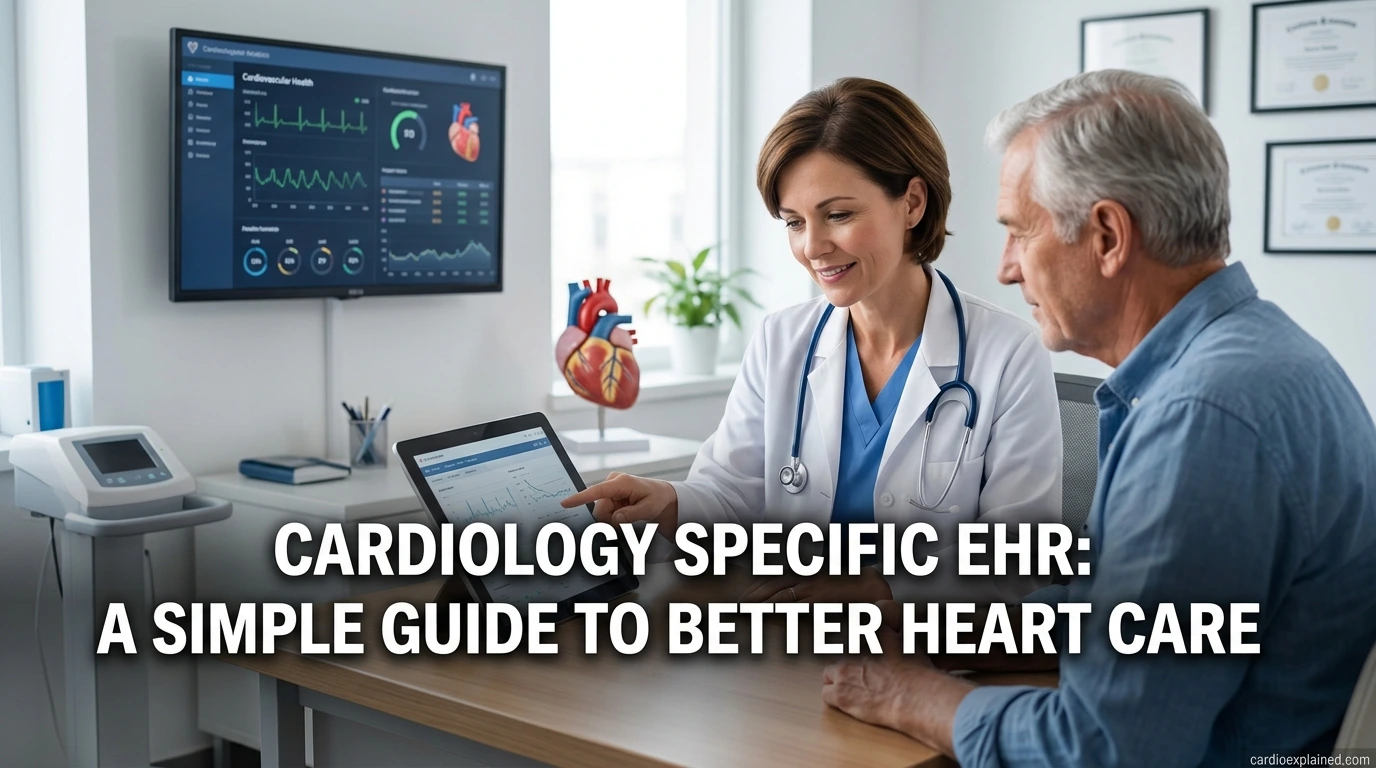

Cardiology specific EHR is a digital health record made for heart care. It helps cardiologists store, find, and share heart health information quickly. Doctors use it to support safe care, better decisions, and smoother patient visits.
Have you ever wondered how a heart doctor remembers every test and visit? Most people have many records over the years. These records can include blood pressure checks, heart scans, lab work, and medicines. A cardiology specific EHR helps keep all this information in one safe place. That makes care easier for both doctors and patients.
Heart care often lasts for many years. You may visit different clinics or need several tests. Good records help your care team stay on the same page. This can lower mistakes and save time. You will also learn how these systems help during office visits, what features they offer, and why they matter for better heart health. By the end, you will better understand how digital records support modern heart care.
❤️ What Is a Cardiology Specific EHR?
A cardiology specific electronic health record, or EHR, is software built for heart doctors. An EHR is a digital version of your medical record. A cardiology system adds tools made for heart care.
Unlike a general EHR, this system focuses on heart problems. It helps doctors manage heart tests, heart images, and long-term care.
How It Differs From a General EHR
A general EHR works for many medical fields. It stores basic health records for all patients.
A cardiology system adds special heart care features. These features help doctors work faster and make better choices.
Some common tools include:
- 🩺 Heart test reports
- 🩺 Electrocardiogram (ECG) records. An ECG checks your heart’s electrical activity.
- 🩺 Echocardiogram reports. An echocardiogram uses sound waves to create heart images.
- 🩺 Heart catheterization notes. This test checks blood flow inside the heart.
- 🩺 Medicine tracking
- 🩺 Follow-up reminders
These tools save time during busy clinic days.
Why Heart Doctors Need Special Software
Heart care creates many records. A patient may need blood tests, scans, stress tests, and medicine changes.
A special system keeps these records together. The doctor can review them within seconds.
For example, a patient with heart failure may visit every few months. Heart failure means the heart cannot pump blood well enough. The doctor can compare weight, blood pressure, and medicine changes during each visit. This helps guide treatment.
Many heart clinics also work with hospitals. A shared record helps both teams see the same information.
Better Teamwork
Heart care often includes many healthcare workers.
These may include:
- ✅ Cardiologists
- ✅ Primary care doctors
- ✅ Nurses
- ✅ Medical assistants
- ✅ Imaging specialists
- ✅ Pharmacists
Everyone can review updated information. This may reduce confusion and improve communication.
A Better Patient Experience
Many patients feel nervous before their first heart visit. They often worry about repeating their medical history.
A digital record makes this easier.
The doctor may already know:
- Previous heart tests
- Current medicines
- Allergies
- Past surgeries
- Family history
This leaves more time for questions and care instead of paperwork.
📋 Why Heart Clinics Need a Cardiology Specific EHR
Heart disease often needs lifelong care. Patients return many times over several years.
Doctors need quick access to old records. Missing information may delay treatment.
A cardiology specific EHR helps organize every visit from the first appointment through long-term follow-up.
Many Heart Conditions Need Long-Term Tracking
Heart problems often change slowly.
Doctors watch trends over time instead of one visit alone.
Examples include:
- ❤️ High blood pressure
- ❤️ Heart failure
- ❤️ Irregular heartbeat
- ❤️ Coronary artery disease. This happens when heart arteries become narrow.
- ❤️ Heart valve disease
The doctor compares today’s results with older records.
Small changes may guide future care.
It Helps During Busy Clinic Days
Heart clinics often see many patients.
Doctors must review:
- Lab results
- Imaging
- Medicines
- Previous visits
- Hospital records
Searching through paper files takes time.
Digital records place everything in one screen.
This helps visits stay organized.
Patient Story
Maria is 67 years old.
She has high blood pressure and atrial fibrillation. Atrial fibrillation is an uneven heartbeat.
She visits her cardiologist every six months.
During one visit, the doctor quickly reviewed her past ECG reports and medicine list. The doctor noticed a small rhythm change. Because the records appeared together, the doctor adjusted her medicine before the problem became worse.
Maria left feeling confident because her doctor understood her history.
Better Follow-Up
Heart care rarely ends after one visit.
Patients often need:
- 📅 Repeat blood work
- 📅 Stress tests
- 📅 Heart imaging
- 📅 Medicine reviews
- 📅 Annual checkups
The system reminds staff about future visits.
Patients receive care at the right time.
Support for Standard Care
Many clinics follow guidance from the American Heart Association (AHA) and the American College of Cardiology (ACC).
These groups publish trusted recommendations for heart care.
A good EHR helps doctors record information in ways that match these standards.
That supports safe and consistent care.
🩺 Signs That Good Digital Records Can Help
Patients do not feel symptoms from an EHR itself. Instead, they notice smoother care.
Good records help doctors respond faster and reduce delays.
Fewer Repeated Questions
Most people dislike answering the same questions every visit.
A digital record stores important details.
These include:
- ✅ Current medicines
- ✅ Allergies
- ✅ Past heart procedures
- ✅ Family history
- ✅ Recent hospital visits
The doctor still confirms changes.
The visit becomes faster.
Faster Test Reviews
Heart doctors often order several tests.
These may include:
| Test | Purpose | What It Shows |
| ECG | Checks heart rhythm | Fast or uneven heartbeat |
| Echocardiogram | Creates heart images | Heart size and pumping strength |
| Stress Test | Checks the heart during activity | Blood flow during exercise |
| Blood Test | Looks for heart markers | Signs of heart damage or risk |
When results stay together, doctors compare old and new findings more easily.
Better Medicine Safety
Many heart patients take several medicines.
Examples include:
- Blood pressure medicine
- Cholesterol medicine
- Blood thinners
- Water pills
Blood thinners help prevent blood clots.
Water pills help remove extra fluid.
The system alerts doctors about medicine changes.
It may also warn about drug interactions.
Drug interactions happen when medicines affect each other in harmful ways.
Patient Story
James is 58 years old.
He visited the emergency room with chest pain.
A week later, he saw his cardiologist.
Because the clinic already had his hospital records, the doctor reviewed every test before the visit. James avoided repeating tests. He also understood his treatment plan better.
Better Communication
Patients often ask many questions.
Doctors can quickly review records before answering.
Families also feel more confident when care stays organized.
Good communication builds trust over time.
As more clinics adopt a cardiology specific EHR, patients may notice shorter visits, fewer repeated forms, and better coordination across their care team. These small improvements can make heart care feel less stressful and more personal.
📋 How Doctors Check Heart Health With a Cardiology Specific EHR
Doctors use many tests to learn about your heart. A cardiology specific EHR keeps these results together. This helps doctors compare new and old information.
Heart Tests Doctors May Order
Each test gives different details.
| Test | Purpose | What It Helps Show |
| Electrocardiogram (ECG) | Checks heart rhythm | Fast, slow, or uneven beats |
| Echocardiogram | Creates heart images | Heart size and pumping strength |
| Stress Test | Checks the heart during exercise | Blood flow during activity |
| Cardiac Catheterization | Looks inside heart arteries | Narrow or blocked arteries |
Doctors review these results during your visit.
The EHR places reports in one location.
Easy Access to Your History
Heart care often lasts many years.
Doctors compare today’s results with older visits.
This helps answer questions like:
- ✅ Has blood pressure improved?
- ✅ Is the heart pumping better?
- ✅ Has cholesterol changed?
- ✅ Are medicines working?
Seeing trends helps doctors make better choices.
Better Decisions
Many patients have several health problems.
For example, a person may have diabetes and heart disease.
The doctor reviews medicines, lab work, and heart tests together.
This supports safer care.
Patient Story
David is 72 years old.
He had a heart attack five years ago.
During a follow-up visit, his cardiologist reviewed old scans and recent blood tests in minutes. The doctor noticed steady improvement and kept the treatment plan unchanged.
David felt happy because he understood his progress.
❤️ Treatment and Daily Management
A cardiology specific EHR does not treat heart disease.
Your healthcare team provides treatment.
The EHR helps doctors organize that care.
Medicine Management
Many heart patients take medicine every day.
The EHR keeps an updated medicine list.
Doctors can quickly check:
- 💊 Current medicines
- 💊 New prescriptions
- 💊 Allergies
- 💊 Possible medicine interactions
This helps lower mistakes.
Planning Future Care
Heart care often includes several visits.
Doctors may schedule:
- 📅 Blood tests
- 📅 Imaging
- 📅 Follow-up visits
- 📅 Lifestyle reviews
The system reminds staff when care is due.
Patients also receive reminders in many clinics.
Helping During Emergencies
Sometimes patients need hospital care.
Hospital doctors can often review earlier records.
This helps them understand:
- Previous heart procedures
- Current medicines
- Recent test results
- Allergies
Fast information may support faster decisions.
Working Together
Heart care involves many people.
These may include:
- Cardiologists
- Family doctors
- Nurses
- Pharmacists
- Imaging teams
Shared records help everyone stay informed.
✅ Healthy Habits That Support Heart Care

Technology helps doctors.
Healthy habits help patients.
Together they support better heart health.
Eat Heart-Healthy Foods
Choose foods that support your heart.
Good choices include:
- 🥗 Fruits
- 🥗 Vegetables
- 🥗 Whole grains
- 🥗 Beans
- 🥗 Fish
- 🥗 Nuts
Try to limit:
- Sugary drinks
- Fried foods
- Too much salt
- Processed snacks
Stay Active
Ask your doctor what activity fits your health.
Many adults benefit from regular walking.
Even short walks can help.
Start slowly if needed.
Take Medicines as Directed
Never stop heart medicine without talking to your doctor.
If you miss doses often, tell your care team.
They can help create a simple routine.
Keep Follow-Up Visits
Many patients feel well.
They may think follow-up visits are unnecessary.
Heart disease can change quietly.
Regular visits help doctors find small changes early.
Know Your Numbers
Ask about:
- Blood pressure
- Cholesterol
- Blood sugar
- Weight
Tracking these numbers supports long-term care.
⚠️ When to See a Doctor
Regular heart visits help prevent problems.
Sometimes you need medical care sooner.
Call Your Doctor If You Notice
- ⚠️ New chest discomfort
- ⚠️ More shortness of breath
- ⚠️ Swollen feet or legs
- ⚠️ Fast or uneven heartbeat
- ⚠️ Frequent dizziness
- ⚠️ New fatigue that does not improve
These symptoms may have many causes.
A doctor can decide what they mean.
Get Emergency Help Right Away
Call 911 if you have:
- Severe chest pain
- Trouble breathing
- Fainting
- Sudden weakness
- Trouble speaking
These symptoms may signal a medical emergency.
Do not drive yourself if symptoms are severe.
Patient Story
Linda noticed new swelling in her ankles.
She called her cardiology office the same day.
Her doctor reviewed recent records and adjusted her care plan after an office visit. Early action helped prevent a hospital stay.
❓ Frequently Asked Questions
Q: Does a cardiology specific EHR replace my cardiologist?
A: No. A cardiology specific EHR is only a digital tool. Your cardiologist still examines you, orders tests, and makes treatment decisions. The system simply helps organize your medical information.
Q: Can patients see their own heart records?
A: Yes, in many cases. Many clinics offer secure patient portals. These let you review test results, medicines, and upcoming appointments.
Q: Is my heart information safe in an EHR?
A: Yes. Healthcare organizations use security measures to protect patient records. Only approved healthcare workers should access your information for your care.
Q: Can different doctors share my heart records?
A: Yes, in many cases. Connected healthcare systems may share records securely. This helps your care team work together more easily.
Q: Does an EHR reduce repeated heart tests?
A: Sometimes. When doctors already have recent results, they may not need to repeat certain tests. The decision always depends on your health needs.
Q: Why do heart specialists prefer a cardiology-specific system?
A: These systems include tools made for heart care. Doctors can review ECGs, heart scans, medicines, and follow-up plans more quickly than with many general systems.
Q: Will every heart clinic use the same EHR?
A: No. Different hospitals and clinics may use different software. Many systems can still exchange health information to support patient care.
Conclusion
A cardiology specific EHR helps organize heart care from the first visit through long-term follow-up. It keeps important records together, supports teamwork, and helps doctors review heart tests more quickly. Patients may enjoy smoother visits, better communication, and fewer repeated questions.
While technology supports better care, it never replaces your healthcare team. Talk to a cardiologist if you have any heart concerns or notice new symptoms. Early care and regular follow-up can help protect your heart for years to come.