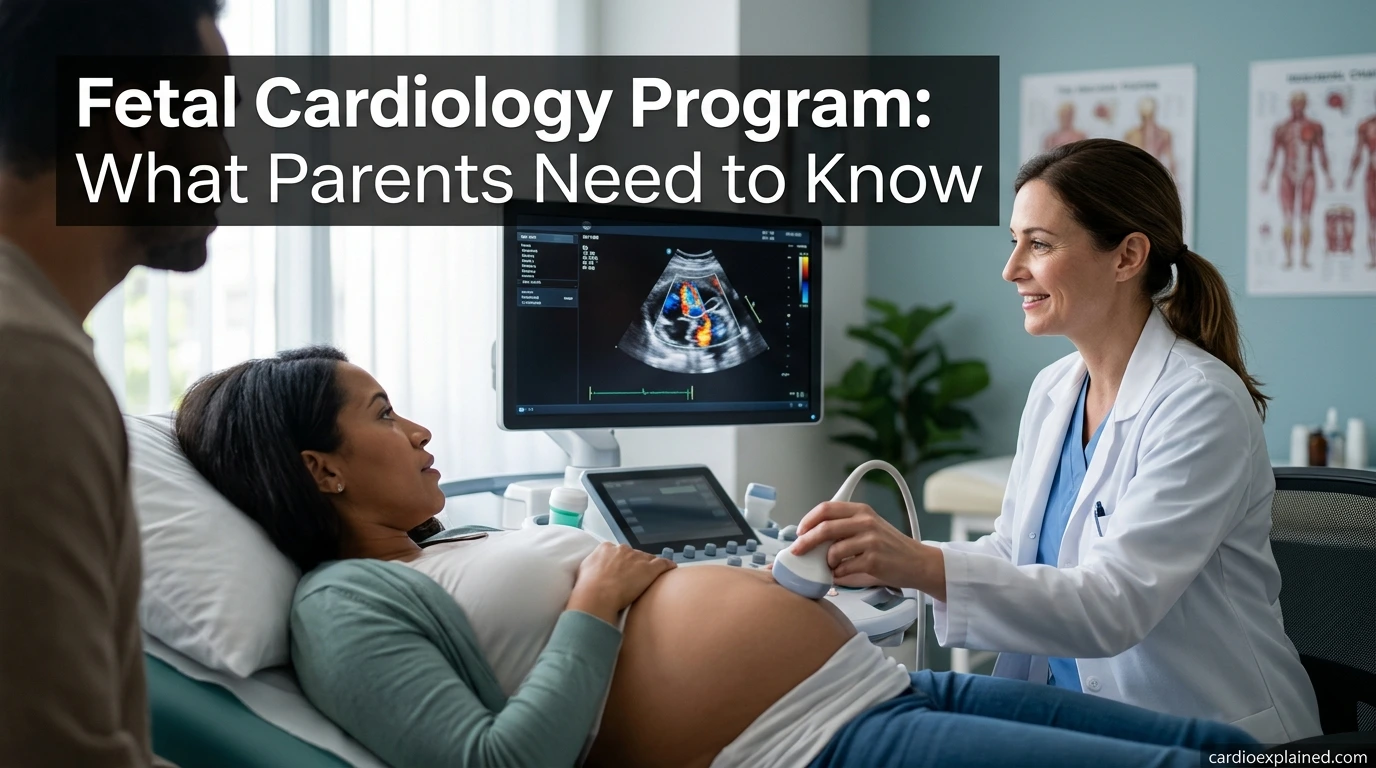

Fetal cardiology program is a special heart care service for unborn babies. It checks a baby’s heart before birth. Doctors use it to find heart problems early and plan safe care for delivery.
Pregnancy can bring joy and worry at the same time. Many parents wonder if their baby is growing well. One common concern is the heart. The heart starts forming very early, and small changes can matter.
A fetal cardiology program helps doctors look at a baby’s heart before birth. This service uses safe sound wave scans. It can show how the heart is formed and how it is working.
In this guide, you will learn how this care works. You will also learn why doctors use it. Many families feel calmer after understanding the process.
❤️ What is a fetal heart care service?
A fetal heart care service focuses on unborn babies. It checks the heart while the baby is still in the womb.
Doctors use a special scan called fetal echocardiogram. This is a detailed ultrasound of the heart. It uses sound waves, not radiation.
The goal is early detection. Early care helps doctors plan safer delivery steps.
Many hospitals in the U.S. follow guidelines from the American Heart Association and American College of Cardiology. These groups support early heart screening when risk is present.
Parents often hear this term during pregnancy scans. It can sound scary at first. But it is only a closer look at the baby’s heart.
🩺 Why doctors recommend heart screening before birth
Doctors may suggest heart checks for many reasons. It does not always mean a problem exists.
Some common reasons include:
- Family history of heart disease
- Abnormal routine ultrasound
- Maternal health conditions like diabetes
- Certain medications during pregnancy
- Genetic conditions found in testing
Many babies sent to a fetal cardiology program are healthy. The visit is just to be safe.
One parent shared that they felt very nervous before the scan. After the visit, they felt relief. The doctor explained everything clearly.
Another family learned about a small heart issue early. This helped them prepare for care right after birth.
🫀 Fetal cardiology program and how it helps families
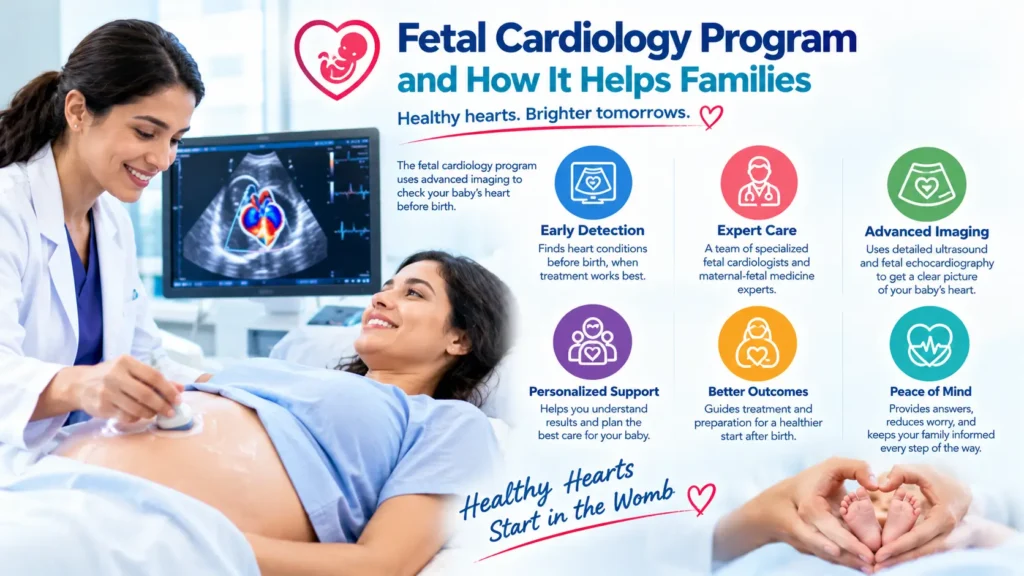
A fetal cardiology program gives full heart support before birth. It connects many specialists in one place.
These may include:
- Fetal heart doctors
- Pregnancy specialists
- Pediatric heart surgeons
- Nurse coordinators
This team works together. They plan care before the baby arrives.
The program helps in many ways:
- Finds heart problems early
- Plans delivery at the right hospital
- Reduces emergency situations
- Guides parents step by step
Emotional support for families
Many parents feel stress during this process. Clear answers help reduce fear.
Doctors often explain results in simple words. They show images of the baby’s heart. This helps parents understand what they see.
Support teams also answer questions. They help families feel more prepared.
📋 What happens during a fetal heart visit
A visit to a fetal heart clinic is simple and safe. It usually takes 30 to 60 minutes.
Here is what you can expect:
- You lie down on a soft exam bed
- Gel is placed on your belly
- A probe moves over your skin
- Images of the baby’s heart appear
- The doctor explains what they see
The scan does not hurt. It feels like a normal pregnancy ultrasound.
Sometimes the baby moves a lot. The doctor may take extra time.
Parents can often watch the screen. Many feel amazed seeing the tiny heart beat.
🧪 Tests used in fetal heart care
Doctors may use different tools to check the baby’s heart. Each test has a simple goal.
| Test Name | What It Does | Safety Level | Time Needed |
| Fetal echocardiogram | Detailed heart scan | Very safe | 30–60 minutes |
| Standard ultrasound | Basic growth check | Very safe | 20–30 minutes |
| Doppler scan | Checks blood flow | Very safe | 10–20 minutes |
The fetal cardiology program may use more than one test. This helps give a full picture.
Doctors follow safe medical rules. They only use tests needed for care.
🧑⚕️ Who works in a fetal heart team
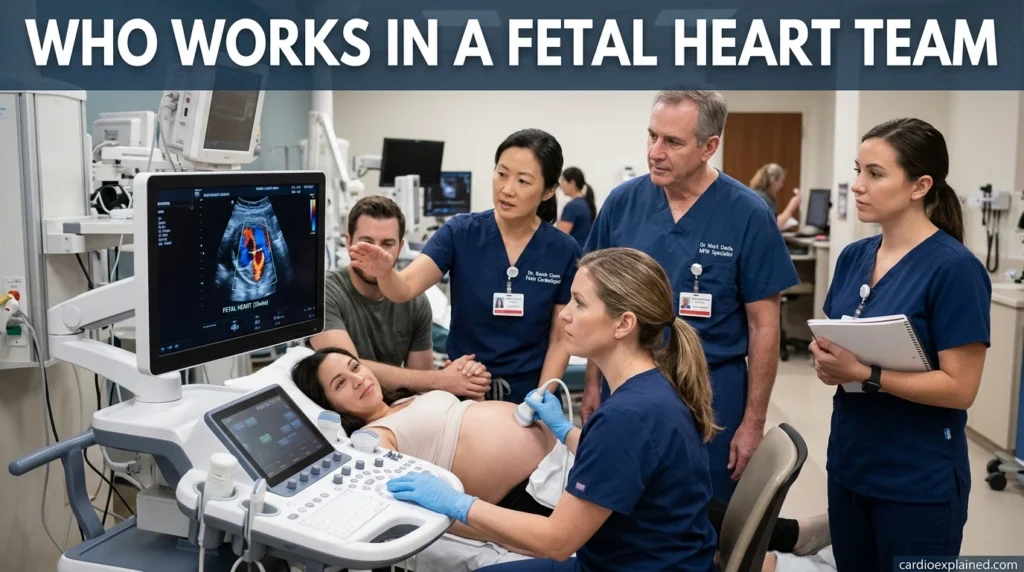
A strong team supports every family. Each person has a clear role.
- ❤️ Fetal cardiologist: Checks baby’s heart
- 🩺 Maternal-fetal doctor: Supports pregnancy health
- 📋 Sonographer: Performs the scan
- 🧑⚕️ Nurse coordinator: Guides appointments
These experts talk with each other. They share test results quickly.
This teamwork helps avoid delays. It also helps parents get answers faster.
💡 Common heart conditions found before birth
Some babies may have heart differences. These are called congenital heart conditions. It means present at birth.
Common types include:
- Small holes in the heart walls
- Valve differences
- Slow or fast blood flow
- Heart chamber size changes
Many of these conditions are treatable after birth.
Doctors may plan special care in advance. This improves safety at delivery.
📊 Simple comparison of prenatal heart care steps
Here is how care may look during pregnancy:
| Stage | What Happens | Goal |
| Early scan | Routine ultrasound | Basic check |
| Referral stage | Fetal cardiology program visit | Detailed heart check |
| Planning stage | Team meeting | Birth plan setup |
| Delivery stage | Specialized hospital care | Safe birth support |
Each step builds on the last one. This helps doctors stay prepared.
🏥 After diagnosis: what comes next
If a heart condition is found, doctors create a plan.
This may include:
- More scans during pregnancy
- Delivery at a heart hospital
- Newborn heart monitoring
- Possible surgery after birth
Not all babies need surgery. Some only need monitoring.
Doctors explain each step slowly. They focus on safety for both parent and baby.
🌈 What parents often feel and experience
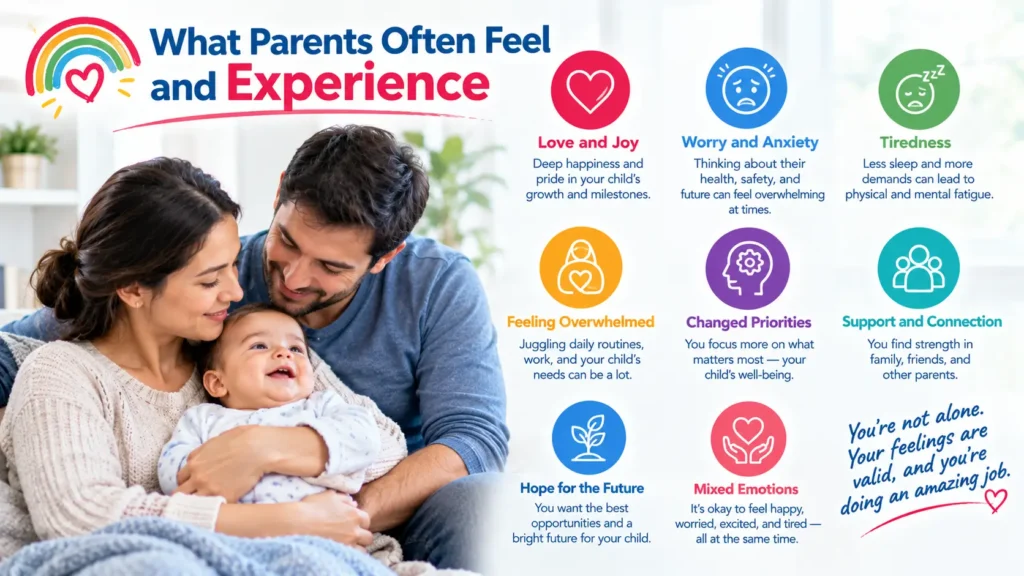
Parents often feel many emotions during this journey.
Some feel fear at first. Others feel confusion.
After meeting the team, many feel calmer. Clear answers help reduce worry.
One mother said she cried before her scan. She later felt relieved after results.
Another couple felt strong support from nurses. They said the process felt less overwhelming.
These feelings are normal. Support is part of care.
⚠️ When to ask about fetal heart screening
Talk to your doctor if you notice:
- Family heart history
- Abnormal ultrasound report
- Health conditions like diabetes
- Concerns during pregnancy scans
Your doctor may suggest a fetal cardiology program for extra safety.
Early checks help planning. They do not always mean a problem exists.
❓ FAQ
Q: What is a fetal cardiology program used for?
A: It checks a baby’s heart before birth. It helps find issues early. It also helps plan safe delivery care.
Q: Is fetal heart scanning safe for the baby?
A: Yes, it is safe in most cases. It uses sound waves, not radiation. It does not harm the baby.
Q: Does every pregnant person need heart screening?
A: No, not everyone needs it. Doctors suggest it only when risk is higher or scans show concerns.
Q: How long does a fetal heart scan take?
A: It usually takes 30 to 60 minutes. It depends on baby position and scan details.
Q: Can a fetal cardiology program treat heart problems before birth?
A: Most treatments happen after birth. The program helps plan care early. It prepares the medical team.
Q: What should I bring to my appointment?
A: Bring medical records and ultrasound reports. Bring a support person if you feel nervous.
🧡 Conclusion
A fetal cardiology program gives parents early answers about a baby’s heart. It uses safe scans and trained experts.
It helps find concerns early. the also helps plan safe delivery steps. Many families feel more prepared after the visit.
Doctors follow trusted guidelines from groups like AHA and ACC. This ensures safe and careful care.
If you ever feel unsure during pregnancy, ask your doctor questions. Early support can make a big difference.
Talk to a cardiologist if you have any heart concerns.