
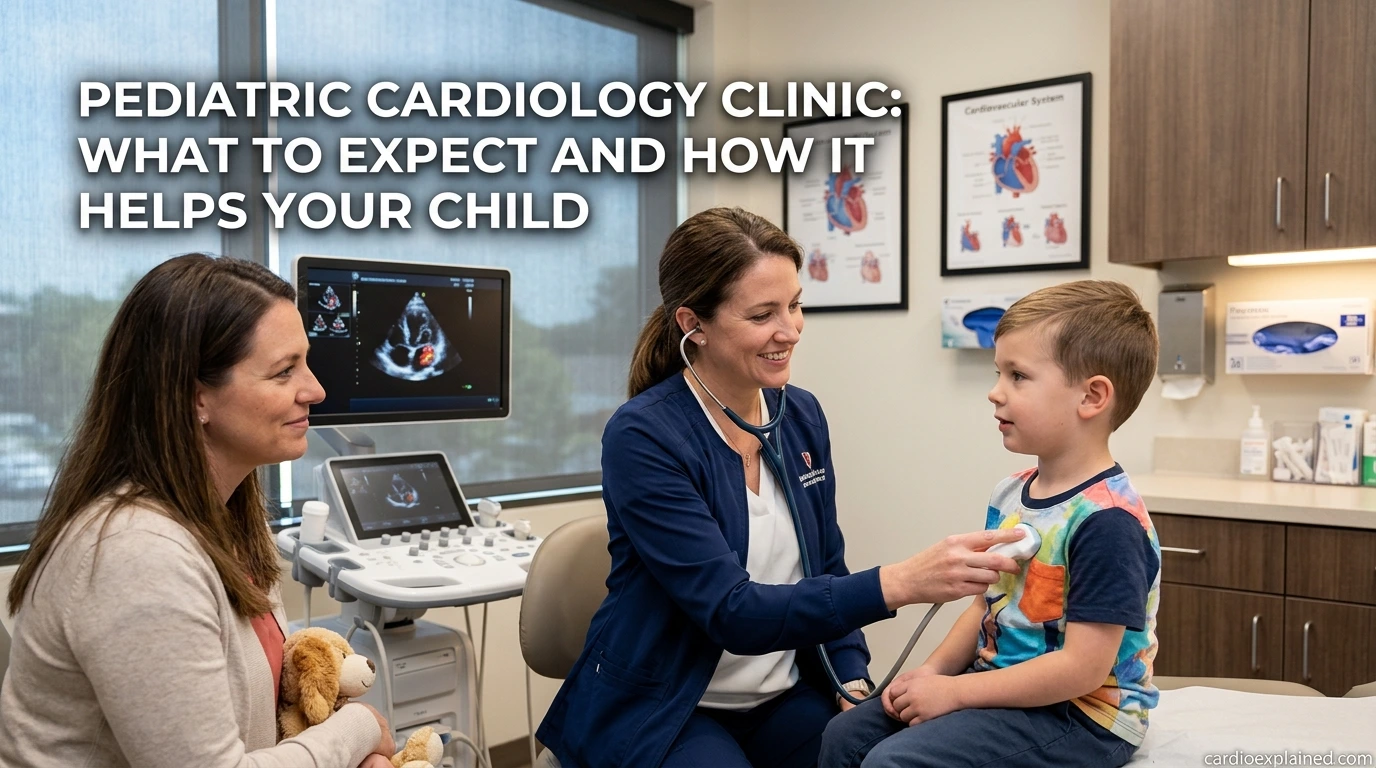

A pediatric cardiology clinic cares for babies, children, and teens with heart concerns. It helps find, watch, and treat heart problems using safe tests and expert care. Doctors also guide families so children can live healthy, active lives.
Have you noticed your child gets tired too fast? Maybe your baby’s doctor heard a heart murmur. A heart murmur is an extra sound during a heartbeat. Many parents feel worried after hearing news like this. A pediatric cardiology clinic gives families answers and support. The care team checks your child’s heart with simple tests. They explain every step in easy words. Many heart problems are mild. Others need close care. Early visits can help doctors plan the best care. You can also ask questions and share your concerns. A caring team helps you feel more confident about your child’s health.
❤️ Why Visit a Pediatric Cardiology Clinic?
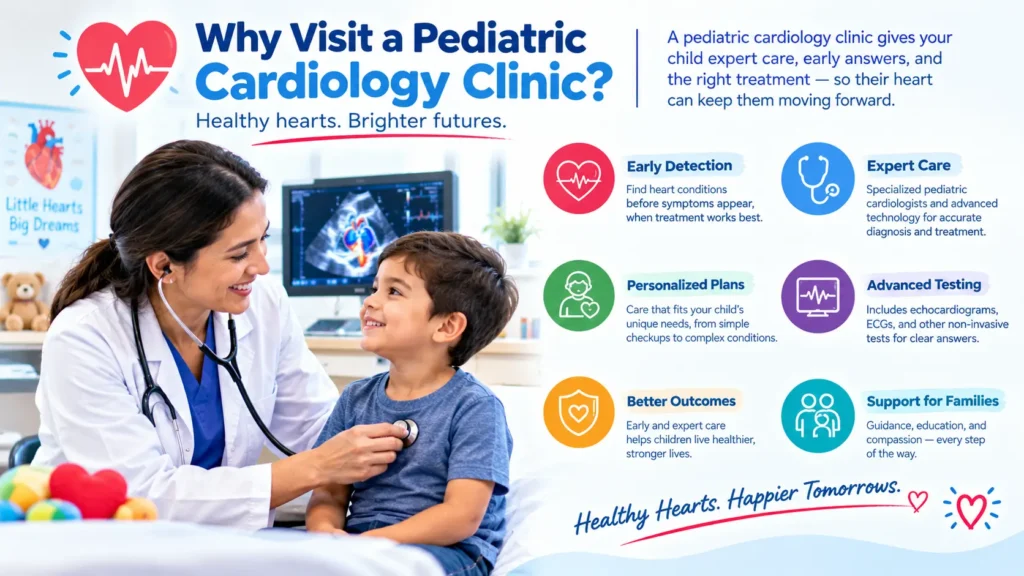
Children have different heart needs than adults. Their bodies are still growing. A heart doctor for children understands these changes.
A pediatric cardiologist is a doctor with special training. This doctor cares only for babies, children, and teens with heart problems.
Your child may visit because of:
- ❤️ A heart murmur
- ❤️ Chest pain
- ❤️ Fast or slow heartbeat
- ❤️ Fainting
- ❤️ Trouble breathing during play
- ❤️ A family history of heart disease
- ❤️ A heart problem found before birth
Many children visit after a routine checkup. Their family doctor may want a closer look. This does not always mean a serious problem.
Many parents feel nervous before the first visit. That feeling is normal. Most families say they feel better after talking with the heart team.
Common Heart Problems in Children
Some heart problems start before birth. These are called congenital heart defects. That means the heart formed differently during pregnancy.
Other heart problems appear later in childhood.
Common examples include:
- ❤️ Small holes between heart chambers
- ❤️ Heart valve problems
- ❤️ Heart rhythm problems
- ❤️ High blood pressure
- ❤️ Heart muscle conditions
Some children only need regular checkups. Others may need medicine or surgery.
Doctors often follow guidance from the American Heart Association (AHA) and the American College of Cardiology (ACC). These groups help doctors give safe, proven care.
🩺 What Happens During the First Visit?
The first visit often lasts longer than a regular checkup. The doctor wants to learn about your child’s health.
The visit usually includes:
- 🩺 Talking about symptoms
- 🩺 Reviewing family health history
- 🩺 Checking height, weight, and blood pressure
- 🩺 Listening to the heart
- 🩺 Ordering tests if needed
Bring past medical records if you have them. Also bring a list of medicines.
Heart Tests You May See
Most tests do not hurt.
| Test | What It Shows | Does It Hurt? |
| Electrocardiogram (ECG) | Heart rhythm and electrical signals | No |
| Echocardiogram | Heart structure and blood flow using sound waves | No |
| Chest X-ray | Heart size and lungs | No |
| Holter monitor | Heart rhythm over one or more days | No |
An electrocardiogram records the heart’s electrical activity. It uses small sticky pads on the skin.
An echocardiogram uses sound waves to create pictures of the heart. Many parents call it an ultrasound for the heart.
If your child needs more testing, the doctor explains each step first.
A Family Story
A seven-year-old boy felt tired during soccer. His parents worried about his energy level.
The doctor ordered an echocardiogram. The test showed a small heart valve problem.
The family learned the condition only needed regular visits. The boy returned to sports with his doctor’s guidance.
Stories like this remind families that many heart concerns have good treatment plans.
📋 How Doctors Care for Heart Problems
Every child has different needs. The care plan depends on the heart condition.
Sometimes the doctor only watches the problem over time.
Other children may need:
- 📋 Medicine
- 📋 Healthy eating advice
- 📋 Exercise guidance
- 📋 Regular heart scans
- 📋 Surgery if needed
The care team explains each choice. Parents help make every decision.
Many children grow into healthy adults with the right care.
Working With Other Specialists
Heart doctors often work with other experts.
These may include:
- 📋 Children’s surgeons
- 📋 Heart imaging experts
- 📋 Nurses
- 📋 Dietitians
- 📋 Physical therapists
- 📋 Social workers
Working together helps give complete care.
The care team also speaks with your child’s family doctor. This helps everyone stay informed.
A pediatric cardiology clinic often becomes a long-term partner for families. Regular visits help doctors watch changes as children grow.
⏱️ Helping Your Child Feel Ready for Heart Visits

A heart visit can feel scary at first. Most children feel calmer when they know what to expect.
You can help by:
- ⏱️ Using simple words to explain the visit
- ⏱️ Bringing a favorite toy or book
- ⏱️ Letting your child ask questions
- ⏱️ Arriving a little early
- ⏱️ Praising your child after the visit
Many children only need simple tests. Most tests finish quickly.
Questions You May Want to Ask
Writing questions before the visit can help.
You may ask:
- ⏱️ What is causing my child’s symptoms?
- ⏱️ Does my child need more tests?
- ⏱️ Can my child play sports?
- ⏱️ Does my child need medicine?
- ⏱️ How often should we return?
A good care team welcomes questions. They want families to understand each step.
Another Family Example
A baby girl had a heart murmur during a newborn visit. Her parents felt very worried.
The heart doctor ordered an echocardiogram. The test showed an innocent murmur. An innocent murmur is a normal heart sound.
The baby needed no treatment. Her parents felt relieved after the visit.
✅ Finding the Right Care and Learning From Experts

Choosing the right heart clinic takes time. Look for doctors with training in children’s heart care.
Many families ask about experience, hospital support, and follow-up care.
You may also want to ask if the clinic offers:
- ✅ Heart imaging services
- ✅ Care before and after surgery
- ✅ Care for newborns
- ✅ Sports heart evaluations
- ✅ Help moving to adult heart care
Some families also read about leading heart centers around the world.
One well-known example is the German Heart Center Munich. It has helped children and adults with heart conditions for many years. Families often learn from its research and education. Your child’s care should still come from a licensed doctor near you.
Frequently Asked Questions
❓ Q: What does a pediatric cardiologist do?
A: A pediatric cardiologist finds, treats, and watches heart problems in children. They care for babies, children, and teens. They also help families understand each condition and treatment plan.
❓ Q: Does every child referred to a pediatric cardiology clinic have heart disease?
A: No. Many children have normal hearts after testing. Doctors may order extra tests to make sure everything looks healthy.
❓ Q: Is an echocardiogram safe for children?
A: Yes. An echocardiogram uses sound waves instead of radiation. It does not hurt and is widely used to check the heart.
❓ Q: Can my child play sports with a heart condition?
A: Maybe. Many children safely play sports after a doctor’s evaluation. Your child’s heart doctor can give advice based on the condition.
❓ Q: Should I learn about places like the German Heart Center Munich?
A: Yes, if you want to learn more about heart care around the world. It is known for heart research and patient care. Your child’s own doctor remains the best source for personal medical advice.
❓ Q: When should I visit a pediatric cardiology clinic?
A: Visit if your child’s doctor recommends it or if heart symptoms need more evaluation. Early care may help doctors understand the problem and plan the next steps.
Conclusion
A pediatric cardiology clinic gives children expert heart care in a caring setting. Many heart problems are mild and only need regular follow-up. Some children need medicine or other treatment. Early care helps families understand their child’s heart and make informed choices. Asking questions and staying involved can make each visit easier. Talk to a cardiologist if you have any concerns about your child’s heart health.