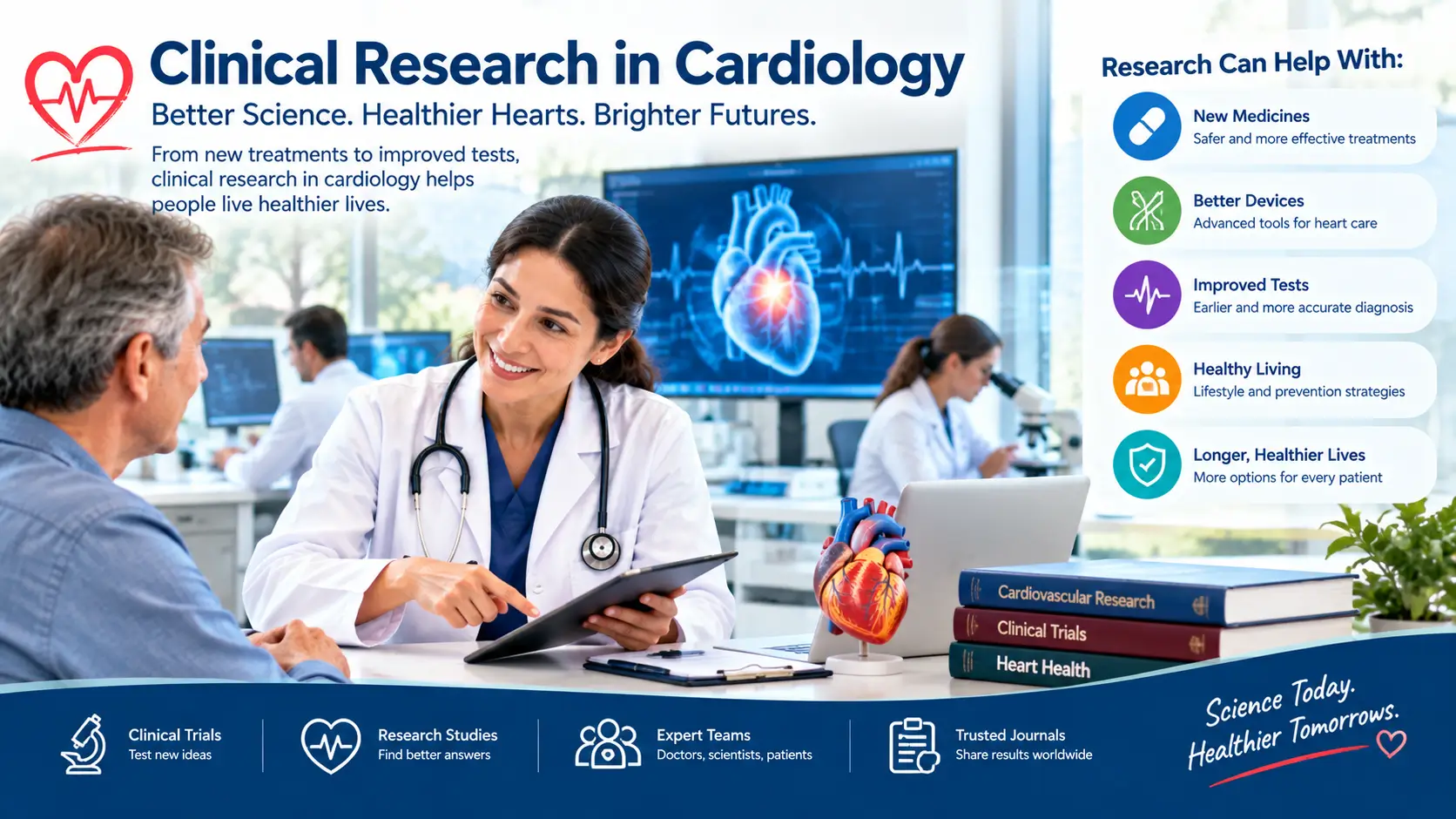
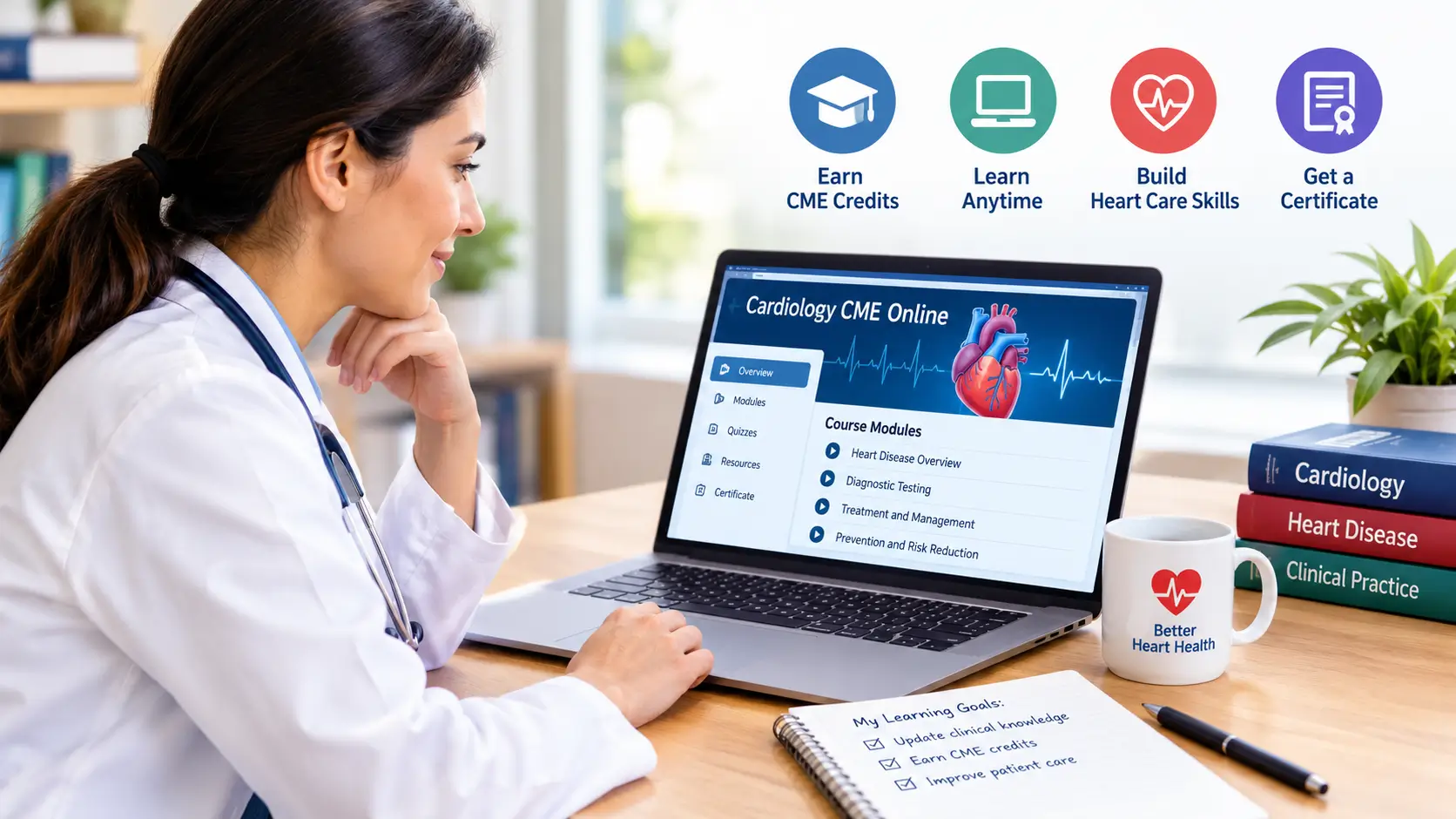

Cardiology CME online gives health professionals a flexible way to learn about heart care. It can provide continuing medical education credits through approved learning activities. These courses may cover heart disease, tests, treatments, prevention, and new clinical guidance.
What Is Cardiology CME Online? 🩺
CME means continuing medical education. It helps health professionals keep their medical knowledge current. Cardiology CME focuses on heart and blood vessel care.
Cardiology CME online lets learners study through a computer or mobile device. Many activities use videos, case studies, questions, articles, or live sessions. Some programs also offer recorded lessons for later viewing.
CME is mainly for doctors and other health professionals. Some programs also support nurses, physician assistants, and other care team members. The exact credit type depends on the course and provider.
Online learning can make study easier for busy professionals. You can often learn from home, work, or another quiet place. Some courses let you stop and return later.
The American College of Cardiology offers many online education options. Its programs cover general cardiology and focused areas. These include electrophysiology, heart failure, imaging, and interventional cardiology. (American College of Cardiology)
CME activities can also support board certification goals. Some ACC activities offer both CME and ABIM Maintenance of Certification points. (American College of Cardiology)
Who Can Benefit From Online CME?
Online cardiology education may help:
- Cardiologists
- Internal medicine doctors
- Family doctors
- Fellows and residents
- Physician assistants
- Nurses and other health professionals
- Health workers who care for heart patients
Medical students may also use online courses for learning. However, CME credit rules may differ for students.
A new cardiology fellow may study after a long hospital day. An online course can fit around clinical duties. The learner can focus on one topic at a time.
Why Choose Online Cardiology CME?
Online education offers several benefits for busy health workers. It can reduce the need to travel to live events.
A learner may watch a lesson during a planned study period. Some programs also provide tests after each learning activity. These tests can help check whether the learner understood the material.
Online programs can also cover specific clinical needs. For example, a doctor may want more practice with ECGs. Another doctor may want to study heart failure care.
ACC lists online programs for several areas of cardiology. Its education catalog includes ECG practice, cardiac imaging, nuclear cardiology, and other topics. (American College of Cardiology)
Online CME Can Support Lifelong Learning
Heart care changes as new research becomes available. Guidelines can also change over time.
CME helps health professionals review new evidence. It may also help them refresh older skills.
For example, a family doctor may see a patient with chest pain. The doctor may review updated heart care guidance through CME. That learning may support better discussions with the patient.
The American College of Cardiology states that its self-assessment programs are updated regularly. They include clinical content, questions, and guideline-based learning. (American College of Cardiology)
| Learning Format | What It May Include | Common Benefit |
| Video course | Talks and slides | Flexible learning |
| Case study | Patient-based examples | Clinical practice |
| Question set | Tests and explanations | Knowledge review |
| Live online session | Expert teaching | Real-time learning |
The best format depends on your learning needs. Some people prefer short videos. Others learn better through cases and questions.
How to Find Free Cardiology CME Online
Free CME can be useful when cost is a concern. However, free does not always mean that every course offers CME credit.
Always check the course details before starting. Look for the credit type, accreditation, completion rules, and expiration date.
Some organizations offer free educational activities at certain times. The ACC, for example, lists various educational opportunities and CME activities. Some activities may require membership or payment. (American College of Cardiology)
The American Heart Association also offers continuing education activities. Its educational programs can support different members of the health care team. (professional.heart.org)
What Should You Check Before Enrolling?
Check these points first:
- Credit type: Confirm which credit you can earn.
- Accreditation: Check the organization providing the credit.
- Topic: Make sure it fits your learning goal.
- Time: Check how long the activity takes.
- Completion rules: Some courses require questions or evaluations.
- Certificate: Confirm how you receive proof of completion.
- Expiration: Check when the activity or credit expires.
A nurse may need a specific type of continuing education. A physician may need AMA PRA Category 1 Credit™. Another professional may need a different credit type.
This is why reading the course information matters. Do not assume every online heart course gives the same credit.
Are Free Online Cardiology Courses With Certificates Available?
Yes, some online courses may provide certificates after completion. However, a certificate and CME credit are not always the same thing.
A certificate may simply show that you finished a course. CME credit means the activity meets specific continuing education requirements.
Read the provider’s credit statement before enrolling. This helps prevent surprises after you finish the course.
What Topics Do Cardiology CME Courses Cover? 📋
Cardiology education can cover many parts of heart care. You can often choose a course based on your clinical role.
Common topics include coronary artery disease, heart failure, and rhythm problems. Courses may also cover blood pressure and cholesterol management.
Other programs focus on heart tests. These can include ECGs, echocardiograms, cardiac CT, and other imaging methods.
The ACC offers education across several specialty areas. Its current programs include adult cardiology, interventional cardiology, electrophysiology, heart failure, and echocardiography. (American College of Cardiology)
General Cardiology
General cardiology courses cover common heart problems. They may review diagnosis, treatment, prevention, and patient care.
These courses can help doctors refresh broad knowledge. They may also include patient cases and practice questions.
ACC’s adult cardiology self-assessment program includes learning modules and case-based questions. (American College of Cardiology)
Interventional Cardiology
Interventional cardiology focuses on procedures that treat heart and blood vessel problems. Online education may cover catheter-based procedures and related care.
ACC’s CathSAP program includes online learning modules and case-based questions. Its current program also provides CME and MOC credit options. (American College of Cardiology)
Preventive Cardiology
Preventive cardiology focuses on lowering heart disease risk. Topics may include blood pressure, cholesterol, smoking, diet, and exercise.
These lessons can help health professionals discuss prevention with patients. They may also review current guideline recommendations.
Electrophysiology
Electrophysiology focuses on heart rhythm problems. Courses may cover conditions such as atrial fibrillation.
Online programs can use ECG examples and patient cases. This gives learners a chance to review real clinical patterns.
How Do Online CME Courses Work? ⏱️
Most online CME courses follow a simple process. First, you choose an activity that matches your needs.
You then create an account if the provider requires one. Some programs may ask for professional details before enrollment.
Next, you complete the learning activity. This may include videos, reading, case questions, or a live online session.
Some courses require a post-test. Others may ask you to complete an evaluation. You may need to finish all required steps before claiming credit.
A Simple CME Process
1: Choose an approved learning activity.
2: Check the credit type and amount.
3: Complete the required lessons.
4: Finish any test or evaluation.
5: Claim your CME credit.
6: Save your certificate or completion record.
A cardiology fellow may complete a short case series between clinical duties. Another doctor may complete a longer self-assessment program over several weeks.
ACC offers online activities that combine learning with questions and assessments. Some programs also provide tools for tracking progress. (American College of Cardiology)
Keeping your own records can also be helpful. Save certificates and completion details in a safe place.
How Do You Choose the Best Cardiology CME Online Course?
There is no single course that fits every learner. Your choice should match your professional needs and credit requirements.
Start with the topic. Choose an area that supports your current work or learning goals.
Next, check the provider. Look for clear accreditation information and credit details. You should also check when the content was last updated.
Current guidance matters in heart care. The ACC says its self-assessment programs receive regular updates. These updates can include newer evidence and clinical guidelines. (American College of Cardiology)
Compare Course Features
| Feature | What to Check | Why It Matters |
| Topic | General or specialty care | Matches your goals |
| Credit | CME, MOC, or other credit | Meets your needs |
| Format | Video, cases, or questions | Fits your learning style |
| Updates | Recent content | Supports current knowledge |
Cost can also matter. Some activities are free, while others require payment.
Time is another factor. A short course may fit a busy schedule. A larger program may offer deeper study.
Do not choose a course only because it has many credits. A smaller activity may better match your current learning gap.
Does Cardiology CME Help With Certification?
CME and certification are related, but they are not the same thing. CME usually refers to continuing education credits.
MOC means Maintenance of Certification. It is part of some physician certification programs.
Some online cardiology activities provide both CME and MOC credit. ACC lists activities that support both types of credit. (American College of Cardiology)
For example, ACC’s online programs can provide CME and ABIM MOC points. The exact amount depends on the activity. (American College of Cardiology)
CME, MOC, and Certificates
These terms can be confusing.
CME: Education completed to maintain and improve professional knowledge.
MOC: A certification maintenance process for eligible physicians.
Certificate: Proof that you completed an activity.
One course may provide more than one of these. Another course may provide only a certificate.
Always check the provider’s official credit statement. Your licensing or certification body may have separate rules.
When Should You Take Online Cardiology CME? ❤️
You can take CME throughout the year. Many professionals plan their learning around work demands.
Some choose several short courses each month. Others complete larger programs during planned study periods.
A good plan starts with your current needs. Think about the patients you see most often. Then look for education that supports those needs.
For example, a primary care doctor may see many patients with high blood pressure. A prevention-focused course may support that work.
A cardiology fellow may need more practice with ECG interpretation. An ECG-focused course may offer useful practice.
A clinician working with heart failure patients may choose heart failure education. Specialty-focused programs can make learning more targeted.
The goal is steady learning. You do not need to complete every available course.
Keep Track of Your CME
Use a simple record for each activity.
Include:
- Course name
- Provider name
- Completion date
- Credit type
- Credit amount
- Certificate number
- Expiration date, if listed
The ACC also provides tools that help users track CME and education progress. (American College of Cardiology)
Good records can make future reporting easier. They may also help when you review your learning goals.
When Should You Ask a Doctor About Heart Symptoms? ⚠️
CME courses are for health professionals. They should not replace medical care for patients.
If you have new heart symptoms, contact a health professional. Chest pain, trouble breathing, fainting, or severe weakness can need urgent care.
Call 911 for severe or sudden symptoms that may signal a heart emergency. Do not wait for an online course or article to guide urgent care.
Many patients feel nervous before their first heart visit. A doctor can explain what tests may be needed.
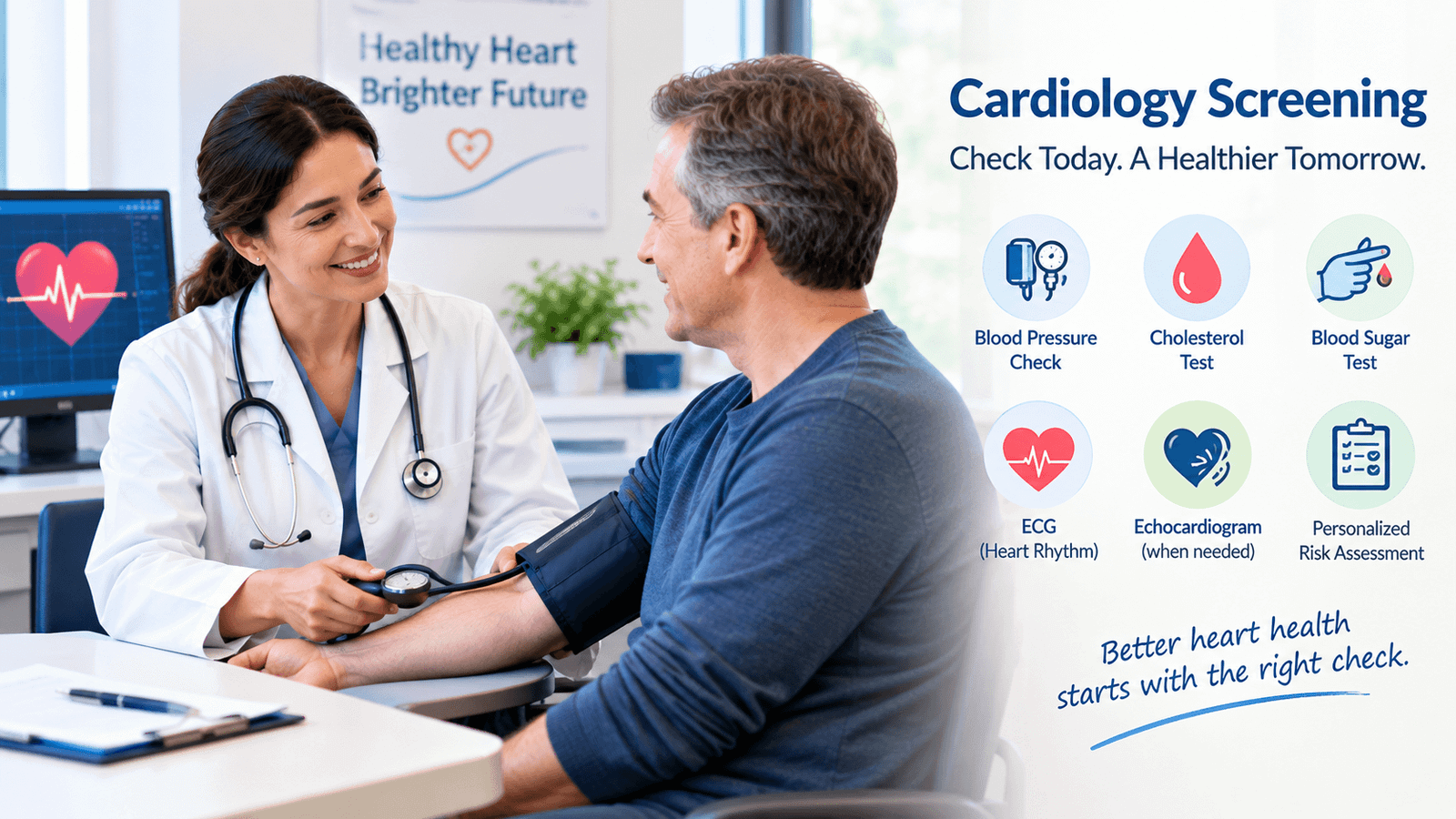
For example, a patient with chest discomfort may need an ECG. An ECG records the heart’s electrical activity.
Other patients may need blood tests or heart imaging. The right tests depend on the symptoms and medical history.
Common Warning Signs
Seek urgent medical help for symptoms such as:
- New or severe chest pressure
- Trouble breathing
- Fainting or near fainting
- Sudden severe weakness
- New symptoms with sweating or nausea
- Severe symptoms that worsen quickly
These signs can have many causes. Only a health professional can assess your situation.
Online CME can improve professional learning. It should never delay care for someone with serious symptoms.
Frequently Asked Questions
Q: Is cardiology CME online available for free?
A: Yes, some online activities may be free. However, many accredited activities have a fee. Always check the current credit and payment details before enrolling.
Q: Can I earn a certificate from an online cardiology course?
A: Yes, some courses provide certificates after completion. A certificate does not always mean the course offers CME credit. Check the provider’s official credit statement first.
Q: Are there free online cardiology courses with certificates?
A: Yes, some educational programs may offer free certificates. Credit rules vary by provider and professional role. Check whether the certificate also includes approved CME credit.
Q: Does Mayo Clinic offer cardiology CME?
A: Mayo Clinic offers medical education programs across many health fields. Availability, topics, and credit options can change. Check its current education listings before enrolling.
Q: Can online cardiology CME support MOC requirements?
A: Yes, some activities provide both CME and MOC points. ACC lists several online activities with dual CME and MOC credit. (American College of Cardiology)
Q: What is interventional cardiology CME?
A: It is continuing education focused on catheter-based heart procedures. Courses may cover procedures, patient cases, and current clinical guidance. Some ACC programs offer online interventional cardiology education. (American College of Cardiology)
Q: What is preventive cardiology CME?
A: It focuses on reducing heart disease risk through prevention and risk care. Topics may include blood pressure, cholesterol, diet, exercise, and smoking. These courses can help clinicians support long-term heart health.
Conclusion
Cardiology CME online gives health professionals a flexible way to keep learning. Courses may cover general cardiology, heart tests, procedures, prevention, and rhythm care.
Some programs provide CME credit, while others may also offer MOC points. Free options may exist, but you should always check the credit details.
Choose education that matches your work, goals, and required credits. Check the provider, course date, accreditation, and completion rules before starting.
Online learning can fit well into a busy health care schedule. Short lessons may also make regular learning easier.
Talk to a qualified health professional if you have heart concerns or new symptoms.
Medically reviewed for accuracy. Always consult a licensed cardiologist for personal advice.