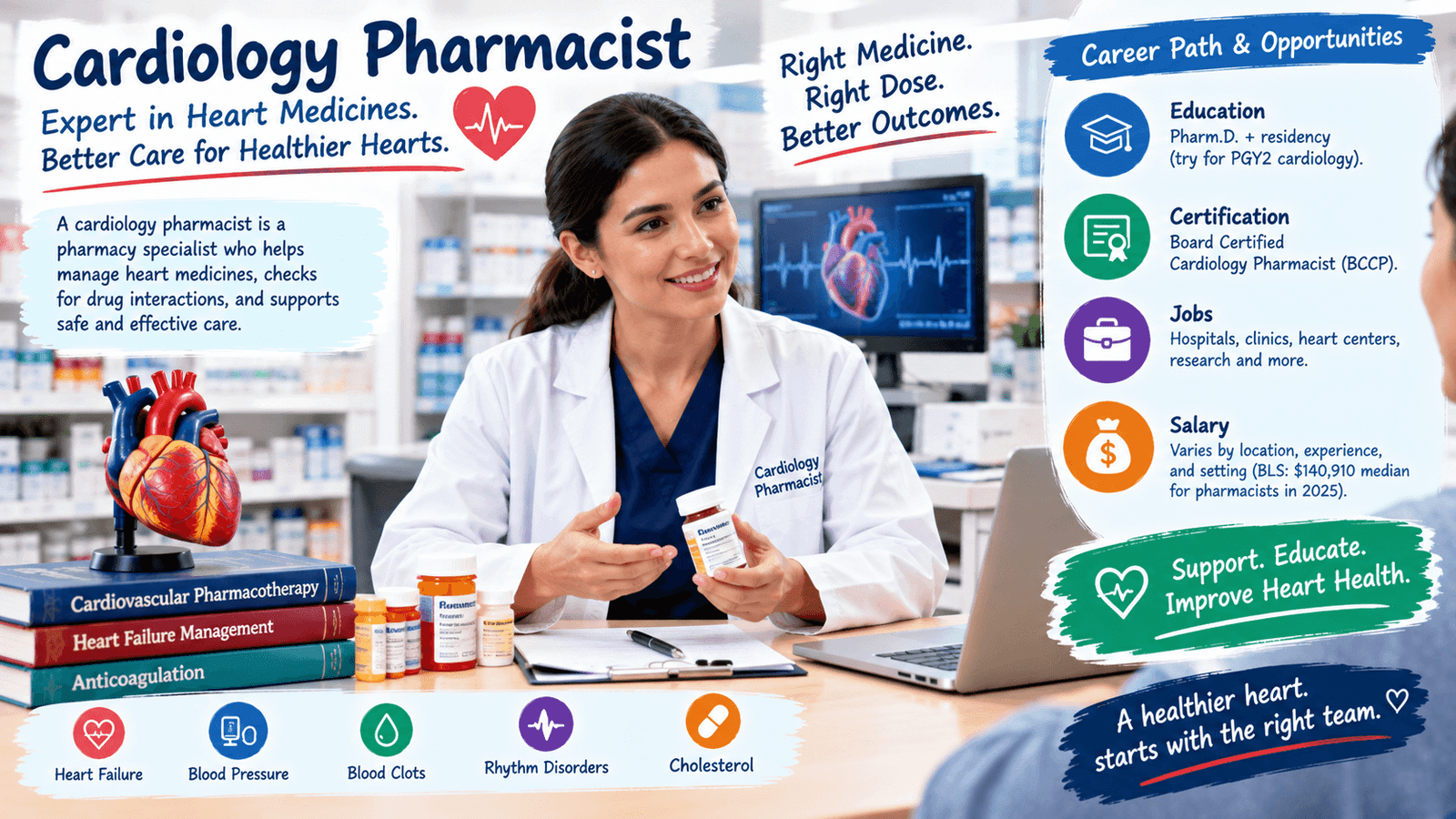

A cardiology pharmacist is a pharmacy specialist focused on heart medicines. They help teams review medicines, check doses, and support patient care. Some complete advanced training and earn BCCP board certification.
Imagine leaving a heart clinic with five new medicine bottles. You may wonder which one does what. You may also worry about side effects or missed doses.
A cardiology pharmacist can help make that list easier to understand. This specialist focuses on medicines used for heart and blood vessel problems. The work can include heart failure, blood pressure, blood clots, and abnormal rhythms.
A cardiology pharmacist may work in a hospital, clinic, heart center, or academic setting. Some also support research, teaching, and medication safety programs. The American College of Cardiology includes clinical pharmacists within its cardiovascular team.
This guide explains the role, training, salary, jobs, and board certification path. It also explains how pharmacists support people who take heart medicines. Students can learn about career steps. Patients can learn when pharmacists may join their care team.
What Does a Cardiology Pharmacist Do?
A cardiology pharmacist focuses on safe and effective medicine use for heart care. The work joins pharmacy knowledge with cardiovascular care.
These pharmacists may review a patient’s full medicine list. They look for wrong doses, unsafe combinations, or medicines needing close monitoring. They also explain how and when to take each medicine.
The American Heart Association lists pharmacists as members of heart failure care teams. Pharmacists can explain medicine interactions and dosing instructions. They can also help patients understand when and how to take medicines.
Common duties
A cardiology pharmacist may:
- Review prescription and over-the-counter medicines.
- Check for possible drug interactions.
- Review doses based on kidney or liver function.
- Help manage blood pressure medicines.
- Support anticoagulation, which helps prevent harmful blood clots.
- Support heart failure medicine plans.
- Review medicines for abnormal heart rhythms.
- Teach patients about side effects and safe use.
- Work with doctors, nurses, and other care team members.
- Help with medication records and safety checks.
Duties vary by workplace and state law. Some pharmacists may have authority to adjust therapy under a collaborative practice agreement.
For example, a patient with heart failure may take several medicines. Each drug may have a different purpose and monitoring need. The pharmacist can review the full list with the care team.
The goal is not simply to give out medicine. The goal is to help the team use medicines safely and correctly.
Where can they work?
Work settings can include:
- Hospitals and cardiac units
- Heart failure clinics
- Anticoagulation clinics
- Outpatient cardiology clinics
- Academic medical centers
- Community health systems
- Research programs
- Pharmacy schools
Some specialists work with very sick patients in cardiac intensive care units. Others focus on long-term care in outpatient clinics.
How Do You Become a Cardiology Pharmacist?
The path usually starts with pharmacy school and a Pharm.D. degree. A Pharm.D. is the professional degree needed to become a pharmacist.
Every state requires pharmacist licensure. State rules can differ, so students should check their state board.
After pharmacy school, many specialists complete postgraduate training. A common path includes a PGY1 pharmacy residency followed by a PGY2 cardiology residency.
ASHP states that PGY2 programs build on skills gained during PGY1 training. Its accredited PGY2 programs include cardiology. A PGY2 year normally requires at least one year of full-time training.
Typical career path
| Step | What it means | Typical focus |
| Pharm.D. | Earn a pharmacy degree | Medicines and patient care |
| Licensure | Meet state requirements | Legal pharmacy practice |
| PGY1 | Broad pharmacy residency | General clinical skills |
| PGY2 Cardiology | Advanced specialty training | Heart care and drug therapy |
| BCCP | Specialty board certification | Cardiology pharmacy expertise |
A PGY2 cardiology program can include heart failure, anticoagulation, arrhythmias, and cardiac intensive care. Training may also cover cardiovascular testing and medication safety.
Not every cardiology pharmacist follows the same path. BPS lists several eligibility routes for the BCCP exam. One route includes a PGY2 cardiology residency. Another combines PGY1 training with cardiology practice experience.
Can you become one without a PGY2?
Yes, BPS allows more than one eligibility route for BCCP certification. Pharmacists may qualify through practice experience or PGY1 plus cardiology practice experience.
However, job requirements differ. Some employers may prefer or require specialty residency training. Students should read each job posting carefully.
A student may start by seeking cardiology rotations during pharmacy school. Research projects and clinical experiences can also help build relevant skills.
What Conditions and Medicines Do They Manage?
Heart care involves many medicines and possible drug problems. A specialist may work with patients who take several medicines at once.
Common areas include heart failure, high blood pressure, and high cholesterol. They may also manage blood clots, coronary disease, and abnormal rhythms.
Heart failure
Heart failure means the heart does not pump blood as well as the body needs. Treatment often involves more than one medicine.
The American Heart Association says people with heart failure may need several medicines. Each medicine can target a different problem.
A pharmacist can help explain each drug’s purpose. They may also check doses, side effects, and possible interactions.
Blood pressure and cholesterol
High blood pressure can raise the risk of heart attack and stroke. Medicines may help lower blood pressure when lifestyle steps are not enough.
High cholesterol can also raise cardiovascular risk. Some patients need medicines to lower certain blood fats.
A pharmacist can help patients understand dose timing and possible side effects. They can also review other medicines that may affect treatment.
Blood thinners and abnormal rhythms
Anticoagulants are medicines that reduce blood clot formation. They may be used for certain patients with atrial fibrillation.
Atrial fibrillation is an irregular heart rhythm. Some patients need medicine to lower their stroke risk.
Pharmacists may help with dosing, safety checks, and patient education. They may also support anticoagulation clinics.
For example, a patient starting a blood thinner may worry about bleeding. The pharmacist can explain warning signs and safe medicine use. The patient should still follow the care plan from the treating clinician.
Medication safety matters
Heart medicines can cause side effects or interact with other drugs. The risk may rise when people take many medicines.
The American Heart Association advises people to share all prescription medicines. This includes over-the-counter drugs, supplements, and herbal products.
A complete medicine list helps the team spot possible problems. It can also make clinic visits more useful.
What Skills Does a Cardiology Pharmacist Need?
Strong pharmacy knowledge is only one part of this career. Specialists also need communication, teamwork, and careful decision-making skills.
Clinical skills
Important areas can include:
- Cardiovascular pharmacology
- Drug interactions
- Anticoagulation
- Heart failure therapy
- Blood pressure treatment
- Cholesterol management
- Arrhythmia medicines
- Medication monitoring
- Patient education
- Emergency cardiovascular care
ASHP cardiology residency materials cover acute coronary syndromes and heart failure. They also cover arrhythmias, anticoagulation, hypertension, and cardiovascular testing.
A specialist also needs to understand lab results. Kidney function can affect the dose of some medicines. Blood pressure, heart rate, and other measures can guide medication decisions.
Communication skills
Patients may feel confused by a long medicine list. Clear words can make a big difference.
A cardiology pharmacist can explain why a medicine is used. They can also explain how to take it and what side effects may need attention.
For example, an older adult may use several prescriptions from different doctors. A pharmacist can help organize the list and identify questions for the care team.
Teamwork
Cardiovascular care often includes doctors, nurses, pharmacists, dietitians, and other professionals. Each person brings a different skill.
The ACC recognizes clinical pharmacists as part of the cardiovascular team. This team approach can support safer medication use.
What Is a Board-Certified Cardiology Pharmacist?
A Board-Certified Cardiology Pharmacist holds the BCCP credential. BCCP stands for Board-Certified Cardiology Pharmacist.
The Board of Pharmacy Specialties manages this specialty certification. BPS says the certification focuses on safe medicine use. It serves people with cardiovascular disease or cardiovascular risk.
Candidates must meet education, license, and practice or residency requirements. They must then pass the specialty examination.
BPS currently reports more than 870 board-certified cardiology pharmacists. The number can change as new pharmacists earn or renew certification.
BCCP eligibility
Current BPS rules include these routes:
- At least four years of cardiology pharmacy practice.
- PGY1 completion plus at least two years of cardiology practice.
- Successful completion of a PGY2 cardiology pharmacy residency.
The experience requirements apply to specific periods and practice conditions. Applicants should review the current BPS rules before applying.
Certification does not replace a state pharmacist license. A pharmacist must still meet state licensing rules.
Why does certification matter?
Board certification can show advanced knowledge in a specialty area. Employers may list it as preferred or required.
It can also help pharmacists set a focused learning goal. Recertification requires ongoing professional development or examination under BPS rules.
What Is the Salary for a Cardiology Pharmacist?
Salary can vary by location, employer, experience, training, and job duties. There is no single national salary number for this specialty.
The U.S. Bureau of Labor Statistics reports pharmacist wages for the broader pharmacist occupation. In May 2025, the median annual pharmacist wage was $140,910.
BLS reported a median wage of $157,290 for pharmacists in hospitals. Ambulatory healthcare services had a median of $153,920.
These figures cover pharmacists as a whole. They do not represent a separate national median for cardiology pharmacists.
What can affect pay?
Several factors may influence compensation:
- Geographic area
- Hospital or clinic setting
- Years of experience
- Board certification
- Residency training
- Leadership duties
- Teaching or research work
- Full-time or part-time status
- Employer type
A new specialist may earn a different salary from an experienced clinical pharmacist. Large academic centers may also use different pay structures.
When reviewing a job offer, look beyond the base salary. Benefits, retirement plans, schedule, paid leave, and education support can also matter.
What Jobs Are Available for Cardiology Pharmacists?
Cardiology pharmacist jobs can appear in hospitals, health systems, clinics, academic centers, and specialty programs.
A specialist may work in inpatient care or outpatient care. Some roles combine both settings.
Common job titles
Search terms may include:
- Cardiology clinical pharmacist
- Cardiovascular clinical pharmacist
- Cardiology pharmacy specialist
- Heart failure clinical pharmacist
- Anticoagulation pharmacist
- Clinical pharmacy specialist
- PGY2 cardiology resident
- Cardiovascular pharmacy educator
Some positions focus on direct patient care. Others include teaching, research, medication safety, or program leadership.
ASHP’s career resources describe cardiology pharmacy roles across inpatient and outpatient settings. These roles can include anticoagulation, heart failure, lipid care, and high-acuity cardiovascular care.
How can students find jobs?
Students can start early. Build relationships during rotations and residency training. Ask preceptors about future openings and required skills.
ASHP maintains a residency directory with accredited PGY1 and PGY2 programs. The directory includes program type, location, specialty, and other details.
Job seekers should compare each posting carefully. Look for license requirements, residency preferences, board certification, schedule, and patient care duties.
How Can Patients Work With a Cardiology Pharmacist?
Patients do not need to know every pharmacy term. A simple medicine list can help start the visit.
Bring the names and doses of all medicines. Include vitamins, supplements, and over-the-counter products.
Ask simple questions:
- What does this medicine do?
- When should I take it?
- Should I take it with food?
- What side effects should I watch for?
- Can this medicine interact with my other drugs?
- What should I do if I miss a dose?
The American Heart Association encourages patients to understand what each medicine treats. It also advises patients to discuss medicine changes with their healthcare team.
A patient with heart failure may feel tired after starting a new medicine. The pharmacist can help explain expected effects and concerns. The patient should report concerning symptoms to the care team.
Never stop a heart medicine on your own. Talk with your doctor or pharmacist before changing a prescription.
FAQ About Cardiology Pharmacist Careers
Q: What is the salary of a cardiology pharmacist?
A: There is no single national salary for this specialty. BLS reports pharmacist wages across the full occupation. In May 2025, the median was $140,910 per year.
Q: How do I become a cardiology pharmacist?
A: Start with a Pharm.D. and pharmacist licensure. Many specialists then complete PGY1 and PGY2 cardiology residency training. BPS also allows other routes toward BCCP eligibility.
Q: What is the BCCP pharmacist credential?
A: BCCP means Board-Certified Cardiology Pharmacist. BPS awards this specialty certification after applicants meet eligibility rules and pass the exam.
Q: Is a PGY2 required for cardiology pharmacy?
A: No, a PGY2 is not the only BCCP eligibility route. BPS also lists practice-based routes. Some employers may still prefer advanced residency training.
Q: Where can I find cardiology pharmacist jobs?
A: Look at hospital, health-system, academic, and outpatient cardiology positions. Search for titles such as cardiovascular clinical pharmacist and heart failure pharmacist.
Q: What does a cardiology pharmacy course cover?
A: Course content can include heart failure, blood pressure, anticoagulation, arrhythmias, and medication safety. Advanced programs may also cover cardiovascular testing and critical care.
Q: Can a pharmacist help me understand heart medicines?
A: Yes. Pharmacists can explain medicine use, interactions, timing, and possible side effects. Ask your healthcare team which pharmacist services are available.
When Should You Talk to a Doctor?
A pharmacist can help with medicines, but some symptoms need urgent medical care.
Call 911 for signs of a possible heart attack. These can include chest pressure, severe shortness of breath, fainting, or other serious symptoms.
Do not wait for a pharmacy visit when symptoms seem severe. Emergency teams can provide urgent evaluation and treatment.
For medicine questions, contact your pharmacist or healthcare team. Ask before stopping, starting, or changing prescription medicines.
Keep an updated medicine list with you. Share it during clinic visits and hospital stays.
If a medicine causes a new or severe reaction, seek medical advice quickly. Some reactions may need urgent care.
Conclusion
A cardiology pharmacist helps people use heart medicines safely and correctly. These specialists may support heart failure, blood pressure, cholesterol, blood clots, and rhythm care.
The career path often starts with a Pharm.D. and state licensure. Many specialists add residency training and may pursue BCCP certification.
Salary depends on setting, location, experience, and job duties. BLS wage data describe pharmacists overall, not cardiology specialists alone.
Patients can also benefit from pharmacist support. Clear medicine instructions may make complex treatment plans easier to follow.
If you are exploring this career, review current BPS and ASHP requirements. If you take heart medicines, keep your care team informed.
Talk to a cardiologist if you have any heart concerns.
Medically reviewed for accuracy. Always consult a licensed cardiologist for personal advice.