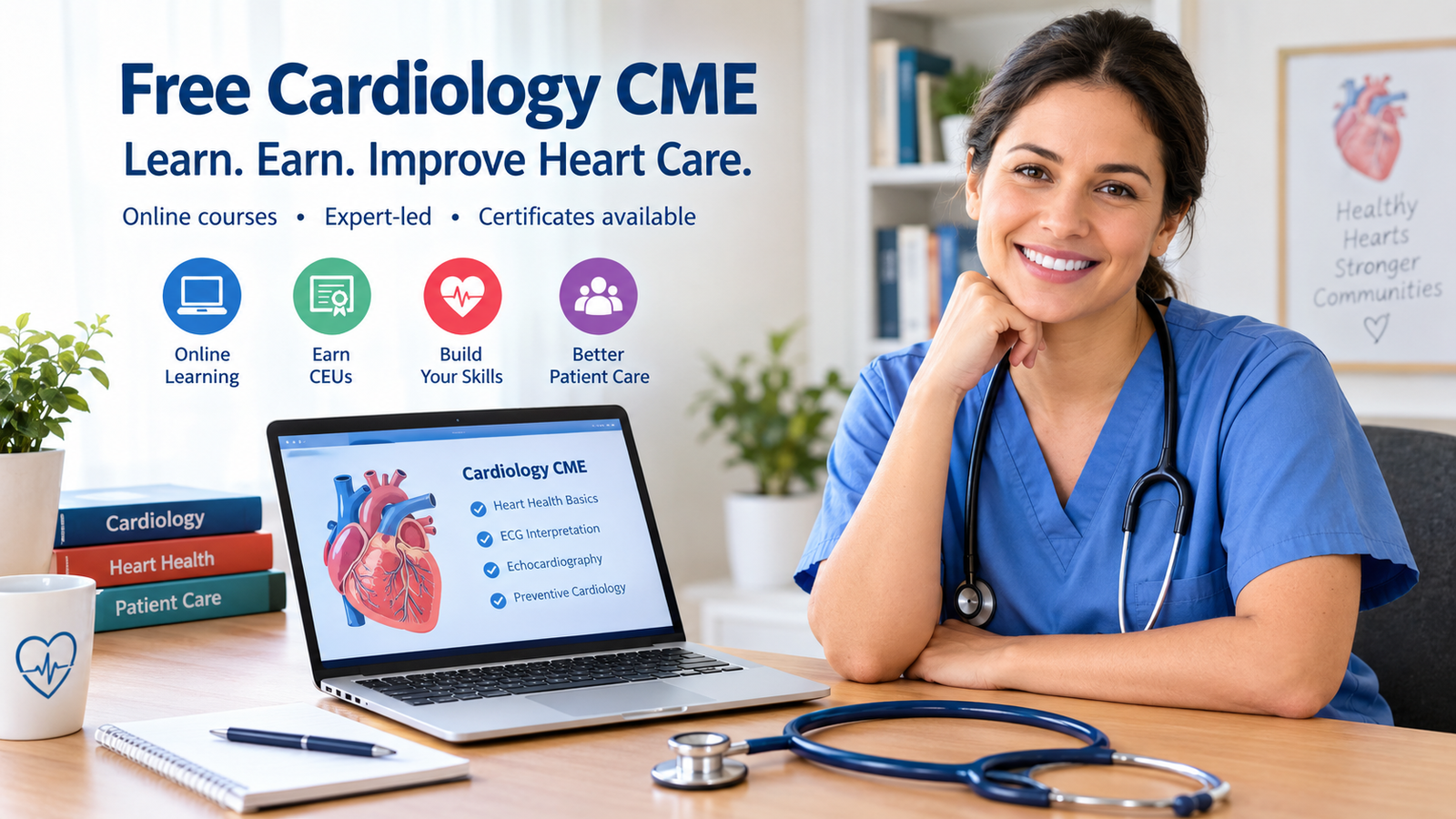

Free cardiology cme gives health professionals a way to learn heart care without course fees. It may offer online lessons, tests, certificates, and credit. Always check each course for current credit rules before you enroll.
❤️ Why cardiology CME matters
Have you ever wanted to learn more about heart care, but faced high course costs? Online cardiology CME can make learning easier for busy health workers. Many courses work online, so you can study at home or during free time.
CME means continuing medical education. It helps licensed health professionals keep their knowledge current. Cardiology CME focuses on the heart, blood vessels, and related care.
These courses may cover heart attacks, heart failure, high blood pressure, ECGs, and imaging. Some also cover new drugs, heart rhythm problems, and prevention.
You may be a doctor, nurse, physician associate, or other health worker. You may also be a student who wants extra heart knowledge. Your credit needs may differ by license and profession.
The American College of Cardiology offers online education with CME and other credits. Its member benefits page also lists hundreds of free online activities.
A free course can still have rules for credit. You may need to finish a test or survey. You may also need to claim your certificate after completion.
This guide explains how free courses work and what to check. It also covers online options, nursing credit, ECG learning, and certificates.
🩺 What is free cardiology CME?
This type of cardiology CME is heart-care education offered without a course fee. The course may be live, recorded, or made of online lessons.
CME credit is not the same as a simple course certificate. A certificate may show that you finished learning. CME credit may count toward professional education needs.
Accredited providers follow rules for educational quality. The ACC and American Heart Association are examples. Both support education for health care teams.
The ACC says its foundation is jointly accredited for several health professions. These include physicians, nurses, and other health workers.
For physicians, some ACC activities offer AMA PRA Category 1 Credit™. Learners should claim only credit matching their participation.
Course status can change over time. An activity may have a release date and an end date. Always read the current course page before starting.
Free does not always mean credit-free
Some learning materials cost nothing but offer no formal credit. Other activities provide free credit after required steps.
Look for these details before you begin:
- Provider name and accreditation
- Credit type and number of hours
- Eligible health professions
- Course release and expiration dates
- Test or evaluation rules
- Certificate or transcript instructions
These details can save time later. They also help you choose a course that fits your license.
📋 Who can use online cardiology CME?
Doctors often use CME to support ongoing professional learning. Nurses may seek CNE contact hours instead. Physician associates may have separate credit rules.
The ACC provides activities for more than one health profession. Some activities list physician CME and nursing contact hours. Others also include AAPA credit.
Students can also use many online lessons for learning. However, student learning does not always create professional CME credit.
A nurse named Maria might need heart education for her practice goals. She finds an online heart failure course during a busy work week. Before starting, she checks that nurses can claim the listed credit.
That small check matters. A course can be useful but still not meet a specific license rule.
Cardiology CME for nurses
Nurses should look for CNE contact hours when needed. Some joint-accredited programs offer nursing credit along with physician CME.
For example, an ACC learning program lists physician CME and nursing contact hours. It also lists AAPA credit for eligible physician associates.
The American Heart Association also provides continuing education for health care teams. Its programs can include physician and nursing credit.
Still, each state board can have its own rules. Check your nursing board before relying on any activity.
🔎 What topics can cardiology CME cover?
Online heart courses can cover many areas of cardiovascular care. The topic you choose should match your learning needs.
Common topics include:
| Topic | What you may learn | Common learning format |
| ECG | How heart signals appear on a tracing | Video or practice |
| Heart failure | Signs, medicines, and care plans | Lecture or case |
| High blood pressure | Risk, checks, and treatment | Online module |
| Heart imaging | Basic use of heart scans | Video or case |
| Heart rhythm | Common rhythm problems | Lecture or quiz |
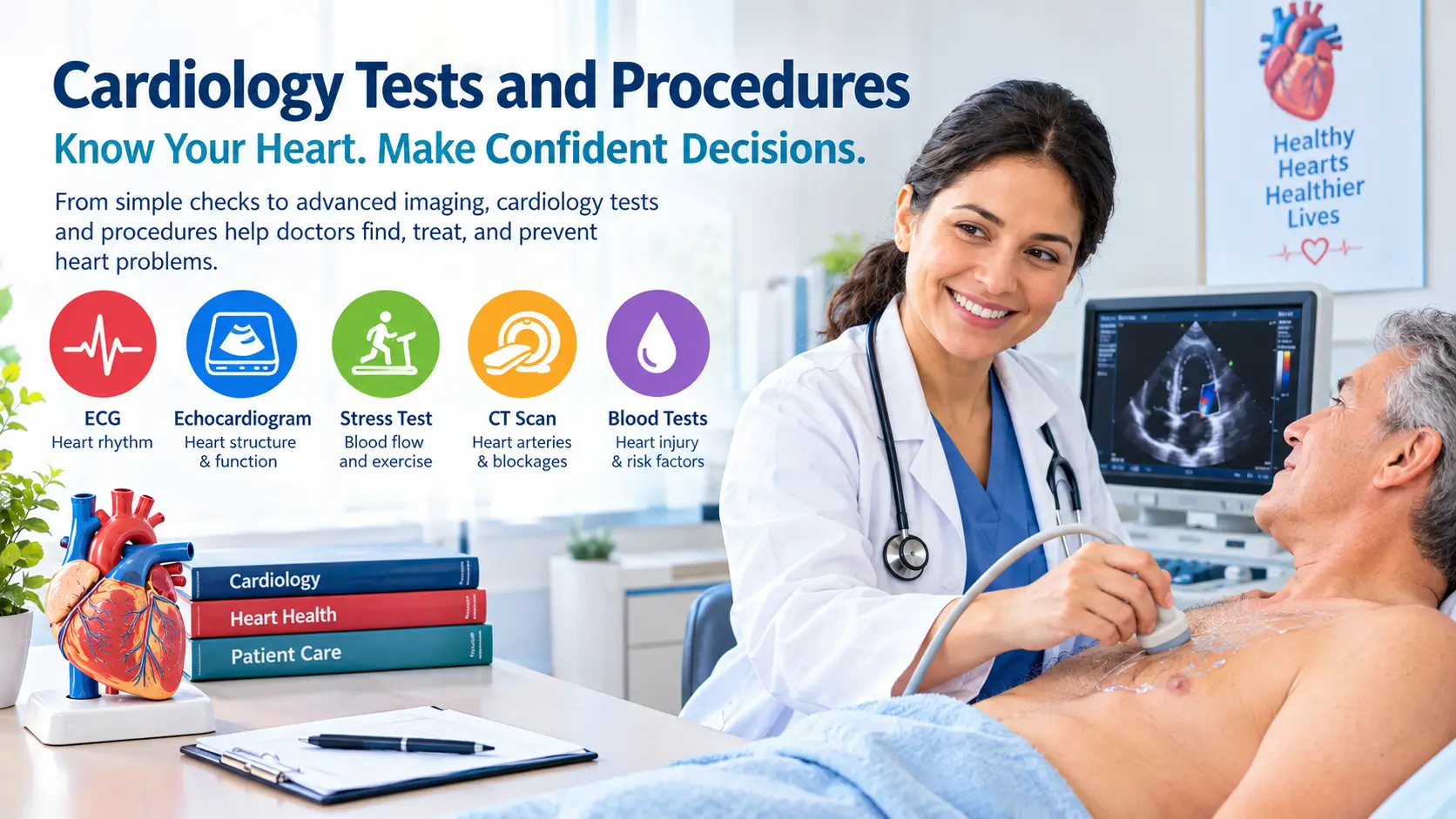
ECG means electrocardiogram. It records the heart’s electrical activity. It can help clinicians study heart rhythm and other heart signals.
The ACC offers an ECG drill and practice activity. It is designed to build ECG interpretation skills. The listed activity provides up to five AMA PRA Category 1 credits.
Echo courses are another common search topic. An echocardiogram uses sound waves to make pictures of the heart. It can help clinicians study heart structure and movement.
Some online courses focus on heart failure. Others cover blood pressure, coronary disease, rhythm problems, or prevention.
Free echo CME
Free echo CME may help learners review heart ultrasound basics. Search for courses that clearly list current credit information.
Do not assume every echo video gives CME credit. Check the course page for accreditation and credit details.
A trainee named James may watch a free echo lecture after work. He learns about heart chambers and blood flow. He then completes the required questions and saves his certificate.
That process shows why course details matter. Watching a video alone may not complete the credit process.
💻 How does online cardiology CME work?
Most online courses follow a simple learning path. You create an account, open the activity, and complete the required content.
Some courses include videos and reading. Others use patient cases or short questions. Many require a post-test and evaluation.
The exact steps depend on the provider. Cleveland Clinic explains that learners must complete the activity and required questions. Learners then complete the CME process and evaluation. A personalized certificate can then be saved.
The ACC also uses course questions and evaluations for some activities. One ACC activity explains how learners can claim credit after passing required questions.
A simple online learning checklist
- Create your learning account.
- Confirm the activity is still active.
- Check your profession and credit type.
- Complete the required lessons.
- Finish the post-test, if required.
- Complete the evaluation.
- Claim your credit.
- Download or save your certificate.
Keep your records in one safe place. You may need them when renewing a license or reviewing education.
A doctor named Sarah may complete one short activity each week. This can feel easier than waiting for one large course.
How to check accreditation before you start
Accreditation tells you who approved the education provider. It can also explain which credits you may claim.
Read the credit statement on the activity page. Look for AMA PRA Category 1 Credit™ when physician CME is needed. Look for CNE contact hours when nursing credit is needed.
Also check the activity expiration date. Some pages remain online after credit eligibility ends. A current page should state whether credit is still available.
If the wording seems unclear, contact the provider before taking the course. You can also ask your licensing board about accepted credit types. This simple step may prevent wasted study time.
Keep a copy of the course details when you finish. Save the certificate with your other education records.
🧾 Do online cardiology CME courses give certificates?
Many accredited activities provide certificates after completion. The certificate may show the activity name, credit type, and earned amount.
However, certificate rules differ by provider. Some activities may offer a completion certificate without professional credit.
Cleveland Clinic says learners can save a personalized CME certificate after completing its required process.
The American Heart Association also provides steps for claiming CE credit. Learners complete an evaluation before claiming credit. They can then download their CE certificate.
A certificate can help you keep a clear education record. Still, it does not replace your state’s license rules.
Free online cardiology courses with certificates
Look for course pages that clearly explain certificate steps. Check whether the certificate shows CME, CNE, or another credit type.
Some courses may have free access but charge for a certificate. Others may offer both learning and credit at no cost.
Read the fee details before you start. This avoids surprises after you complete the course.
⏱️ How to choose a useful cardiology CME course
Start with your goal. You may need credit for a renewal period. You may want to improve one skill, such as ECG reading.
Then check the course date and credit rules. Older content may not match newer guidance.
Look for clear learning goals. Good activities should explain what you should know after completion.
You can also review the faculty and provider. Professional groups and major health systems often publish educational activities.
The ACC lists free online CME, CNE, and MOC activities for members.
The AHA also runs accredited education for health care teams. Its Scientific Sessions program includes continuing education credit.
A practical comparison
| Check | Why it matters | What to look for |
| Credit | Meets your education goal | CME, CNE, or MOC |
| Provider | Shows who made the course | Accredited organization |
| Date | Helps confirm current content | Release and end dates |
| Format | Fits your schedule | Live, video, or self-study |
Avoid choosing a course only because it says “free.” A useful course should also fit your role and goal.
⚠️ When should you ask for help?
CME can support professional learning, but it does not replace personal medical care. A course may explain a heart problem without telling you what affects your own health.
If you have new chest pain, seek urgent medical care. Chest pressure with shortness of breath can be an emergency.
Other warning signs can include fainting, severe breathing trouble, or sudden weakness. Call 911 for signs that could mean a heart attack or stroke.
These signs are not a reason to start a CME course. They are a reason to seek medical help.
For learners, ask a supervisor or licensing board when credit rules seem unclear. You can also contact the course provider.
The ACC and AHA publish educational material based on recognized clinical guidance. Free cardiology cme can also explain how guidelines apply to common heart care topics. Still, individual patient care needs a qualified clinician.
Course material cannot replace a medical exam.
What should you check before claiming credit?
Before claiming credit, confirm your actual participation time. Some providers tell learners to claim only earned credit.
For example, ACC activities state that physicians should claim credit matching participation.
Also check if the activity supports your required MOC or other credit. Not every CME course provides every credit type.
Keep the certificate after completion. Save the activity name and completion date with it.
❓ Frequently asked questions
Q: Can I find free cardiology cme online?
A: Yes, several professional groups offer online cardiology education. The ACC lists free online CME, CNE, and MOC activities for members. Check each activity for current access and credit rules.
Q: Is cardiology CME available for nurses?
A: Yes, some activities offer nursing contact hours. ACC programs can list CNE hours alongside physician CME. Always check your nursing board’s requirements.
Q: What should I look for in free cardiology CME?
A: The right option depends on your profession and learning goal. Compare credit, topic, provider, course date, and completion rules. This helps you choose a course that fits your needs.
Q: Can I get free echo CME?
A: Yes, some online heart imaging activities may offer CME credit. Check whether the activity covers echocardiography and lists current accreditation. Do not assume every free echo lesson offers formal credit.
Q: Can I take cardiology CME online?
A: Yes, many cardiology activities are available online. They may use videos, cases, reading, and questions. Some can be completed on your own schedule.
Q: Can free online cardiology courses include certificates?
A: Yes, some activities provide certificates after completion. Cleveland Clinic describes a process for completing activities and saving a CME certificate. Check fees before starting.
Q: Does cardiology CME count toward license renewal?
A: It may count, but rules differ by profession and state. Check your licensing board and the activity’s credit statement. Keep your certificate as proof of completion.
❤️ Final thoughts
Online heart education can make learning easier to access. Online options can also fit busy work and study schedules.
The key is to check credit rules before you begin. Make sure the topic fits your role and learning goal.
Look for clear accreditation, current dates, and simple certificate steps. Keep your records after completing each activity.
The ACC and AHA offer recognized education for health care professionals. Other major health systems also provide accredited learning.
Free cardiology cme can support ongoing learning when you use it carefully. It can help you review skills and keep learning over time.
Talk to a cardiologist if you have any heart concerns.
Medically reviewed for accuracy. Always consult a licensed cardiologist for personal advice.