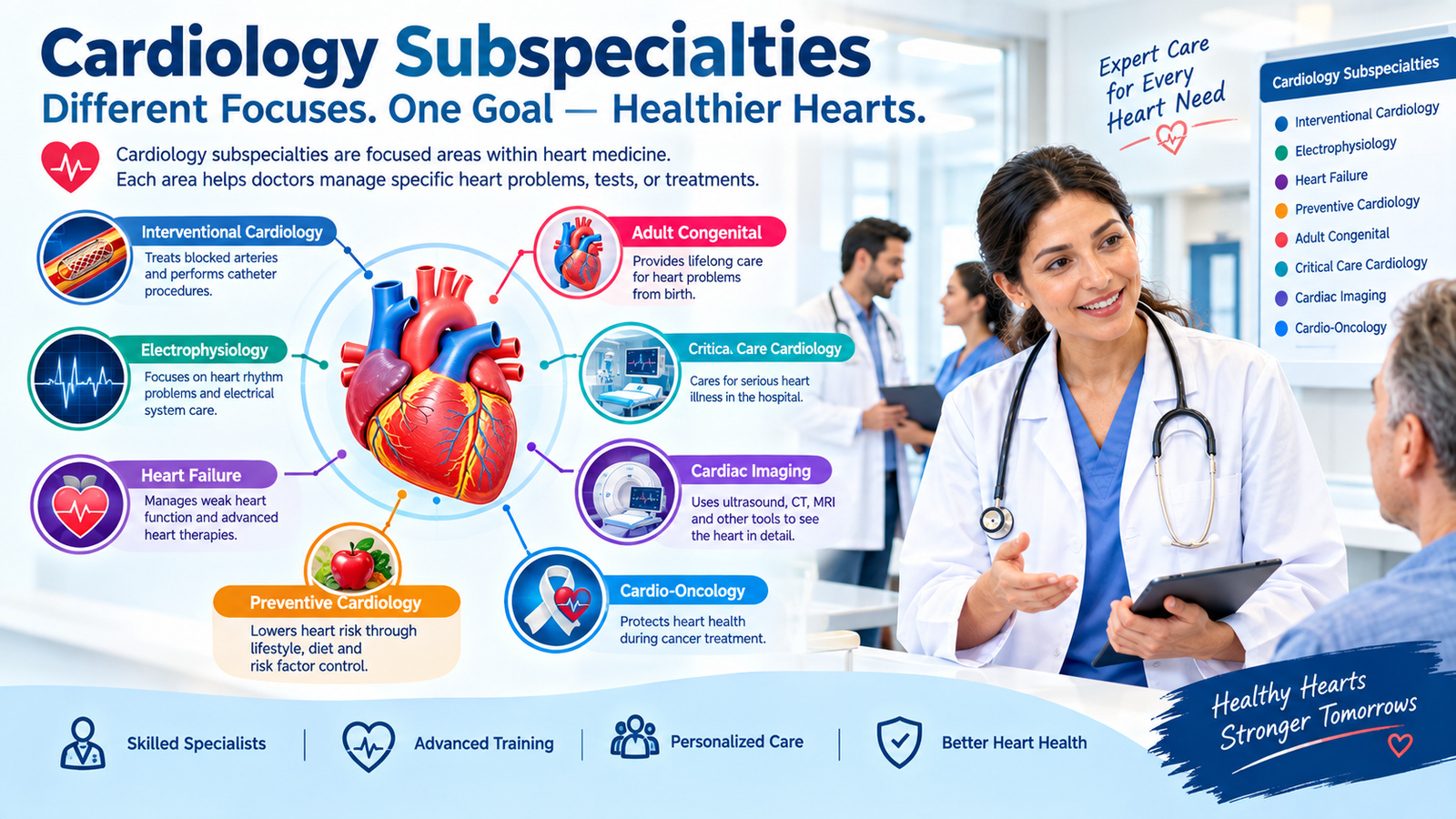

Cardiology subspecialties are focused areas within heart medicine. Each area helps doctors care for specific heart problems, tests, or .
What Are Cardiology Subspecialties?
Have you ever wondered why one heart doctor does different work than another? Cardiology has many focused areas. Each area helps doctors manage certain heart conditions and needs.
Cardiology subspecialties help doctors build deeper skills in one part of heart care. Some focus on heart rhythm. Others focus on blocked arteries or heart failure. Some doctors focus on prevention, imaging, or heart problems present from birth.
A general cardiologist can manage many common heart problems. They may also send patients to a focused specialist. This choice depends on the patient’s symptoms and needs.
The American College of Cardiology lists many areas within cardiovascular medicine. These include prevention, imaging, electrophysiology, heart failure, and critical care.
This guide explains the main areas in simple terms. It also covers training, fellowships, career pay, and patient care. You will learn what each specialist does and when you may need one.
Main Cardiology Subspecialties and Their Focus
Heart medicine covers a wide range of care. Some areas involve office visits and long-term care. Others involve procedures or advanced hospital care.
| Specialty | Main Focus | Common Work |
| Interventional Cardiology | Blocked heart arteries | Stents and catheter procedures |
| Electrophysiology | Heart rhythm | Ablation and rhythm devices |
| Heart Failure | Weak heart function | Medicines and advanced heart care |
| Preventive Cardiology | Lowering heart risk | Cholesterol and lifestyle care |
| Cardiac Imaging | Heart pictures | Echo, CT, and MRI |
| Adult Congenital | Birth-related heart problems | Lifelong heart care |
| Critical Care Cardiology | Serious heart illness | Intensive hospital care |
These areas can overlap. A patient may see more than one heart specialist.
Interventional Cardiology
Interventional cardiologists perform procedures inside blood vessels. They often treat blocked coronary arteries.
They use a thin tube called a catheter. The tube travels through a blood vessel toward the heart. Doctors may use a balloon or stent during some procedures.
A stent is a small tube that helps keep an artery open. These procedures can help restore blood flow when appropriate.
ABIM requires one additional year of interventional training after cardiovascular fellowship.
Electrophysiology
Electrophysiologists focus on the heart’s electrical systemTheir work focuses on diagnosing and treating abnormal heart rhythms.
They may treat conditions such as atrial fibrillation. They can also perform catheter ablation. Ablation uses heat or cold to change abnormal electrical signals.
Some electrophysiologists place or manage heart rhythm devices. These include pacemakers and implantable defibrillators.
ABIM requires additional fellowship training for clinical cardiac electrophysiology. The standard pathway includes one or two additional years.
Advanced Heart Failure and Transplant Cardiology
These specialists care for people with severe heart failure. They also help patients who may need advanced treatments.
Care may include special medicines, devices, or transplant evaluation. Some patients need temporary or long-term support for heart pumping.
ABIM requires extra training after cardiovascular disease fellowship. The standard pathway includes one additional year.
Why Do People Need Different Heart Specialists?
People develop heart problems for many reasons. Age, family history, high blood pressure, diabetes, and smoking can affect risk.
Some people have heart problems from birth. Others develop artery disease later in life. Some develop rhythm problems without major artery disease.
Your main doctor may first evaluate your symptoms. A general cardiologist can then decide if another specialist may help.
Preventive Cardiology
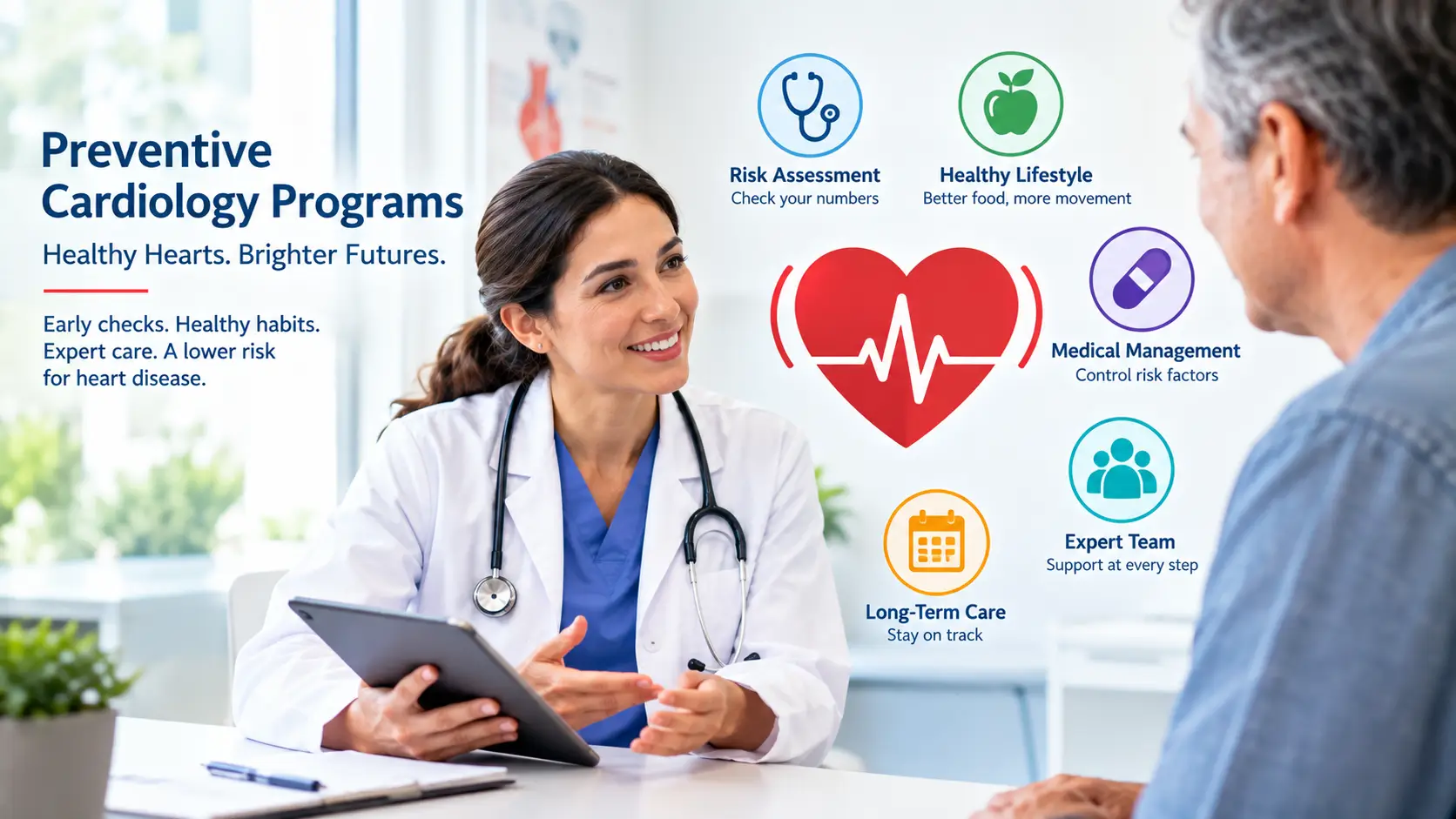
Preventive cardiology focuses on lowering future heart risk. These doctors may work with people who have high cholesterol or high blood pressure.
They may also help people with diabetes or a strong family history. Lifestyle changes often form part of this care.
A preventive visit may include blood pressure checks. It may also include cholesterol testing and a review of diet.
The goal is to lower risk when possible. Care depends on each person’s health history.
Cardio-Oncology
Cardio-oncology focuses on heart care during cancer treatment. Some cancer treatments can affect the heart.
These specialists work with cancer doctors. They monitor heart health before, during, and after certain treatments.
Sports Cardiology
Sports cardiology focuses on heart health in active people. It may help athletes with symptoms or known heart conditions.
Doctors may review exercise history and family history. They may also order heart tests when needed.
The ACC describes cardiovascular medicine as a broad field. It includes preventive care, imaging, electrophysiology, and other focused areas.
Symptoms That May Lead to a Cardiology Referral
You do not always need a subspecialist. Your first visit may be with a primary care doctor or general cardiologist.
Common symptoms can include:
- Chest pressure or discomfort
- Shortness of breath
- Racing or irregular heartbeat
- Fainting or near-fainting
- Leg or ankle swelling
- Unusual tiredness
- Reduced ability to exercise
- Dizziness
Your symptoms can have many possible causes. A doctor may need tests before choosing the right specialist.
A Real-World Example
Imagine a patient who feels a racing heartbeat several times each week. An ECG may not catch the rhythm during one short visit.
The doctor may order longer heart monitoring. If the monitor shows an abnormal rhythm, an electrophysiologist may become involved.
Another patient may have chest pressure during exercise. The doctor may order imaging or a stress test. An interventional cardiologist may become involved if testing shows a serious blockage.
These examples show why specialist care can vary between patients.
How Doctors Check Heart Problems
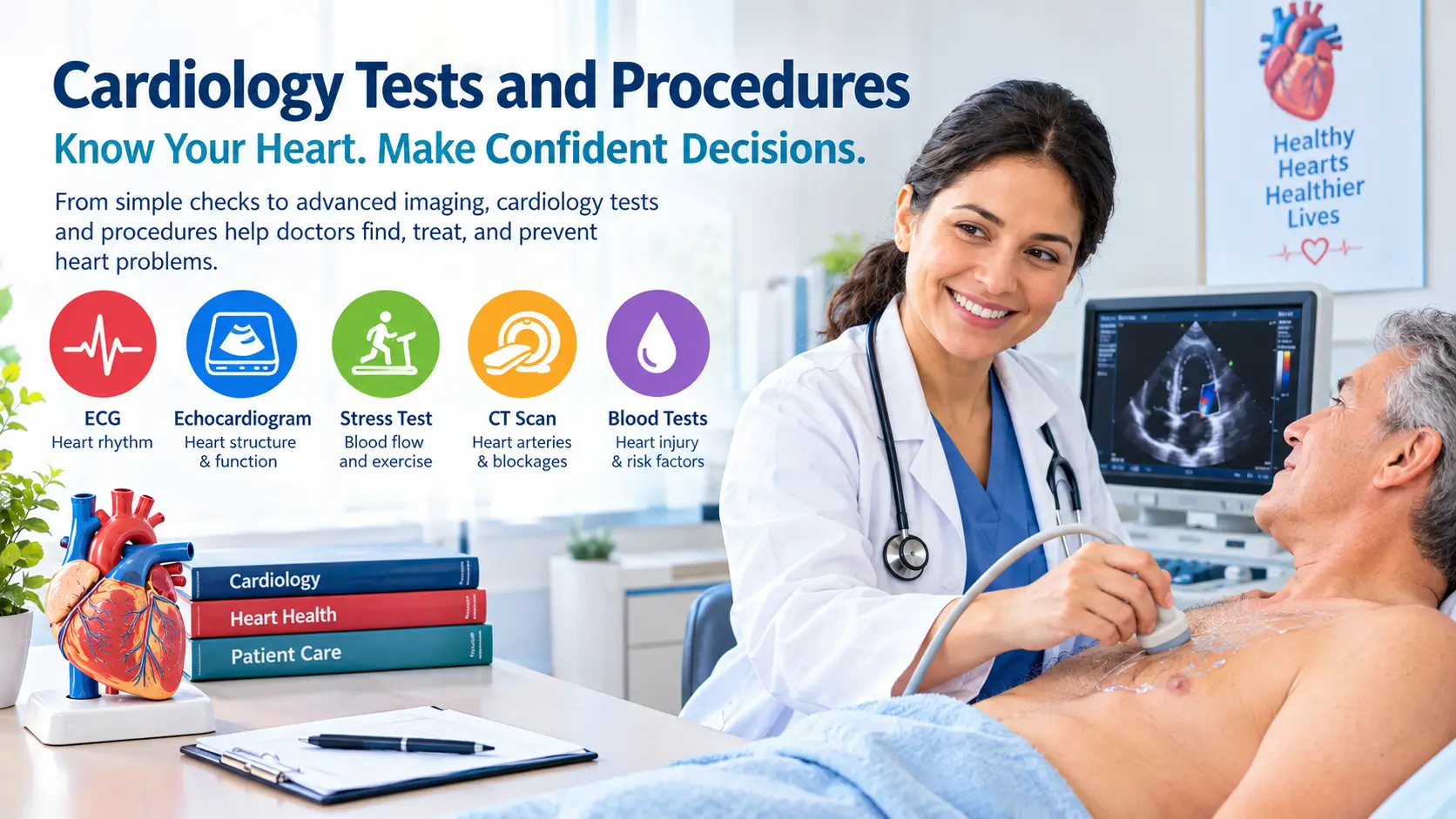
Doctors use different tests for different questions. No single test can check every part of the heart.
Common tests include:
- ECG or EKG
- Echocardiogram
- Stress testing
- Heart rhythm monitoring
- Cardiac CT
- Cardiac MRI
- Blood tests
- Coronary angiography
An ECG records the heart’s electrical signals. An echocardiogram uses sound waves to create heart images.
Stress testing checks how the heart responds during increased work. Heart monitors record rhythm for longer periods.
Cardiac CT and MRI create detailed pictures. Doctors may use them to study arteries, heart muscle, or structure.
How Subspecialists Use Testing
Each specialist may use different tests more often.
An electrophysiologist may review rhythm recordings. An interventional cardiologist may review coronary imaging.
A heart failure specialist may review echo results. An imaging specialist may focus on detailed heart pictures.
The ACC’s training framework includes ECG testing, echo, nuclear imaging, CT, MRI, catheterization, and electrophysiology.
Another Patient Example
A patient may have shortness of breath while walking. The cause could involve the heart, lungs, or another condition.
The doctor may begin with an exam and basic testing. An echocardiogram may then show how well the heart pumps.
If the results suggest heart failure, a heart failure specialist may help. Other tests may follow based on the patient’s condition.
Treatment and Care From Each Subspecialty
Treatment depends on the heart problem. Specialists may use medicines, procedures, devices, or lifestyle care.
Interventional cardiologists may perform catheter procedures. Electrophysiologists may perform ablation or manage rhythm devices.
Heart failure specialists may manage complex medicines and advanced therapies. Preventive cardiologists may focus on blood pressure, cholesterol, weight, and lifestyle.
Imaging specialists help other doctors understand detailed heart images. Adult congenital specialists care for adults with heart problems from birth.
Critical care cardiologists work with very sick hospital patients. They may care for people in cardiac intensive care units.
The ACC recognizes critical care cardiology as a focused area. It also supports advanced training in heart failure and transplant care.
Treatment Often Involves a Team
A patient may see several heart specialists. This does not mean the condition is always severe.
Different doctors may simply handle different parts of care. One doctor may manage medicines. Another may perform a procedure.
Good communication helps keep care organized. Always tell each doctor about your medicines and past heart tests.
Training, Fellowships, and Career Paths
People searching for cardiology careers often ask about fellowship training. Training varies by specialty.
In the United States, physicians usually complete internal medicine training first. They then complete cardiovascular disease fellowship training.
ABIM lists 36 months for cardiovascular disease training. This includes at least 24 clinical months.
Some focused areas need more training. Interventional cardiology requires another 12 months. Advanced heart failure also requires another 12 months.
Adult congenital heart disease requires 24 additional months. Clinical cardiac electrophysiology requires additional specialized training.
List of Cardiology Fellowships
Common fellowship paths include:
- Cardiovascular disease
- Interventional cardiology
- Clinical cardiac electrophysiology
- Advanced heart failure and transplant cardiology
- Adult congenital heart disease
Other focused training areas also exist. These can include imaging, preventive care, cardio-oncology, and critical care.
The exact pathway depends on the program and certification route. Training rules can change, so applicants should check current ABIM and program requirements.
Are Some Cardiology Fellowships More Friendly?
Applicants often ask whether a program feels friendly or supportive. That experience can vary between programs.
The ACC advises fellows to learn about mentoring and the training environment. Talking with current fellows can provide useful insight.
Reddit discussions can also show personal experiences. However, online comments are individual views, not formal program ratings.
Applicants can ask about teaching, workload, call schedules, procedures, and mentoring. They can also ask how fellows work with faculty.
A supportive environment may look different for each trainee. Personal goals should guide the questions you ask.
Cardiology Subspecialties Salary and Career Factors
Salary is another common search topic. Pay can vary greatly between physicians.
Location, practice type, experience, workload, and procedures can affect compensation. Academic jobs may also have different pay structures than private groups.
Doximity’s 2026 report listed average cardiology compensation at $604,635. The figure reflects U.S. physician survey data from 2025. It should not be treated as a guaranteed salary.
The report included nearly 23,000 U.S. physician survey responses. It also adjusted analyses for factors such as specialty and location.
Interventional work may involve different compensation models. Call duties and procedure volume can also affect pay.
Students should look beyond salary when comparing careers. Training length, work hours, location, and patient care interests also matter.
Prevention and Choosing the Right Specialist
Healthy habits support heart health. They can also reduce some heart disease risks.
Helpful habits include:
- Avoid tobacco and nicotine.
- Keep blood pressure under control.
- Check cholesterol as advised.
- Manage blood sugar.
- Eat more vegetables and whole foods.
- Stay active when your doctor allows it.
- Maintain a healthy weight when appropriate.
- Get regular medical care.
Preventive care can start before heart symptoms appear. Your primary care doctor can help assess your overall risk.
If you already have a heart condition, follow your treatment plan. Do not stop medicine without talking with your doctor.
Choosing a Heart Specialist
Ask your doctor why a referral is needed. Ask what the specialist focuses on.
You can also ask about:
- The specialist’s area of training
- The tests you may need
- Expected treatment options
- Follow-up needs
- Your other medical conditions
You may need more than one specialist. Team care can help address different parts of a complex heart problem.
When to See a Doctor or Seek Emergency Care
New heart symptoms should not always wait for a routine visit. Chest pressure, severe shortness of breath, fainting, or sudden weakness can need urgent care.
Call 911 for possible heart attack symptoms. These may include chest discomfort with sweating, nausea, breathing trouble, or pain spreading to the arm or jaw.
Do not drive yourself during a possible heart emergency. Emergency teams can begin care while taking you to the hospital.
For less urgent symptoms, contact your doctor. This includes repeated palpitations, new swelling, or reduced exercise ability.
When a Subspecialist May Help
A specialist may help when your condition needs focused skills. Your general cardiologist can often arrange the referral.
For example, repeated abnormal rhythms may lead to electrophysiology care. A serious artery blockage may lead to interventional care.
Advanced heart failure may require a dedicated heart failure team. Heart problems from birth may need an adult congenital specialist.
The right referral depends on your symptoms and test results. Your doctor can explain why a certain specialist fits your needs.
Frequently Asked Questions
Q: How many cardiology subspecialties are there?
A: There are many focused areas within cardiovascular medicine. Major areas include interventional cardiology, electrophysiology, heart failure, prevention, imaging, and adult congenital care. Training programs may offer additional focused areas.
Q: What does an interventional cardiologist do?
A: An interventional cardiologist performs catheter-based heart procedures. These procedures can treat certain blocked arteries and other heart problems. Training includes an additional year after cardiovascular disease fellowship.
Q: What does a preventive cardiologist do?
A: A preventive cardiologist focuses on lowering heart disease risk. Care may include cholesterol, blood pressure, diabetes, diet, exercise, and lifestyle changes. The plan depends on your personal risk.
Q: What is the difference between cardiology and electrophysiology?
A: Electrophysiology is a focused area within cardiology. It deals mainly with abnormal heart rhythms and the heart’s electrical system. Electrophysiologists may perform ablation and manage rhythm devices.
Q: How long is a cardiology fellowship in the United States?
A: Cardiovascular disease fellowship training requires 36 months under ABIM rules. Some focused areas require extra fellowship training after that period.
Q: Are cardiology subspecialties well paid?
A: Cardiology is a high-compensation medical specialty in recent U.S. survey data. Doximity reported average cardiology compensation of $604,635 for 2025. Individual pay can differ greatly by location, practice type, experience, and work duties.
Q: Which cardiology subspecialty should I choose?
A: The choice depends on your career goals and interests. Some doctors prefer procedures, while others prefer long-term patient care. Training style, lifestyle, research, and work setting can also shape the decision.
Conclusion
Cardiology subspecialties give doctors focused skills for different heart needs. Interventional cardiologists perform catheter procedures. Electrophysiologists treat heart rhythm problems. Other specialists focus on prevention, imaging, heart failure, or congenital heart disease.
Training can take several years. Some focused areas require extra fellowship training after general cardiology. Career pay can also vary by location, practice type, and work duties.
Patients do not always need a subspecialist. A primary care doctor or general cardiologist can often guide the first steps.
If symptoms are new or concerning, seek medical advice. Call 911 for possible heart attack symptoms.
Talk to a cardiologist if you have heart concerns. Your doctor can help you find the right type of care.
Medically reviewed for accuracy. Always consult a licensed cardiologist for personal advice.