

Cardiology images are pictures of your heart and blood vessels. They help doctors find heart problems, plan care, and track your heart over time. These images can show how your heart looks, how it moves, and how well it works.
Have you ever wondered how doctors can see your heart without surgery? Many people ask this before a heart test. Modern cardiology images give doctors a clear view of your heart in safe and simple ways.
These pictures help find heart disease early. They also help explain your symptoms. You may need imaging if you have chest pain, shortness of breath, or an unusual heartbeat. Some tests take only a few minutes. Others give detailed pictures from many angles. Knowing what each test does can help you feel calm before your visit. It can also help you ask better questions. Heart imaging has become a normal part of care for millions of people across the United States.
❤️ What Are Cardiology Images?
Cardiology images are medical pictures of your heart. They also show nearby blood vessels. These pictures help doctors understand how your heart works.
Some images show the heart’s shape. Others show blood flow. Some even show heart muscle damage.
Doctors use these images to:
- 🩺 Check heart size and shape
- 🩺 Watch heart movement
- 🩺 Measure blood flow
- 🩺 Find blocked arteries
- 🩺 Look for damaged heart muscle
- 🩺 Plan treatment
- 🩺 Check results after treatment
Heart imaging helps people of all ages. Your doctor chooses the best test based on your symptoms and health history.
Why Heart Images Matter
Many heart problems begin with few signs. Imaging may find changes before they become serious.
For example, a person may feel tired for weeks. Blood tests look normal. An ultrasound of the heart may show a weak heart muscle. Early care can help slow more damage.
Another patient may have chest pain during exercise. Imaging can help doctors learn if blocked arteries cause the pain.
Doctors often combine imaging with:
- Blood pressure checks
- Blood tests
- Heart rhythm tests
- Physical exams
Together, these tools give a better picture of heart health.
Common Types of Heart Imaging
Several imaging tests are available today. Each one answers different questions.
| Test | What It Shows | Common Use |
| Echocardiogram | Heart movement and valves | Checks heart function |
| Chest X-ray | Heart size and lungs | Finds heart enlargement |
| Cardiac CT | Detailed heart anatomy | Looks for blocked arteries |
| Cardiac MRI | Heart muscle and tissue | Finds damage or scars |
Your doctor explains why one test fits your needs better than another.
🩺 Why Doctors Order Cardiology Images
Doctors order heart imaging for many reasons. Symptoms often guide the decision. Your health history also matters.
You may need imaging if you have:
- ❤️ Chest pain
- ❤️ Shortness of breath
- ❤️ Fast or slow heartbeat
- ❤️ Dizziness
- ❤️ Fainting
- ❤️ Swollen legs
- ❤️ A heart murmur
A heart murmur means your doctor hears an unusual sound during your heartbeat.
Family History Can Raise Risk
Heart disease sometimes runs in families. Your doctor may suggest imaging even if you feel well.
Risk factors include:
- High blood pressure
- High cholesterol
- Diabetes
- Smoking
- Obesity
- Older age
- Family history of heart disease
Finding problems early often gives more treatment choices.
Imaging Before and After Treatment
Heart pictures help before treatment starts. They also help after treatment ends.
For example, a patient preparing for heart valve surgery often gets several scans. These pictures help surgeons plan the safest approach.
After surgery, another scan checks healing. Doctors can compare new pictures with older ones.
Standard Medical Guidance
Groups like the American Heart Association (AHA) and the American College of Cardiology (ACC) support imaging when symptoms or risk factors suggest heart disease. Doctors avoid unnecessary testing. They choose studies that answer important medical questions.
📋 Signs That May Lead to Heart Imaging
Heart symptoms vary from person to person. Some appear suddenly. Others develop slowly.
Your doctor may suggest imaging when symptoms continue or become worse.
Chest Pain
Chest pain has many causes. Some are not related to the heart.
Heart imaging helps doctors learn if poor blood flow causes the pain.
Pain may feel like:
- Pressure
- Tightness
- Burning
- Heavy weight
Never ignore severe chest pain.
Shortness of Breath
Many people become short of breath after exercise. That can be normal.
Breathing trouble during simple daily tasks may need more testing.
Heart imaging can show:
- Weak heart pumping
- Valve problems
- Fluid around the heart
These findings help guide treatment.
Fast or Irregular Heartbeat
Some people notice fluttering in the chest. Others feel skipped beats.
These symptoms do not always mean heart disease. Still, doctors may order imaging to look for hidden problems.
Swelling and Fatigue
Swollen feet and ankles may happen when the heart cannot pump well.
Extreme tiredness also deserves attention.
One older patient blamed aging for constant fatigue. An echocardiogram later showed heart valve disease. After treatment, daily activities became much easier.
When Symptoms Need Fast Care
⚠️ Seek emergency care right away if you have:
- Severe chest pain
- Trouble breathing
- Fainting
- Sudden weakness
- Trouble speaking
- Pain spreading to the arm, jaw, or back
These symptoms may signal a medical emergency. Quick treatment can save heart muscle and even save lives.
Doctors often use heart imaging soon after emergency care begins. These tests help confirm the cause and guide the next steps.
⏱️ How Doctors Check Your Heart With Imaging
Doctors choose the right imaging test based on your symptoms. Your age and health history also matter. Each test gives different details about your heart.
Cardiology Images Used for Diagnosis
Many cardiology images are painless and do not need surgery. Some tests use sound waves. Others use magnets or X-rays.
Below is a simple comparison.
| Test | How It Works | What It Helps Find |
| Echocardiogram | Uses sound waves | Valve problems, heart pumping, heart size |
| Electrocardiogram (ECG) | Records heart signals | Heart rhythm problems (This is not an image but often pairs with imaging.) |
| Cardiac CT Scan | Uses X-rays | Narrow or blocked heart arteries |
| Cardiac MRI | Uses magnets | Heart muscle damage and scars |
| Nuclear Stress Test | Uses a small safe tracer | Blood flow during rest and exercise |
| Coronary Angiogram | Uses dye and X-rays | Blocked heart arteries |
What Happens During Each Test
Most heart imaging tests happen in a hospital or clinic.
An echocardiogram often takes about 30 to 60 minutes. A small device moves across your chest with warm gel.
A CT scan takes only a few minutes. You must stay very still during the scan.
An MRI usually lasts longer. It may take 30 to 90 minutes. The machine makes loud sounds, but ear protection helps.
A coronary angiogram is different. A doctor places a thin tube into a blood vessel. Dye helps show the arteries on X-ray images.
Getting Ready for Imaging
Your care team will explain how to prepare.
You may need to:
- ✅ Avoid food before some tests
- ✅ Wear comfortable clothes
- ✅ Remove jewelry
- ✅ Tell your doctor about allergies
- ✅ Share if you are pregnant or may be pregnant
- ✅ Bring a list of your medicines
Many patients feel nervous before their first imaging visit. Most say the test feels much easier than expected once it begins.
❤️ Treatment After Heart Imaging
Heart imaging does not treat disease. It helps doctors choose the best care.
Your treatment depends on what the pictures show. Two people with the same symptom may need different care.
Medicines
Medicine is often the first step.
Your doctor may suggest medicine to:
- ❤️ Lower blood pressure
- ❤️ Reduce cholesterol
- ❤️ Prevent blood clots
- ❤️ Control heart rhythm
- ❤️ Help the heart pump better
Take medicine exactly as directed. Never stop it without talking to your doctor.
Healthy Lifestyle Changes
Many heart problems improve with healthy habits.
Your doctor may recommend:
- 🥗 Eat more fruits and vegetables.
- 🚶 Walk most days of the week.
- 🚭 Stop smoking.
- 😴 Get enough sleep.
- 💧 Drink enough water.
- 😊 Manage daily stress.
Small changes often lead to lasting results.
Medical Procedures
Some heart problems need more than medicine.
Your doctor may suggest:
- A heart stent to open a blocked artery
- Heart valve repair or replacement
- A pacemaker to control heartbeat
- Heart bypass surgery for severe artery disease
Imaging helps doctors plan these procedures. It also checks healing afterward.
A Real-Life Example
A middle-aged man had chest pressure while walking. His CT scan showed narrowed heart arteries.
His doctor started medicine first. Later, he received a stent. Follow-up imaging showed better blood flow. He returned to daily walks after recovery.
Doctors follow trusted guidance from groups such as the AHA and ACC when choosing treatment. Each care plan matches the person’s needs.
✅ Protecting Your Heart Every Day

Many heart problems can be lowered through healthy choices. While not every condition is preventable, daily habits make a big difference.
Eat Foods That Help Your Heart
Choose meals rich in natural foods.
Good choices include:
- 🥦 Vegetables
- 🍎 Fresh fruit
- 🐟 Fish
- 🌾 Whole grains
- 🥜 Nuts
- 🫘 Beans
Limit foods high in salt, sugar, and unhealthy fats.
Stay Active
Regular movement keeps your heart strong.
Adults should aim for regular exercise each week. Even a short daily walk helps.
Pick activities you enjoy, such as:
- Walking
- Swimming
- Cycling
- Dancing
- Gardening
Always ask your doctor before starting a new exercise plan if you have heart disease.
Know Your Numbers
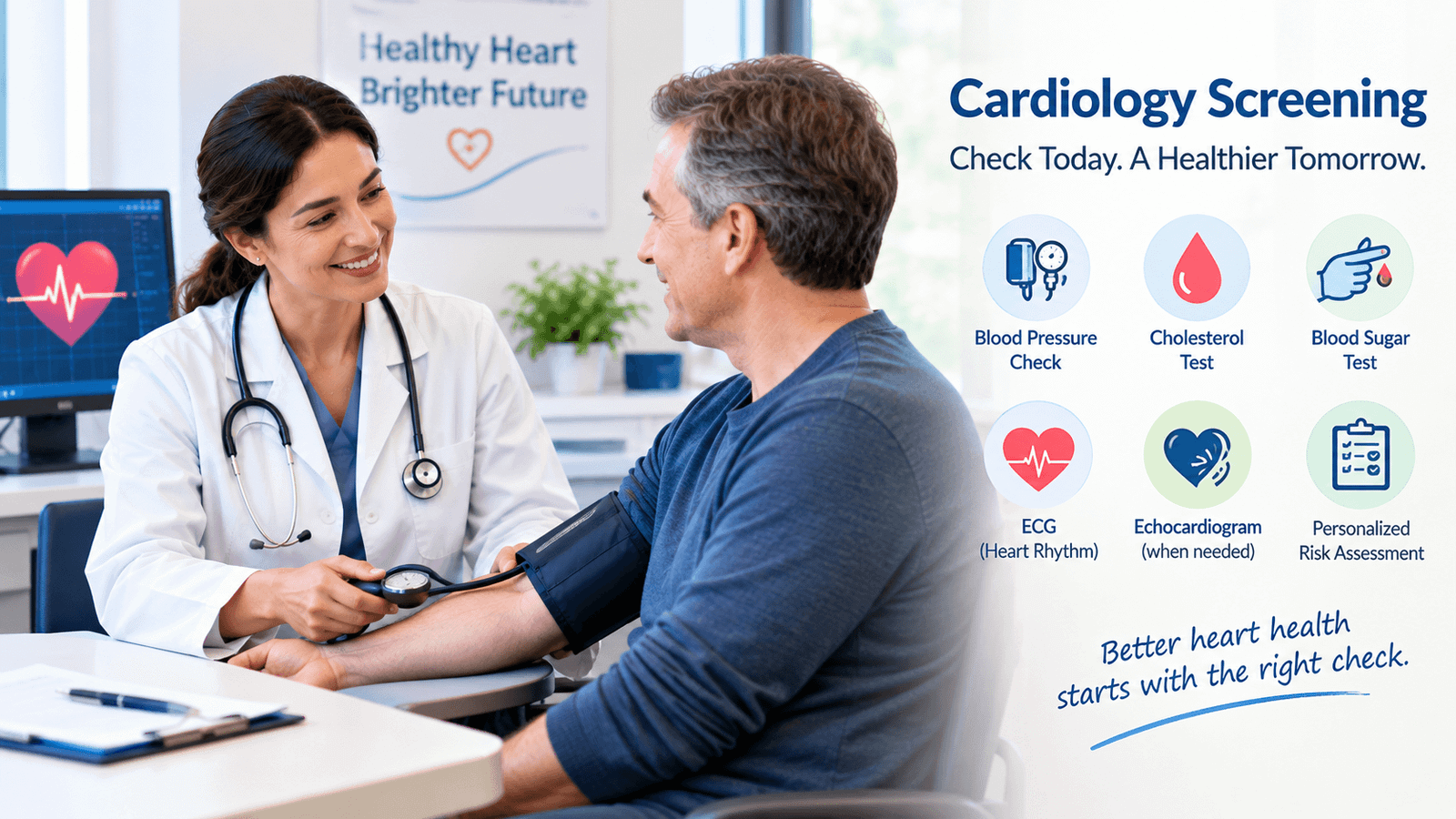
Regular checkups help find problems early.
Track:
- Blood pressure
- Cholesterol
- Blood sugar
- Body weight
Your doctor can explain what your numbers mean.
Avoid Tobacco
Smoking harms blood vessels and the heart.
If you smoke, ask your healthcare team for help quitting. Many people need more than one attempt. Each effort moves you closer to success.
Keep Follow-Up Visits
Heart care does not end after one appointment.
Your doctor may repeat cardiology images over time. These follow-up tests help track changes and measure how well treatment works.
⚠️ When to See a Doctor
Do not ignore new heart symptoms.
Early care often prevents bigger problems later.
Make an Appointment If You Notice
Call your doctor if you have:
- ⚠️ Chest discomfort that returns
- ⚠️ Shortness of breath
- ⚠️ Swollen feet or ankles
- ⚠️ Fast or irregular heartbeat
- ⚠️ Unusual tiredness
- ⚠️ Dizziness that keeps happening
These symptoms do not always mean heart disease. They deserve medical attention.
Go to the Emergency Room Right Away
Get emergency help if you have:
- Severe chest pain lasting several minutes
- Trouble breathing at rest
- Fainting
- Sudden weakness on one side
- Trouble speaking
- Cold sweat with chest pain
These signs may point to a heart attack or another emergency.
Trust Your Instincts
Many people wait because they hope symptoms will disappear.
One woman thought her chest pressure came from stress. After several days, she visited her doctor. Heart imaging found early artery disease. Treatment started before a heart attack happened.
It is always better to ask questions than wait too long.
Doctors use your symptoms, exam, and cardiology images together to understand what is happening. They then build a care plan that fits your needs.
Frequently Asked Questions
❓ Q: Are cardiology images safe?
A: Yes. Most cardiology images are very safe when used correctly. Your doctor chooses the test that fits your needs. Some tests use a small amount of radiation, while others use none at all. Your care team always weighs the benefits and any possible risks.
❓ Q: Do all heart imaging tests use radiation?
A: No. An echocardiogram and a cardiac MRI do not use radiation. CT scans, chest X-rays, and coronary angiograms do use small amounts. Your doctor explains why a certain test is the best choice.
❓ Q: How long does a heart imaging test take?
A: It depends on the test. A chest X-ray may take only a few minutes. An echocardiogram often takes 30 to 60 minutes. A cardiac MRI may take up to 90 minutes.
❓ Q: Can I eat before a heart imaging test?
A: Sometimes yes, and sometimes no. Some tests require fasting for several hours. Others do not have food limits. Always follow the instructions from your healthcare team.
❓ Q: Will I get my results right away?
A: Usually not. A heart specialist reviews the images before giving results. Many people hear back within a few days. Emergency cases often receive faster results.
❓ Q: Can children have heart imaging tests?
A: Yes. Doctors often use echocardiograms for babies and children because they are painless and do not use radiation. Pediatric heart specialists choose the safest test for each child.
❓ Q: How often will I need cardiology images?
A: It depends on your health. Some people need only one study. Others need repeat imaging to watch heart disease or check treatment results. Your cardiologist will decide the best schedule for your care.
Conclusion
Cardiology images help doctors see how your heart looks and works. They can find problems early, guide treatment, and track your progress over time. Many imaging tests are quick, safe, and painless, making them an important part of modern heart care.
If you have chest pain, shortness of breath, or an unusual heartbeat, do not ignore your symptoms. Early testing may lead to earlier treatment and better heart health. Talk to a cardiologist if you have any heart concerns or questions about the best imaging test for you.