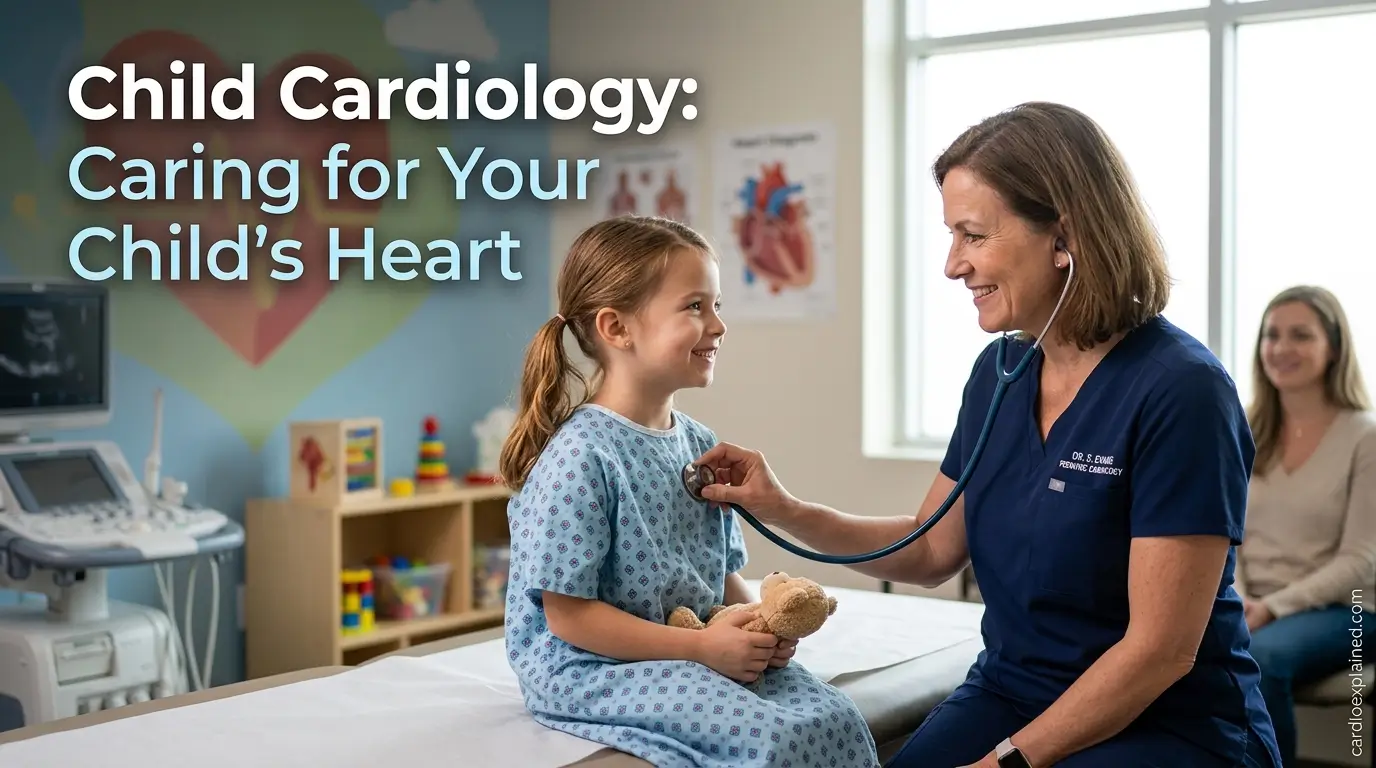

Child cardiology is a medical field that focuses on heart care for babies, children, and teens. It helps find, monitor, and treat heart problems at a young age. Doctors use tests, exams, and follow-up visits to help children live healthy lives.
Has your child ever complained about chest pain or a fast heartbeat?
Many parents worry when something seems wrong with their child’s heart. That is normal. Child cardiology helps doctors understand heart concerns in children of all ages.
Some children are born with heart conditions. Others develop symptoms later. A heart specialist for children can check what is happening and guide the next steps.
You may want to know when to see a specialist. You may also wonder what tests are used. Learning more can help you feel calm and prepared. This guide explains heart care for children in simple terms. It also covers common questions about pediatric heart centers and clinics.
❤️ What Is Child Cardiology?
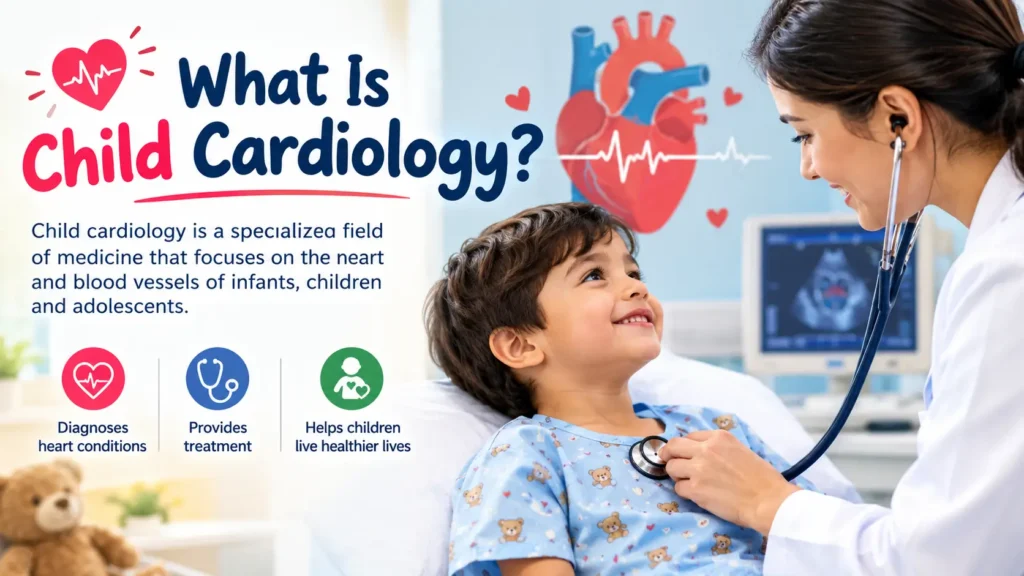
Child cardiology focuses on heart health in children.
Doctors in this field are called pediatric cardiologists. They have special training in children’s heart care.
They care for:
- 🩺 Babies
- 🩺 Children
- 🩺 Teenagers
- 🩺 Children born with heart conditions
A child’s heart is not the same as an adult’s heart. Children’s bodies grow and change. Their heart care needs can differ too.
Common Heart Conditions in Children
Some heart problems appear at birth. Doctors call these congenital heart defects. This means a child is born with the condition.
Other concerns may include:
- ✅ Heart murmurs
- ✅ Fast heartbeat
- ✅ Slow heartbeat
- ✅ High blood pressure
- ✅ Fainting episodes
- ✅ Heart muscle problems
Many conditions are mild. Some need regular care and monitoring.
Why Early Care Matters
Early care may help doctors find problems sooner.
When doctors spot issues early, they can watch growth closely. They can also suggest treatment when needed.
Many children with heart conditions grow up and live active lives.
🩺 Signs Your Child May Need a Heart Specialist
Not every symptom means a heart problem.
Still, some signs deserve medical attention.
Contact your child’s doctor if you notice:
- ⚠️ Shortness of breath
- ⚠️ Frequent fainting
- ⚠️ Chest pain during exercise
- ⚠️ Blue lips or skin
- ⚠️ Poor weight gain
- ⚠️ Fast or irregular heartbeat
A primary doctor may suggest a visit with a pediatric cardiologist.
A Real-Life Example
Many parents feel nervous before the first visit.
For example, a school-aged child may faint during sports. The family doctor may refer the child for heart testing. In many cases, results show a harmless cause. Still, checking is important.
📋 Tests Used in Child Cardiology
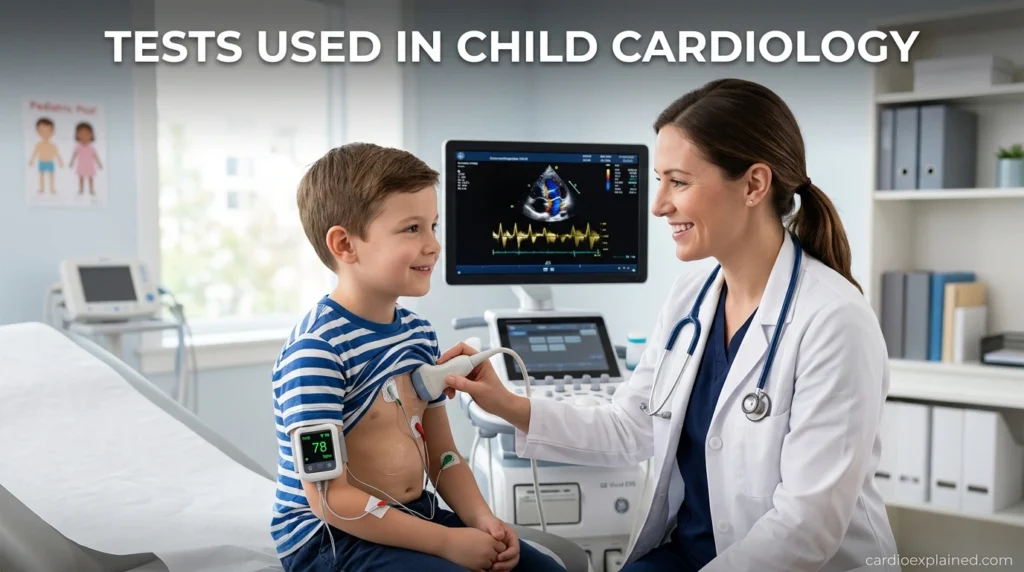
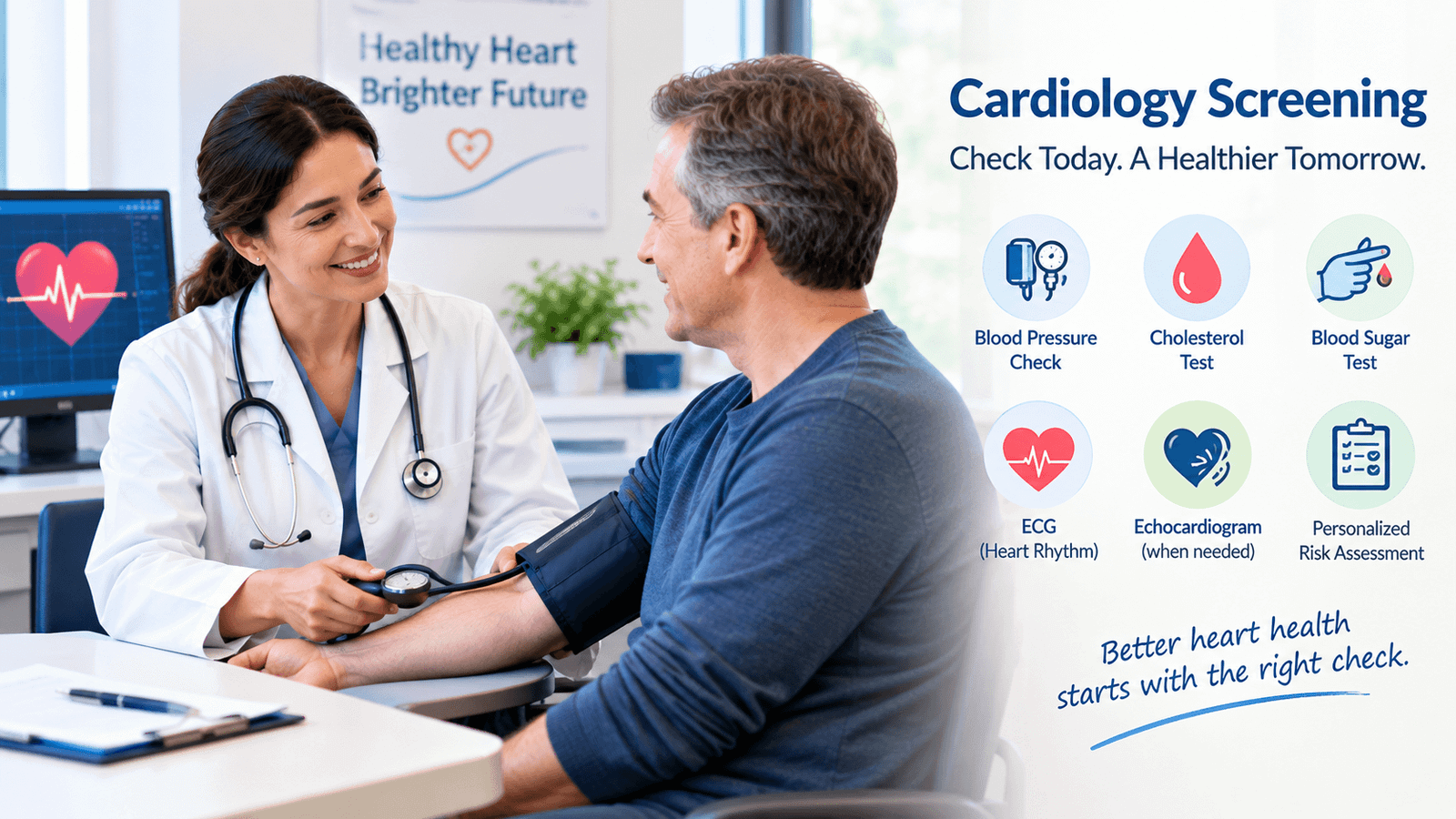
Doctors use several tools to learn how the heart works.
Most tests are safe and painless.
Common Heart Tests
| Test | What It Does | What Your Child Experiences |
| Electrocardiogram (ECG) | Records heart signals | Small stickers on the skin |
| Echocardiogram | Uses sound waves to show the heart | A probe moves across the chest |
| Holter Monitor | Tracks heart rhythm over time | Small monitor worn at home |
| Stress Test | Checks the heart during exercise | Walking or running on equipment |
Understanding an Echocardiogram
An echocardiogram uses sound waves.
It creates pictures of the heart. Doctors can see heart chambers, valves, and blood flow.
Children often watch a video during the test.
What Guidelines Recommend
Groups such as the American Heart Association (AHA) and the American College of Cardiology (ACC) support careful evaluation when symptoms suggest a heart issue.
Doctors choose tests based on symptoms and medical history.
⏱️ What Happens During a Visit?
A first visit is often easier than families expect.
The doctor starts by asking questions.
Questions the Doctor May Ask
- ✅ What symptoms does your child have?
- ✅ When did they begin?
- ✅ Does anyone in the family have heart disease?
- ✅ Does exercise trigger symptoms?
The doctor then performs an exam.
The Physical Exam
The doctor may:
- 🩺 Listen to the heart
- 🩺 Check blood pressure
- 🩺 Measure height and weight
- 🩺 Check oxygen levels
Some children need testing on the same day.
Others return later for additional studies.
Another Real-World Example
A baby may have a heart murmur during a routine visit.
A murmur is an extra sound heard through a stethoscope. Many murmurs are harmless. A specialist can decide if more testing is needed.
❤️ Finding Pediatric Heart Care and Specialty Centers
Families often look for trusted heart programs.
Large hospitals and university centers often provide advanced care.
Pediatric Cardiology Programs in Germany
Some people search for terms such as:
- Kinderkardiologie Uni Mainz
- Kinderkardiologie Darmstadt
- Kinderkardiologie Giessen
- Kinderheilkunde II Pädiatrische Kardiologie
- Kinderkardiologie Frankfurt Höchst
- Kinderkardiologie Uniklinik Frankfurt
These centers often provide:
- ✅ Heart testing
- ✅ Follow-up care
- ✅ Care for congenital heart disease
- ✅ Specialized treatment programs
If you live in the United States, ask your pediatrician for local referrals. Children’s hospitals often have pediatric heart programs.
Looking for a Children’s Cardiologist Near You
Some families search for “Kardiologe für Kinder in der Nähe,” which means a children’s cardiologist nearby.
When choosing a specialist, consider:
- 📋 Board certification
- 📋 Children’s hospital affiliation
- 📋 Experience with your child’s condition
- 📋 Access to testing services
A referral from your pediatrician can help.
Scheduling an Appointment
Many parents search for terms such as “Uniklinik Frankfurt Kinderkardiologie Termin” when seeking appointments.
In the United States, appointment steps often include:
- Call the specialist’s office.
- Share referral information.
- Send medical records if requested.
- Confirm insurance details.
- Attend the evaluation visit.
Planning ahead can make the process smoother.
📋 Living With a Heart Condition

A heart diagnosis can feel scary at first.
Many families worry about school, sports, and daily activities.
Can Children Play Sports?
Many children can stay active.
The answer depends on the condition.
A cardiologist may suggest:
- ✅ Full participation
- ✅ Activity limits
- ✅ Extra testing before sports
Always follow your doctor’s advice.
School and Daily Life
Most children attend school normally.
Teachers may need information about medications or activity limits.
Good communication helps everyone support the child.
Emotional Support Matters
Children may feel worried about medical visits.
Parents may feel stress too.
Helpful steps include:
- ❤️ Answer questions honestly
- ❤️ Keep routines steady
- ❤️ Celebrate milestones
- ❤️ Ask for support when needed
Small actions can build confidence.
Frequently Asked Questions
Q: What does child cardiology treat?
A: Child cardiology treats heart conditions in babies, children, and teens. These may include heart murmurs, rhythm problems, and congenital heart defects. A specialist can evaluate symptoms and recommend care.
Q: Kardiologe für Kinder in der Nähe – how do I find one?
A: The best place to start is your child’s pediatrician. They can refer you to a qualified pediatric cardiologist. Children’s hospitals also often provide specialist directories.
Q: What services are available at Kinderkardiologie Uni Mainz?
A: Pediatric cardiology departments at university hospitals often provide testing, diagnosis, and follow-up care. Services may vary by location. Contact the hospital directly for current information.
Q: Can I schedule a Uniklinik Frankfurt Kinderkardiologie Termin online?
A: Many hospitals now offer online scheduling options. Availability depends on the facility. Check the hospital’s official website or call the clinic.
Q: What is Kinderheilkunde II Pädiatrische Kardiologie?
A: This term refers to a pediatric cardiology department within a children’s health program. These departments focus on heart care for young patients and often support complex cases.
Q: Are Kinderkardiologie Darmstadt, Giessen, and Frankfurt Höchst options for specialized care?
A: Yes. These locations are known for pediatric heart services. Families should contact each center to learn about available specialists, testing, and appointment times.
Conclusion
Child cardiology plays an important role in keeping children’s hearts healthy. Early evaluation can help doctors understand symptoms and guide care. Tests are often simple, safe, and designed for children.
Many heart concerns turn out to be manageable. Some children need ongoing monitoring, while others need only reassurance. The right specialist can help families make informed decisions.
If your child has symptoms or a known heart condition, talk to a cardiologist if you have any heart concerns. Early guidance may bring peace of mind and support your child’s health journey.