
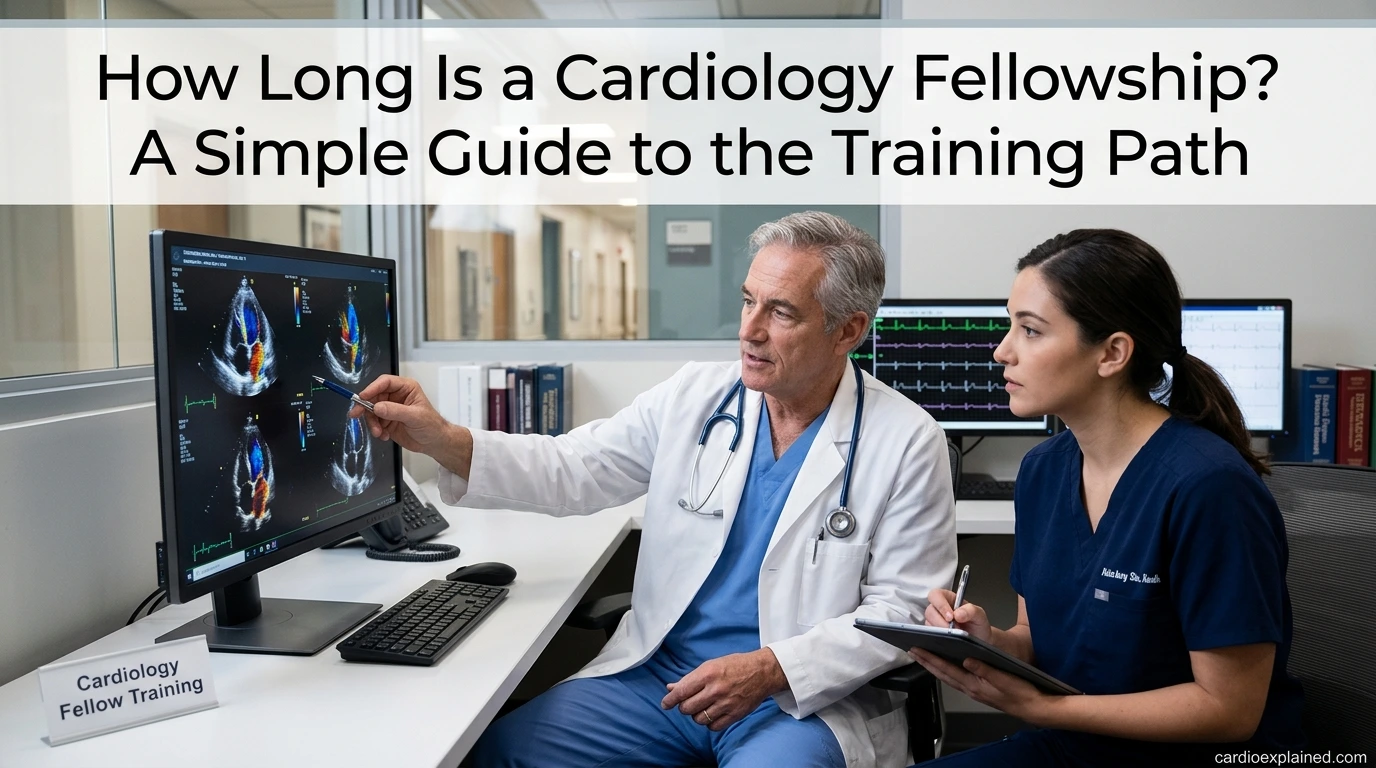

How long is a cardiology fellowship? A general cardiology fellowship lasts three years after internal medicine residency. Some doctors train even longer if they choose a heart specialty, such as heart rhythm care or advanced heart failure care.
Have you ever wondered how a heart doctor learns so much? Many people ask how long is a cardiology fellowship when they meet a cardiologist or think about a medical career. The answer is simple, but the full path takes many years.
Heart doctors spend a long time learning to care for people safely. They study in school, train in hospitals, and work with experienced doctors. This extra time helps them make careful decisions. It also helps patients feel more confident during heart care. Whether you are a patient, a caregiver, or a student, knowing this path can help you understand the skill behind every visit.
❤️ How Long Is a Cardiology Fellowship?
A cardiology fellowship usually lasts three years in the United States. Doctors begin this training after they finish an internal medicine residency.
The full journey often looks like this:
| Training Stage | Typical Length | Main Focus |
|---|---|---|
| College | 4 years | Basic science and other subjects |
| Medical school | 4 years | Learning medicine and patient care |
| Internal medicine residency | 3 years | Caring for adults with many illnesses |
| Cardiology fellowship | 3 years | Heart and blood vessel care |
Most future cardiologists spend about 14 years training after high school.
During fellowship, doctors care for real patients every day. They also learn from heart experts. They slowly take on more responsibility as their skills grow.
🩺 What Happens During Cardiology Fellowship?
A fellowship is hands-on training. Doctors already know general medicine. Now they focus on the heart.
They learn how to:
- ✅ Listen to heart sounds
- ✅ Read heart tests
- ✅ Treat common heart diseases
- ✅ Care for people in clinics
- ✅ Help patients in the hospital
- ✅ Respond to heart emergencies
Many fellows also work overnight or on weekends. These hours help them gain real experience.
Learning Heart Tests
Doctors learn many common heart tests.
| Test | What It Does |
|---|---|
| Electrocardiogram (ECG or EKG) | Shows the heart’s electrical activity |
| Echocardiogram | Uses sound waves to create heart pictures |
| Stress test | Shows how the heart works during exercise or medicine |
| Heart monitor | Tracks heart rhythm over time |
These tests follow standard medical practice. Groups such as the American Heart Association (AHA) and the American College of Cardiology (ACC) publish guidance for heart care.
Learning Patient Care
Fellows spend time with many kinds of patients.
For example, an older man may come with chest pain. The fellow checks his history, orders tests, and discusses the plan with a senior doctor.
Another patient may worry about a new heart murmur. A heart murmur is an extra sound heard through a stethoscope. Many murmurs are harmless, but some need more testing.
These daily experiences build confidence over time.
⏱️ Why Does Training Take So Long?
The heart works every second of your life. Small mistakes can have serious effects.
Doctors need years to learn:
- ❤️ Heart anatomy, or the heart’s structure
- ❤️ Heart disease diagnosis
- ❤️ Safe medicine use
- ❤️ Emergency care
- ❤️ Teamwork with other specialists
Experience matters.
Many patients feel nervous before their first heart visit. A well-trained cardiologist can explain each step in simple words. That calm approach often comes from years of practice.
Learning also never stops. Cardiologists attend classes and meetings after fellowship. They keep up with new research and updated care recommendations.
📋 Can Cardiology Training Take Longer?
Yes. Some cardiologists choose extra training after general fellowship.
This extra training focuses on one area of heart care.
| Specialty | Extra Training | Focus |
|---|---|---|
| Interventional cardiology | 1 year | Heart catheter procedures and stents |
| Electrophysiology | 2 years | Heart rhythm problems |
| Advanced heart failure | 1 year | Severe heart failure and heart transplant care |
| Imaging | 1 year | Advanced heart scans |
Doctors who complete these programs become experts in specific problems.
For example, someone with repeated abnormal heart rhythms may see an electrophysiologist. This doctor has extra training in electrical problems of the heart.
If you ask how long is a cardiology fellowship, remember that three years covers general cardiology. Extra specialties add more years.
Board Certification
Many cardiologists also earn board certification.
Board certification means a doctor passed special exams. It shows they meet high standards in their field.
Doctors may also complete continuing education. This helps them stay current throughout their careers.
✅ A Day in the Life of a Cardiology Fellow
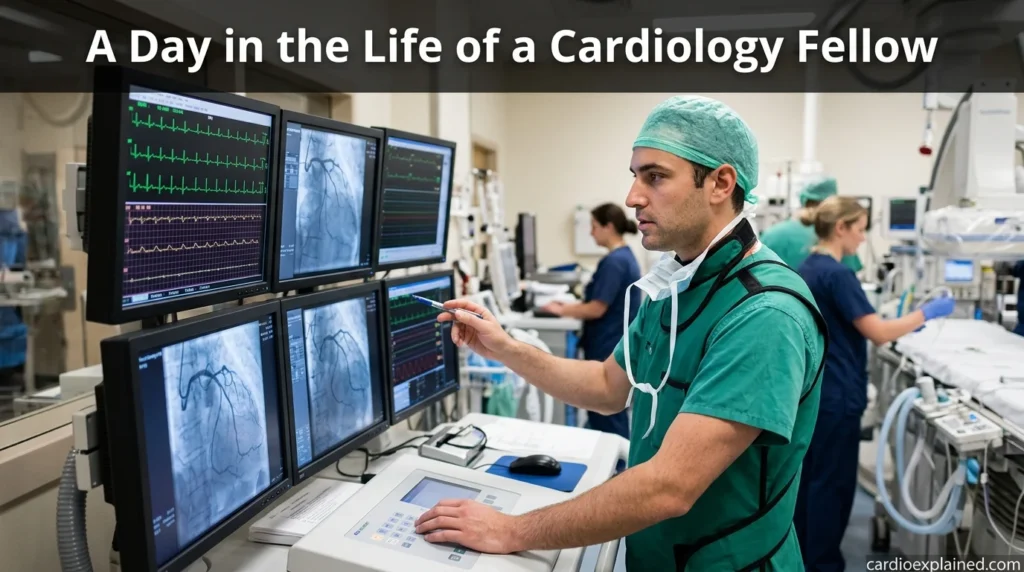
No two days look exactly alike.
A fellow may start early by checking hospital patients.
Next, they may visit a heart clinic. There, they meet people with high blood pressure, chest pain, or heart failure.
Heart failure means the heart cannot pump blood as well as it should.
Later, they may read echocardiograms or stress tests.
Some days include emergencies. Others focus on teaching or research.
Most fellows also meet with senior doctors. They review cases and discuss treatment plans together.
This teamwork helps patients receive safe care.
⚠️ What Patients Should Know About Fellowships
Some patients feel unsure when they hear the word “fellow.”
There is no need to worry in many cases.
A fellow is already a licensed doctor. They finished medical school and residency before fellowship.
Senior heart specialists supervise fellows during training.
Many teaching hospitals use this team approach every day.
For example, a woman preparing for a stress test may first meet a fellow. Later, the supervising cardiologist reviews the findings. Together, they create the care plan.
This process helps fellows learn while protecting patient safety.
Patients can always ask who is leading their care. Most doctors welcome these questions.
❤️ Career Outlook for Cardiologists
Heart disease remains common in the United States.
Because of this, cardiologists continue to play an important role.
Many work in:
- ❤️ Hospitals
- ❤️ Private clinics
- ❤️ Academic medical centers
- ❤️ Heart specialty groups
Some also teach future doctors. Others join research studies that improve patient care.
Training takes time, but many doctors enjoy helping patients through every stage of heart health.
Frequently Asked Questions
Q: ❓ How long is a cardiology fellowship after residency?
A: A general cardiology fellowship lasts three years after a three-year internal medicine residency. Some doctors train longer if they choose a heart specialty.
Q: ❓ Can a cardiologist study longer than three years?
A: Yes. Many cardiologists complete one or two extra fellowship years. These programs teach advanced heart procedures or special heart conditions.
Q: ❓ Do cardiology fellows treat patients?
A: Yes. Fellows care for patients every day. Experienced cardiologists supervise their work and review important decisions.
Q: ❓ Is a cardiology fellow a real doctor?
A: Yes. A fellow already finished medical school and residency. Fellowship provides advanced heart training.
Q: ❓ Why does heart training take so many years?
A: Heart care can be complex. Doctors need time to master testing, treatment, emergencies, and patient communication.
Q: ❓ Do all cardiologists perform heart surgery?
A: No. Cardiologists usually diagnose and treat heart disease without surgery. Heart surgeons complete a different training path.
Conclusion
Understanding how long is a cardiology fellowship helps explain why heart specialists have deep knowledge and experience. A general fellowship lasts three years after internal medicine residency. Some doctors add one or two more years for advanced heart specialties. Every stage builds skills through patient care, testing, and supervised learning. This careful training helps doctors make thoughtful decisions and provide safe care. If you have heart concerns, talk to a cardiologist. They can answer your questions and guide you toward the care that may fit your needs.