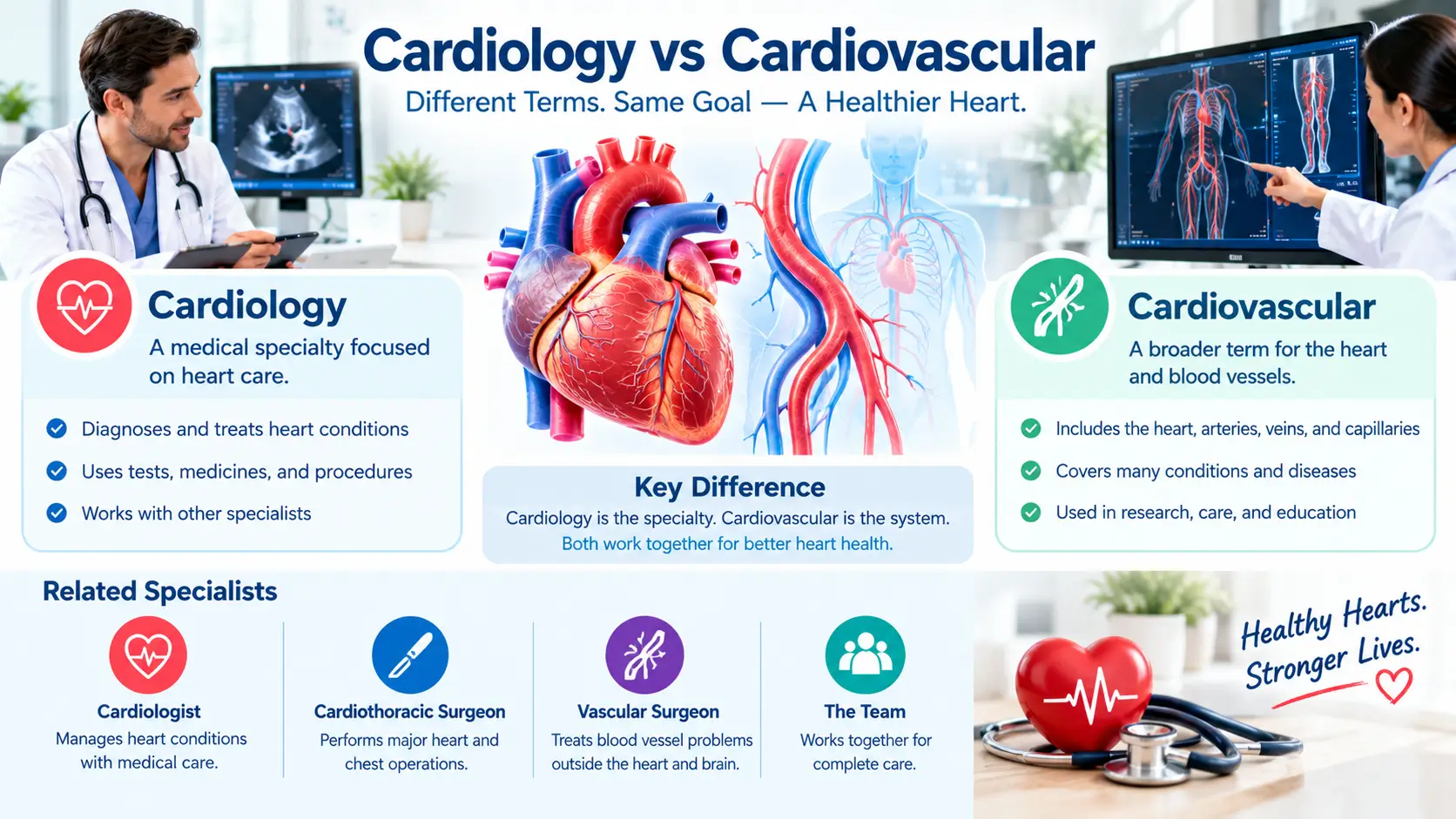
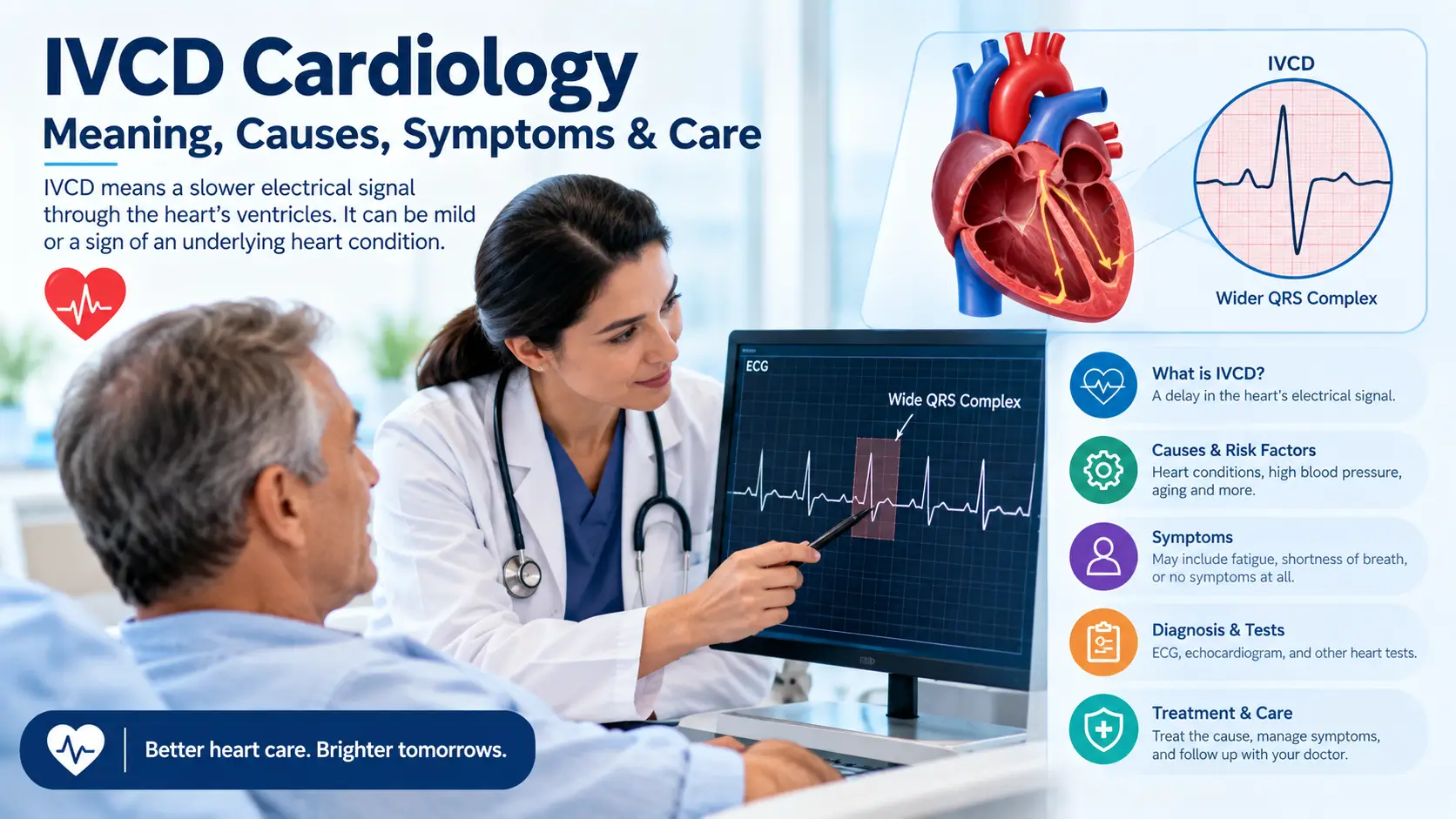

IVCD in cardiology means intraventricular conduction delay, a slower electrical signal through the heart’s lower chambers. Doctors usually find IVCD on an ECG and then look for its cause.
IVCD may be mild and cause no symptoms. In other cases, it can relate to heart disease and may need more testing or treatment.
What Does IVCD Mean in Cardiology? 🩺
Have you seen “IVCD” on an ECG report? The term can look scary at first.
IVCD means intraventricular conduction delay. It describes slower electrical movement through the heart’s ventricles. The ventricles are the lower chambers that pump blood to your body.
Your heart uses electrical signals to control each heartbeat. These signals normally travel through a set path. This path helps both ventricles squeeze in a steady pattern.
When that signal moves more slowly, an ECG may show a wider QRS complex. The QRS complex represents the electrical activity that makes the ventricles contract.
IVCD does not always mean severe heart disease. Some people have no symptoms at all. Others may have an underlying heart or health problem.
Doctors look at the whole ECG, not just the IVCD label. They also review symptoms, medical history, and other test results.
IVCD compared with a normal ECG
A normal ECG usually shows a narrow and regular electrical pattern. IVCD can make the QRS complex wider than expected.
The delay can affect one side or both sides of the heart. The exact pattern helps doctors understand what may be happening.
Common conduction patterns include:
| Pattern | Simple meaning | Common ECG clue |
| Right bundle branch block | Signal travels slowly on the right side | Right-sided conduction pattern |
| Left bundle branch block | Signal travels slowly on the left side | Left-sided conduction pattern |
| Nonspecific IVCD | Delay does not fit either main pattern | Wide QRS without classic features |
The term “nonspecific” does not mean the finding has no meaning. It means the ECG pattern does not match a specific bundle branch block.
Your doctor may compare your current ECG with an older one. A new change can need more attention than a long-standing finding.
What Causes IVCD?
IVCD can happen for several reasons. Sometimes doctors cannot find one clear cause.
Heart conditions can change the way electrical signals travel. These changes may affect the heart muscle or its electrical pathways.
Possible causes include:
- High blood pressure over many years.
- Coronary artery disease.
- Previous heart attack.
- Heart muscle disease.
- Heart valve problems.
- Changes from aging.
- Certain heart rhythm problems.
- Some medicines or electrolyte problems.
An electrolyte is a mineral that helps your body and heart work. Potassium is one example.
A doctor may check blood tests when the ECG finding needs more explanation. These tests can help identify problems that affect heart function.
IVCD with LAD
You may also see “IVCD with LAD” on an ECG report. LAD usually means left axis deviation.
The heart’s electrical axis describes the main direction of electrical activity. Left axis deviation means that direction points farther left than usual.
IVCD with LAD does not give a complete diagnosis by itself. Doctors need the full ECG and medical history.
The combination can appear with several heart conditions. It can also occur with other electrical or structural changes.
LVH with IVCD
Another report may say “LVH with IVCD.” LVH means left ventricular hypertrophy.
This means the muscle wall of the left ventricle appears thicker than expected. Long-term high blood pressure can contribute to this change.
An ECG can suggest LVH, but it cannot always confirm thickened heart muscle. Doctors may use an echocardiogram for a closer look.
An echocardiogram uses sound waves to create pictures of the heart. It can show heart size, muscle thickness, valves, and pumping function.
What Symptoms Can IVCD Cause? ⚠️
IVCD itself may not cause any symptoms. Many people discover it during a routine ECG.
Symptoms often depend on the reason behind the conduction delay. They can also depend on how well the heart pumps.
Possible symptoms may include:
- Feeling tired.
- Shortness of breath.
- Dizziness.
- Fainting.
- Fast or uneven heartbeats.
- Reduced ability to exercise.
- Chest discomfort.
These symptoms can have many causes. An IVCD finding does not prove that IVCD caused them.
When symptoms need more attention
A person with a new ECG change may feel worried. The doctor may ask when symptoms began and how often they happen.
For example, a 55-year-old person may have an ECG during a routine visit. The report may show IVCD without any symptoms.
The doctor may compare the ECG with an older test. If the pattern has stayed the same, the care plan may differ.
Another person may develop fainting and shortness of breath. Their ECG may show a new conduction problem. The doctor may order more tests to look for an underlying cause.
These examples show why context matters. The same ECG term can mean different things in different people.
How Do Doctors Measure and Diagnose IVCD? 📋
Doctors usually identify IVCD with an electrocardiogram, also called an ECG or EKG.
An ECG uses small sticky sensors placed on the skin. The sensors record the heart’s electrical signals.
The QRS duration is one part doctors review. A wider QRS can suggest slower electrical movement through the ventricles.
IVCD measurement
Doctors measure the QRS complex in milliseconds. The exact interpretation depends on the ECG pattern and clinical setting.
A wide QRS can have several causes. Bundle branch blocks, pacing, ventricular rhythms, and other patterns can affect QRS width.
Nonspecific IVCD generally refers to a wide QRS that does not meet standard patterns for right or left bundle branch block.
Doctors do not diagnose a patient from QRS width alone. They also study the shape of the QRS and the rest of the ECG.
Common tests doctors may use
| Test | What it can show | Why doctors may use it |
| ECG | Heart rhythm and electrical signals | Finds conduction changes |
| Echocardiogram | Heart structure and pumping | Checks heart muscle and valves |
| Blood tests | Minerals and other body markers | Looks for possible contributing problems |
| Heart monitor | Rhythm over time | Finds changes that come and go |
A heart monitor can record your rhythm for hours or days. Doctors may use one when symptoms happen only sometimes.
An echocardiogram can be useful when doctors want to check heart structure. It may show reduced pumping strength or valve problems.
Doctors may also order other imaging or heart tests when the history suggests a need.
Sinus rhythm with IVCD on ECG
“Sinus rhythm” means the heartbeat starts from the heart’s normal natural pacemaker. An ECG can show sinus rhythm and IVCD at the same time.
This combination means the heart rhythm starts normally. However, the electrical signal takes longer than expected through the ventricles.
Sinus rhythm with IVCD does not automatically mean a dangerous rhythm. Doctors still need to consider the person’s symptoms and heart health.
Is IVCD Serious?
IVCD can be harmless in some people. It can also point to an underlying heart problem in others.
The importance depends on several factors. These include the type of conduction delay and whether it is new.
Doctors may pay closer attention when IVCD appears with:
- Fainting.
- Chest pain.
- Severe shortness of breath.
- Reduced heart pumping function.
- Known heart disease.
- A new ECG change.
- Other major ECG abnormalities.
A person with no symptoms may need only follow-up. Another person may need several tests.
The ECG pattern matters too. Right bundle branch block, left bundle branch block, and nonspecific IVCD have different meanings.
Doctors may also compare the ECG with earlier records. A stable finding can provide useful context.
How Is IVCD Treated?
There is no single treatment for IVCD. Doctors usually treat the cause rather than the ECG label itself.
If high blood pressure contributes to heart changes, treatment may focus on blood pressure control. If coronary artery disease is present, the doctor may address that condition.
Some people need no specific treatment for the conduction delay. Their doctor may simply monitor the heart over time.
When medicines may help
Doctors may prescribe medicine for an underlying condition. The medicine depends on the patient’s needs.
For example, a person with high blood pressure may need blood pressure medicine. Another person may need medicine for an abnormal heart rhythm.
Do not stop a prescribed medicine because an ECG shows IVCD. Talk with your doctor before changing any medicine.
IVCD and pacemakers
A pacemaker is a small device that helps control a slow or abnormal heart rhythm. IVCD alone does not mean that you need a pacemaker.
Doctors consider a pacemaker when specific electrical or rhythm problems affect the heart. Symptoms and heart rhythm findings also matter.
Some patients with serious conduction disease may benefit from device therapy. Others may need no device at all.
A device decision requires a detailed medical review. Your cardiologist can explain whether your ECG pattern creates a need.
IVCD and cardiac resynchronization
Some patients with heart failure have major electrical delays. These delays can make the ventricles squeeze out of sync.
In selected patients, doctors may consider cardiac resynchronization therapy, or CRT. CRT uses special pacing to help the ventricles beat in a more coordinated way.
CRT is not appropriate for every person with IVCD. Doctors consider heart function, symptoms, ECG findings, and other factors.
IVCD With LAD, LVH, and Other ECG Findings
ECG reports often contain several findings together. This can make the report difficult to understand.
IVCD with LAD is one example. LVH with IVCD is another.
These terms describe different parts of the ECG. They do not automatically provide a final diagnosis.
Doctors may look at:
- Heart rhythm.
- QRS width.
- QRS shape.
- Electrical axis.
- Signs of heart muscle strain.
- Earlier ECG results.
- Symptoms and medical history.
This approach helps doctors put the ECG finding into context.
A patient may have sinus rhythm with IVCD and no symptoms. Another patient may have IVCD with reduced heart function.
The same ECG term can therefore have different clinical meanings. Your doctor should explain what the finding means for you.
Lifestyle and Follow-Up Tips ❤️
You cannot always prevent IVCD. Some causes relate to conditions that develop over time.
Still, healthy habits can support overall heart health.
Helpful steps may include:
- Keep blood pressure under good control.
- Avoid smoking and nicotine.
- Eat a balanced diet.
- Stay active when your doctor allows it.
- Keep regular medical visits.
- Take prescribed medicines as directed.
- Manage diabetes if you have it.
- Ask about cholesterol control when needed.
Do not start a new exercise plan without medical advice if you have heart symptoms.
People with known heart disease may need a personal activity plan. Your doctor can tell you what level of exercise fits your condition.
Keep your ECG records
Save copies of important ECG reports when possible. Older ECGs can help doctors identify changes.
A new IVCD finding may have a different meaning from a stable finding. Comparing old and new tests can give useful information.
Tell your doctor about fainting, chest discomfort, breathing problems, or new heartbeats. These symptoms can help guide further testing.
When Should You See a Doctor? ⚠️
Talk with a doctor if an ECG report shows IVCD. This is especially important if the finding is new.
You should also discuss any new heart symptoms. Your doctor can decide whether you need more tests.
Seek urgent medical care for severe or sudden symptoms.
These may include:
- Severe chest pain.
- Severe trouble breathing.
- Fainting.
- Sudden weakness.
- New confusion.
- A very fast or very slow heartbeat with symptoms.
Call emergency services for serious symptoms. Do not wait for a routine office visit.
If you feel well, your doctor may still want to review the ECG. The next step may be simple follow-up.
The key is not to judge the ECG label alone. Your full health picture matters.
Frequently Asked Questions
Q: Is IVCD serious?
A: IVCD can be mild in some people. It can also occur with heart disease or reduced heart function. Doctors consider the ECG pattern, symptoms, and other test results.
Q: What are the types of IVCD?
A: Common patterns include right bundle branch block and left bundle branch block. Nonspecific IVCD describes a wide QRS without those classic patterns. The ECG shape helps doctors identify the type.
Q: What does IVCD with LAD mean?
A: It means the ECG shows intraventricular conduction delay and left axis deviation. These are two separate ECG findings. Your doctor must review the complete ECG and medical history.
Q: Can IVCD need a pacemaker?
A: Yes, some people with serious conduction problems may need a pacemaker. IVCD alone does not mean you need one. Doctors consider symptoms and other electrical findings before recommending a device.
Q: What does sinus rhythm with IVCD mean on an ECG?
A: It means the heartbeat starts from the heart’s normal pacemaker. The electrical signal then moves more slowly through the ventricles. This finding can occur with or without symptoms.
Q: What does LVH with IVCD mean?
A: LVH means the left heart muscle may look thicker than usual. IVCD means electrical signals move slowly through the ventricles. Doctors may use an echocardiogram to check heart structure.
Q: How is IVCD measured?
A: Doctors measure the QRS duration on an ECG. They also study the QRS shape and other ECG features. The full pattern helps determine the type of conduction delay.
Conclusion
IVCD cardiology refers to a delay in electrical signal movement through the heart’s ventricles. Doctors usually find it on an ECG.
IVCD can occur without symptoms. It can also appear with heart disease, high blood pressure, or other conditions.
Doctors consider the ECG pattern, symptoms, medical history, and other test results. Some people need only follow-up. Others may need medicine, further testing, or device treatment.
IVCD with LAD, LVH with IVCD, and sinus rhythm with IVCD describe different ECG findings. These terms need context before doctors can explain their meaning.
If your ECG shows IVCD, discuss the result with your doctor. Talk to a cardiologist if you have any heart concerns.
Medically reviewed for accuracy. Always consult a licensed cardiologist for personal advice.