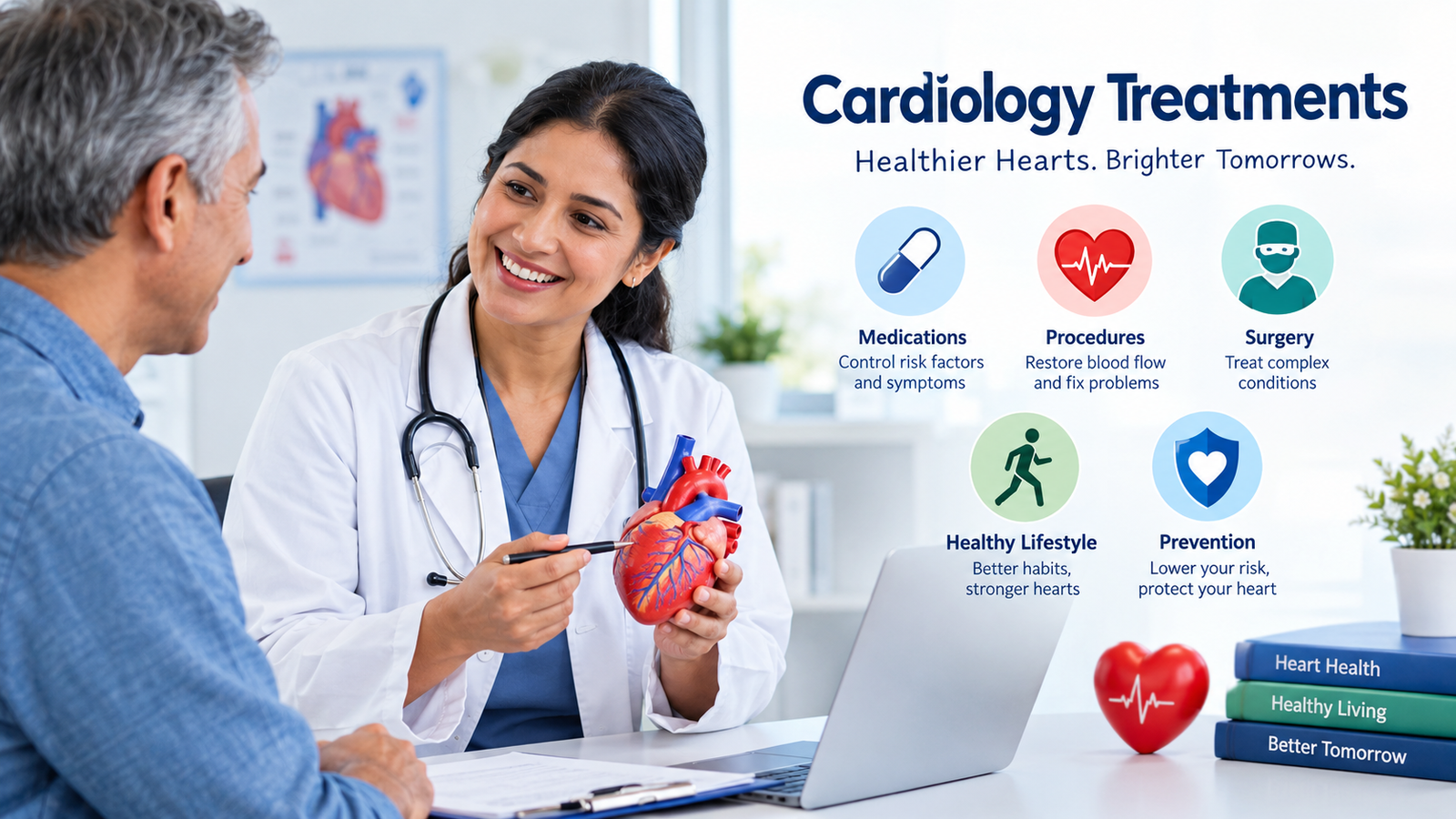

Cardiology treatments are medical care used to treat heart and blood vessel problems. They may include medicines, lifestyle changes, procedures, or surgery. Doctors choose treatment based on the heart condition, test results, risks, and patient needs.
Introduction
Have you ever felt worried after hearing the words “heart problem”?
You may wonder what happens next and how doctors can help.
Cardiology treatments cover many ways to manage heart and blood vessel conditions.
The right plan depends on your symptoms, health history, and test results.
Some people need daily medicines and lifestyle changes.
Others may need a heart procedure or surgery.
Heart disease can include many different conditions.
Coronary artery disease is the most common type in the United States.
Doctors may treat high blood pressure, high cholesterol, heart rhythm problems, and heart failure.
They may also treat blocked heart arteries and heart valve problems.
This guide explains common treatments in simple terms.
You will learn about tests, medicines, procedures, surgery, and healthy habits.
You will also learn when heart symptoms need urgent care.
Many patients feel nervous before their first heart visit.
Knowing what to expect can make that visit feel less stressful.
What Are Cardiology Treatments?
Cardiology treatments are care options for heart and blood vessel conditions.
A cardiologist is a doctor who treats heart-related problems.
Treatment can start with simple changes to daily habits.
It may also include prescription medicines or medical procedures.
Doctors first learn what may be causing the problem.
They review your symptoms, medical history, and risk factors.
They may also order blood tests or heart imaging.
Common heart conditions include:
- Coronary artery disease, which affects blood flow to the heart.
- Heart failure, which affects how well the heart pumps.
- Arrhythmia, which means an abnormal heart rhythm.
- Valve disease, which affects heart valves.
- High blood pressure, which strains blood vessels and the heart.
The treatment plan may use more than one approach.
For example, a patient may need medicine and regular exercise.
Treatment Depends on the Heart Problem
There is no single treatment for every heart condition.
A treatment that helps one person may not suit another person.
Doctors consider age, symptoms, other health problems, and test results.
They also consider possible benefits and risks.
The American Heart Association and American College of Cardiology publish heart care guidelines.
These guidelines help doctors make evidence-based treatment decisions.
A patient with blocked arteries may need medicine first.
Another patient may need a stent or bypass surgery.
This is why personal medical advice should come from your care team.
Causes and Risk Factors for Heart Problems
Heart problems can develop for many reasons.
Some risks come from family history or age.
Other risks can change through treatment and daily habits.
High blood pressure is a major heart disease risk.
High cholesterol can also raise heart disease risk.
Smoking is another major risk factor.
Other factors include diabetes, excess weight, and low activity.
An unhealthy diet can also increase risk.
Heavy alcohol use may raise blood pressure and heart risk.
Family history can also affect your risk.
Age can increase risk as the years pass.
How Heart Disease Can Develop
One common problem involves plaque inside the arteries.
Plaque is a buildup of fat and other material.
This buildup can narrow an artery.
It may reduce blood flow to the heart.
A severe blockage can cause a heart attack.
Heart attacks need emergency medical care.
Not every risk factor can be changed.
However, many risks can be managed with proper care.
A patient with high blood pressure may feel completely normal.
High blood pressure often causes no clear symptoms.
Regular checks can find problems before serious symptoms appear.
Risk Factors Doctors May Check
| Risk factor | Why it matters | What may help |
| High blood pressure | Strains the heart and vessels | Medicine and lifestyle changes |
| High cholesterol | Can add to artery plaque | Diet, activity, and medicine |
| Smoking | Damages the heart and blood vessels | Quitting support |
| Diabetes | Can raise heart disease risk | Blood sugar control |
| Low activity | Can increase several heart risks | Regular movement |
Doctors may check several risks during routine visits.
This helps guide prevention and treatment choices.
Symptoms and Signs to Watch For
Heart symptoms can look different from person to person.
Some heart conditions may cause few or no symptoms.
Chest pain or pressure can be a warning sign.
Shortness of breath can also signal a heart problem.
Other possible symptoms include:
- Unusual tiredness.
- Dizziness or fainting.
- A fast or uneven heartbeat.
- Swelling in the legs or feet.
- Pain in the upper back, neck, jaw, or arm.
- Nausea or vomiting during some heart attacks.
The CDC lists chest discomfort and shortness of breath among heart attack symptoms.
Symptoms May Not Always Feel Like Chest Pain
Some people may not have strong chest pain.
Symptoms can be less clear in some patients.
A person may feel very tired or short of breath.
Some may feel pain in the jaw, back, or arm.
For example, a patient may blame shortness of breath on age.
A doctor may still need to check the heart.
Another patient may notice a racing heartbeat.
That person may need testing for an abnormal rhythm.
Do not ignore new or unexplained heart symptoms.
Cardiac Procedures and Tests
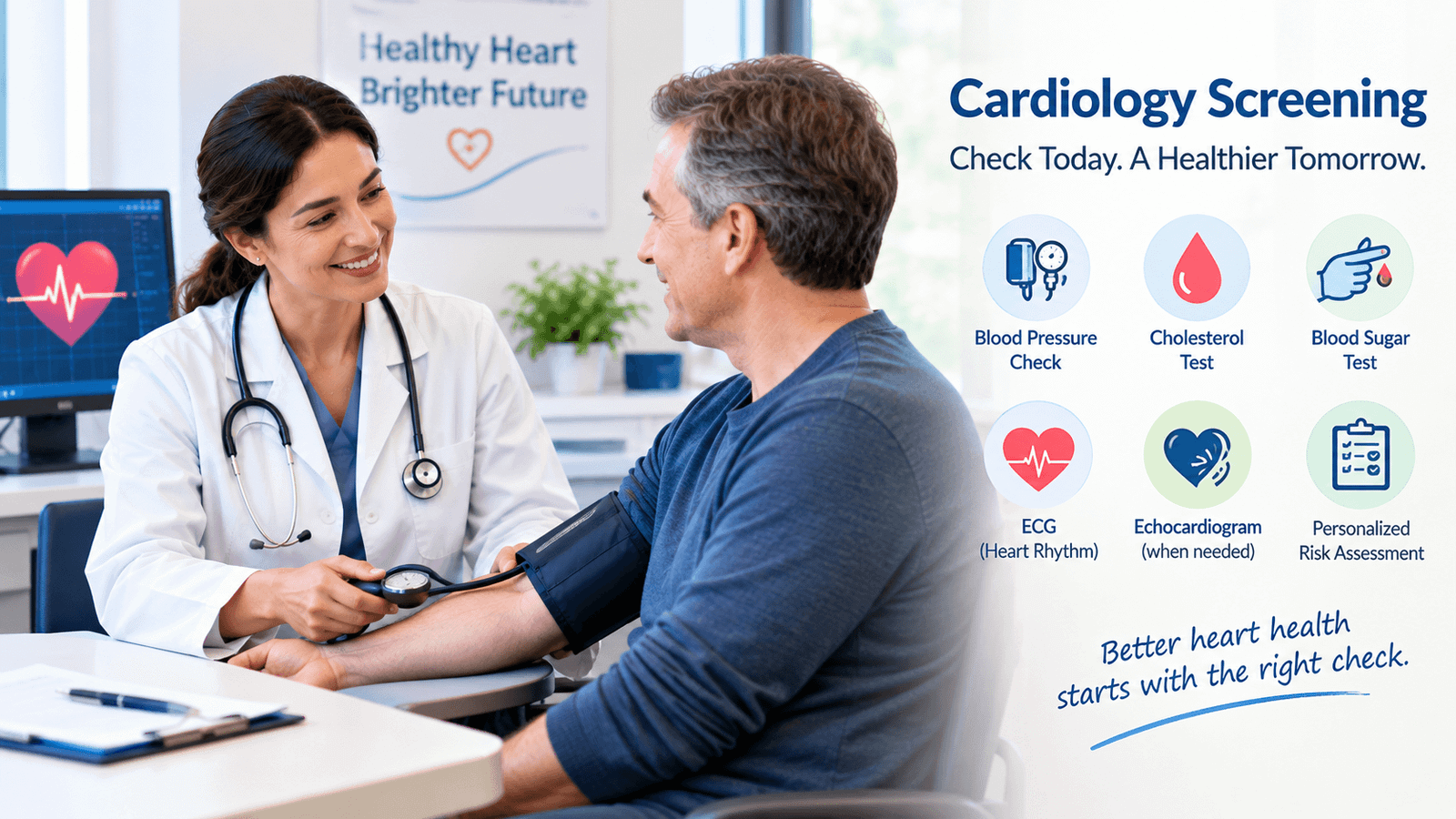
Doctors use different tests to find heart problems.
The test depends on your symptoms and health history.
Common cardiac procedures and tests include:
| Test or procedure | Main purpose | What it checks |
| ECG | Records heart signals | Heart rhythm |
| Echocardiogram | Creates heart images | Heart structure and pumping |
| Stress test | Checks the heart during activity | Blood flow and response |
| Cardiac catheterization | Examines heart arteries | Blockages and pressure |
| Holter monitor | Records rhythm over time | Irregular heartbeats |
An ECG uses small sticky patches on the skin.
It records the heart’s electrical activity.
An echocardiogram uses sound waves to create heart images.
It can show how the heart moves and pumps.
A stress test checks how the heart works during exercise.
Some patients receive medicine when exercise is not possible.
Cardiac Diagnosis List
Doctors may consider several possible diagnoses.
The list can include coronary artery disease, arrhythmias, valve disease, and heart failure.
Blood tests may also help find certain heart problems.
Cholesterol testing can show levels of different blood fats.
Some patients need imaging tests for more information.
Others may need longer heart rhythm monitoring.
For example, a patient may report occasional skipped beats.
A short ECG might not catch the problem.
A longer monitor may record the rhythm during daily life.
Your doctor chooses tests based on your symptoms and risks.
Cardiology Treatments and Management Options
Cardiology treatments can include lifestyle changes, medicines, procedures, and surgery.
Doctors often combine several methods for long-term heart care.
Medicines may help control blood pressure and cholesterol.
They may also reduce clot risk or control heart rhythm.
Common medicine groups include beta blockers and ACE inhibitors.
Blood-thinning medicines may help prevent certain dangerous clots.
Never start, stop, or change heart medicine without medical advice.
Medicines for Heart Conditions
Doctors may prescribe medicines for different goals.
For example, some medicines lower blood pressure.
Others lower cholesterol or reduce heart workload.
Statins are medicines that can lower LDL cholesterol.
LDL is often called “bad” cholesterol.
Some patients need antiplatelet medicines after certain procedures.
These medicines can help prevent harmful blood clots.
The right medicine depends on your condition.
Your doctor also considers other medicines and possible side effects.
Procedures for Blocked Heart Arteries
Some patients have narrowed or blocked coronary arteries.
Doctors may recommend a procedure to restore blood flow.
Percutaneous coronary intervention, or PCI, can place a stent.
A stent is a small tube that helps keep an artery open.
Another option is coronary artery bypass surgery.
This surgery creates a new path around a blocked artery.
ACC and AHA guidance supports patient-centered decisions for revascularization.
Revascularization means restoring blood flow through blocked heart arteries.
Doctors consider the blockage pattern and overall health.
They may also involve a heart team when choices are complex.
Types of Heart Surgery for Blockage
Coronary artery bypass grafting is a common surgery for severe blockage.
Doctors use a blood vessel to create a new blood flow route.
PCI with a stent is less invasive than bypass surgery.
It uses a thin tube called a catheter.
The best choice depends on the person and the artery disease.
Doctors should discuss benefits, risks, and other options.
A patient facing bypass surgery may feel scared.
Clear explanations can help the patient understand each step.
Prevention and Healthy Lifestyle Tips
Healthy habits can support heart health at every age.
They also work with medicines and other medical care.
The CDC recommends healthy food, regular activity, and tobacco avoidance.
These habits can help control blood pressure, cholesterol, and blood sugar.
Eat for Heart Health
Choose more vegetables, fruits, whole grains, and fiber-rich foods.
Limit foods high in saturated fat and trans fat.
Too much sodium can raise blood pressure.
Reading food labels can help you manage sodium intake.
You do not need to change everything at once.
Small steps can become lasting habits.
Stay Active
Regular movement can support heart and blood vessel health.
It can also help control weight, blood pressure, and cholesterol.
For many adults, moderate activity is a useful goal.
Brisk walking is one simple example.
Ask your doctor before starting hard exercise.
This matters more if you already have heart symptoms.
Avoid Tobacco
Smoking raises the risk of heart disease and heart attack.
Quitting can lower that risk over time.
Ask your doctor about quit-smoking programs and medicines.
Support can make quitting easier for many people.
Manage Other Health Problems
Control high blood pressure, diabetes, and high cholesterol.
Take prescribed medicines as directed.
Keep regular appointments with your healthcare team.
Bring questions and a current medicine list.
These steps can support both treatment and prevention.
When to See a Doctor: Red Flags
⚠️ Some heart symptoms need emergency medical care.
Call 911 for possible heart attack symptoms.
Do not drive yourself to the hospital.
Warning signs may include:
- Chest pressure, squeezing, or discomfort.
- Trouble breathing or severe shortness of breath.
- Fainting or sudden severe weakness.
- Pain spreading to the arm, back, neck, or jaw.
- Sudden cold sweating with other concerning symptoms.
The CDC lists several of these symptoms as possible heart attack signs.
Do not wait for symptoms to become severe.
Fast treatment can matter during a heart emergency.
When to Schedule a Heart Visit
Make an appointment for repeated or unexplained symptoms.
You should also discuss new heart symptoms with your doctor.
This includes repeated palpitations, swelling, or unusual tiredness.
Your doctor can decide if heart testing may help.
For example, a patient may notice breathlessness during normal walking.
A medical visit can help identify possible causes.
Early evaluation can also help manage heart disease risks.
Frequently Asked Questions
Q: What is the best treatment for heart disease?
A: There is no single best treatment for every heart condition.
Treatment depends on the type and severity of the problem.
Doctors may use medicines, lifestyle changes, procedures, or surgery.
Your care team can match treatment to your test results and needs.
Q: What are common cardiac procedures and tests?
A: Common tests include ECGs, echocardiograms, and stress tests.
Doctors may also use cardiac catheterization or heart rhythm monitors.
Each test answers a different medical question.
Your symptoms usually guide which test you need.
Q: What does a cardiac diagnosis list include?
A: A cardiac diagnosis list can include many heart conditions.
Examples include coronary artery disease, heart failure, arrhythmias, and valve disease.
A doctor needs testing before making a personal diagnosis.
Symptoms alone may not show the exact cause.
Q: How is cardiovascular disease treated?
A: Cardiovascular disease may need lifestyle changes and prescription medicine.
Some people may need a procedure or surgery.
Doctors may also treat related risks like high blood pressure.
The plan depends on the specific heart and blood vessel problem.
Q: What types of heart surgery can treat a blockage?
A: Bypass surgery can create a new path around blocked arteries.
Another option may involve PCI with a stent.
Doctors choose based on the artery disease and patient factors.
ACC and AHA guidance supports shared decisions for revascularization.
Q: What cardiac procedures are commonly used?
A: Procedures can include stent placement, bypass surgery, and catheter-based tests.
Other procedures may treat abnormal heart rhythms or valve problems.
The right procedure depends on the condition being treated.
Your cardiologist can explain the expected benefits and risks.
Q: How much do types of heart surgery cost?
A: Heart surgery costs can vary widely across the United States.
Insurance coverage, hospital fees, and the procedure affect the final cost.
Ask your hospital and insurer for a written estimate.
Also ask about deductibles, copays, and other possible charges.
Conclusion
Cardiology treatments can help manage many heart and blood vessel problems.
Treatment may include medicines, lifestyle changes, procedures, or surgery.
The right plan depends on your condition and test results.
Doctors also consider your other health needs and personal goals.
Healthy habits can support medical treatment.
Regular activity, healthy food, and tobacco avoidance can help protect heart health.
Knowing warning signs can also help you act quickly.
Chest discomfort and severe breathing trouble need urgent attention.
Many heart problems can be managed with ongoing medical care.
Regular visits can help your care team track your progress.
Talk to a cardiologist if you have any heart concerns.
Medically reviewed for accuracy. Always consult a licensed cardiologist for personal advice.