
Pediatrics cardiology is the medical field that cares for babies, children, and teens with heart conditions. It helps find, monitor, and treat heart problems early. Doctors use exams, heart tests, and follow-up care to support healthy growth and development.
Have you ever wondered what happens when a child has a heart concern?
Many parents feel worried after hearing a heart murmur or test result. A fast heartbeat, chest pain, or family history may also raise questions. This is where pediatrics cardiology plays an important role.
Children are not small adults. Their hearts grow and change as they age. Heart care for children needs special training and tools. Early care can help doctors find problems and guide treatment when needed.
Some children need only regular checkups. Others may need medicine or special procedures. Learning about heart care can help families feel more confident and prepared.
❤️ Understanding Pediatrics Cardiology

Pediatrics cardiology focuses on heart and blood vessel health in children.
A pediatric cardiologist is a doctor who treats heart conditions in young people. These doctors receive extra training after medical school.
Heart issues may be present at birth. Doctors call these congenital heart defects. Congenital means the condition started before birth.
Other heart problems may develop later during childhood.
Common Conditions Seen in Children
Some common conditions include:
- ❤️ Heart murmurs
- ❤️ Congenital heart defects
- ❤️ Heart rhythm problems
- ❤️ High blood pressure
- ❤️ Heart muscle diseases
Not every murmur means a child has heart disease. Many murmurs are harmless sounds.
A pediatric cardiologist can tell the difference.
Why Early Care Matters
Early diagnosis can help doctors monitor growth and health.
Some conditions improve without treatment. Others need close follow-up.
The American Heart Association (AHA) supports early heart screening when concerns exist.
🩺 Signs That May Need a Heart Evaluation
Many children with heart conditions look healthy.
Still, some signs may suggest a heart problem.
Symptoms in Babies
Parents may notice:
- 🩺 Poor feeding
- 🩺 Fast breathing
- 🩺 Blue lips or skin
- 🩺 Slow weight gain
These signs do not always mean heart disease. They can have many causes.
Symptoms in Older Children
Older children may experience:
- 🩺 Chest pain
- 🩺 Dizziness
- 🩺 Fainting
- 🩺 Fast heartbeat
- 🩺 Shortness of breath
Doctors review symptoms along with medical history.
A Real-Life Example
Many parents feel nervous before a first heart visit.
For example, a school nurse may hear a murmur during a routine exam. The family often worries about serious disease. After testing, many children learn their murmur is harmless.
📋 Tests Used to Check a Child’s Heart
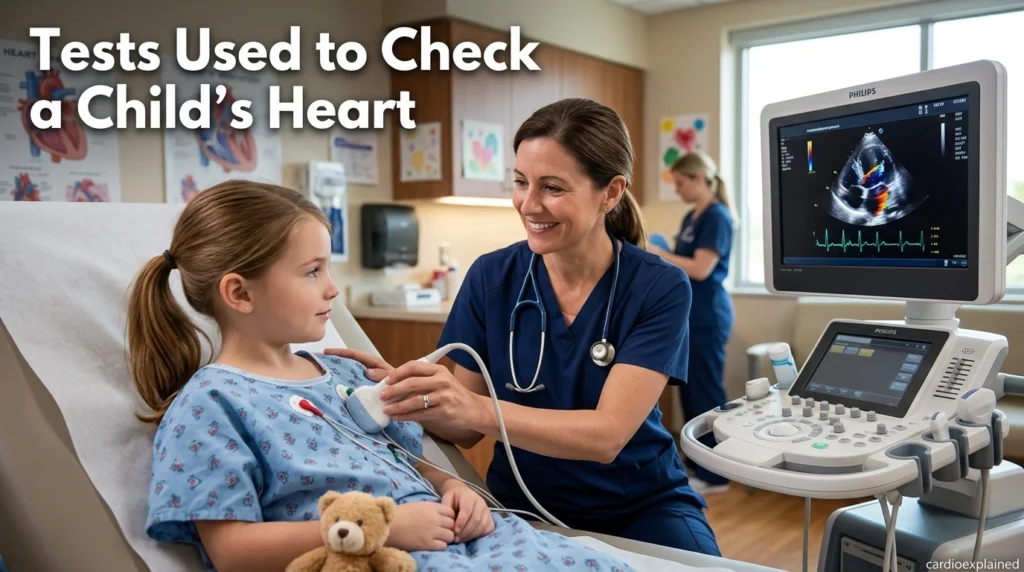
Doctors use several tools to understand heart health.
Most tests are painless and safe.
Physical Exam
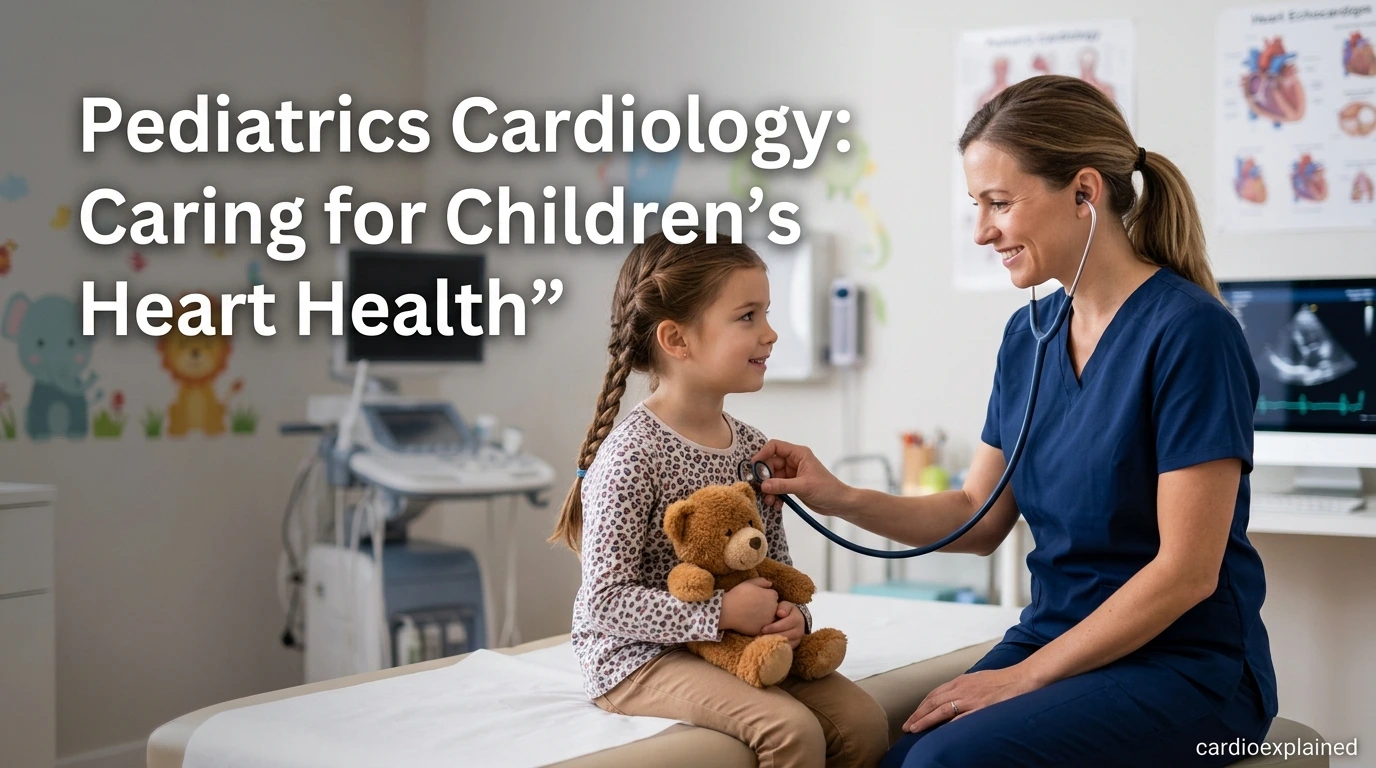
The doctor listens to the heart with a stethoscope.
They also check blood pressure and pulse.
Electrocardiogram (ECG)
An ECG records the heart’s electrical signals.
Small stickers go on the skin.
The test takes only a few minutes.
Echocardiogram
An echocardiogram uses sound waves to create heart pictures.
Many people call this a heart ultrasound.
It helps doctors see heart structure and movement.
Common Heart Tests
| Test | Purpose | Pain Level |
| ECG | Checks heart rhythm | None |
| Echocardiogram | Shows heart structure | None |
| Stress Test | Monitors heart during exercise | Minimal |
| Holter Monitor | Records heart activity over time | None |
Following Medical Guidelines
Doctors often follow guidance from groups such as:
- 📋 American Heart Association (AHA)
- 📋 American College of Cardiology (ACC)
These groups support safe and effective heart care.
⏱️ Treatment and Long-Term Care
Not every child needs treatment.
Many children only need regular monitoring.
Medicines
Doctors may prescribe medicine for:
- ⏱️ Blood pressure control
- ⏱️ Heart rhythm problems
- ⏱️ Heart function support
Families should follow the doctor’s instructions closely.
Procedures and Surgery
Some heart defects need procedures or surgery.
Many treatments happen at specialized children’s hospitals.
Doctors explain benefits and risks before treatment.
Life After Treatment
Many children live active lives after treatment.
Regular checkups help track progress.
A child may continue sports and school activities with medical guidance.
Another Patient Example
A teenager may feel dizzy during sports practice.
Testing may show a heart rhythm issue. After treatment and follow-up care, many teens safely return to activities.
✅ Education and Career Paths in Cardiac Sonography
People interested in heart care often explore cardiac sonography.
Cardiac sonographers perform heart ultrasound exams.
These professionals work closely with cardiologists.
What Is Cardiac Sonography?
Cardiac sonography uses ultrasound to create heart images.
The test is also called echocardiography.
Students learn:
- ✅ Heart anatomy
- ✅ Ultrasound technology
- ✅ Patient care
- ✅ Imaging techniques
Accredited Cardiac Sonography Programs
Accredited programs meet educational standards.
Accreditation helps students prepare for certification exams.
When researching schools, look for recognized accreditation and clinical training opportunities.
Cardiology Sonography Programs Online
Some schools offer online coursework.
Most programs still require in-person clinical training.
Students should confirm program accreditation before enrolling.
Cardiology Sonography Programs in California
California offers several cardiac sonography training options.
Programs may be available through:
- ✅ Community colleges
- ✅ Universities
- ✅ Allied health schools
Requirements vary by institution.
Finding Programs Near Your Area
People often search for:
- Cardiology sonography programs near me
- Cardiology sonography programs near Frankfurt am Main
- Cardiology sonography programs near Offenbach
Available options depend on location and program approval status. Always review each school’s current admission requirements.
Well-Known Training Programs
Students may also research programs associated with major medical centers.
Examples include:
- The Johns Hopkins cardiac sonography training pathway and related educational opportunities
- The UCSF cardiac sonography educational environment and affiliated training experiences
Program details can change over time. Always check directly with the institution for current information.
❤️ Living Well With a Childhood Heart Condition

A heart condition does not define a child.
Many children grow, learn, and play normally.
Healthy Habits
Families can support heart health by:
- ❤️ Encouraging physical activity when approved
- ❤️ Offering balanced meals
- ❤️ Attending follow-up visits
- ❤️ Taking medicines as directed
Emotional Support Matters
Children may feel worried about medical visits.
Simple explanations can reduce fear.
Parents can ask questions and bring notes to appointments.
Working With Your Care Team
Strong communication helps everyone.
The care team may include:
- ❤️ Pediatric cardiologists
- ❤️ Nurses
- ❤️ Surgeons
- ❤️ Sonographers
- ❤️ Primary care doctors
Good teamwork supports better outcomes.
FAQ
Q: Are cardiology sonography programs online a good option?
A: Yes, many online programs offer strong classroom education. Most still require hands-on clinical training at approved healthcare sites.
Q: How can I find cardiology sonography programs near me?
A: Start with accredited schools, colleges, and hospital-based programs. Check local program websites for current admissions information.
Q: Are there cardiology sonography programs near Frankfurt am Main?
A: Yes, healthcare training opportunities may be available in and around Frankfurt. Program offerings can change, so review current school information directly.
Q: Are there cardiology sonography programs near Offenbach?
A: Yes, students near Offenbach may find programs in the surrounding region. Admission requirements vary between schools.
Q: What should I know about the Johns Hopkins Cardiac Sonography program?
A: Johns Hopkins is widely respected in healthcare education. Students should review the institution’s latest program information and admission requirements.
Q: Does pediatrics cardiology involve cardiac sonography?
A: Yes. In many cases, pediatrics cardiology relies on echocardiograms, which cardiac sonographers help perform. These images help doctors evaluate heart structure and function.
Conclusion
Pediatrics cardiology helps children receive specialized care for heart concerns. Early evaluation can help doctors identify problems and guide treatment. Many children with heart conditions lead active and healthy lives with proper support.
Parents should watch for symptoms, attend recommended visits, and ask questions when concerns arise. Heart tests are often safe and painless. Working closely with healthcare providers can bring peace of mind and better understanding.
Talk to a cardiologist if you have any heart concerns. Medically reviewed for accuracy. Always consult a licensed cardiologist for personal advice.