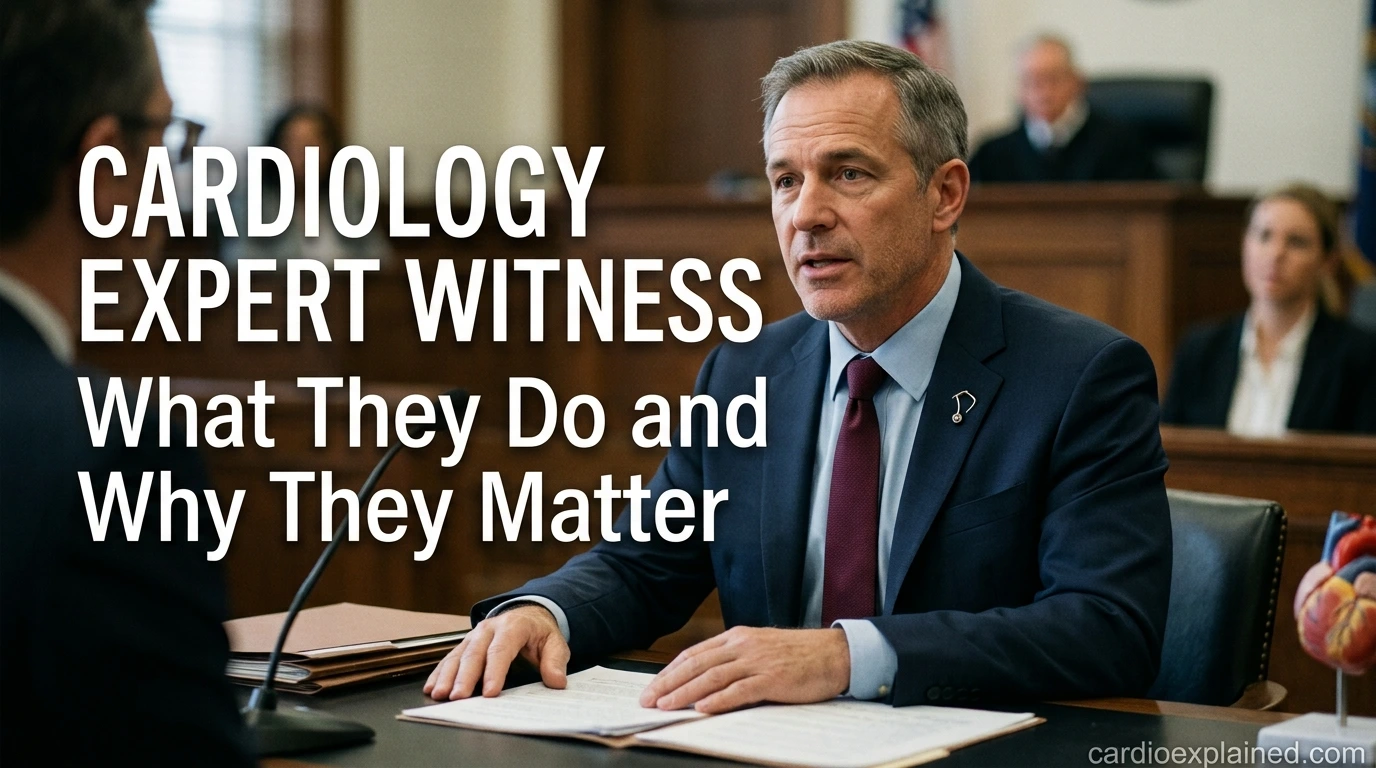

A cardiology expert witness is a heart doctor who gives an expert opinion in legal cases. They review medical records, explain heart care in simple terms, and help judges or juries understand complex medical facts. Their goal is to provide an honest, evidence-based opinion.
Have you ever wondered who explains heart care during a court case? Medical records can seem confusing. Heart diseases also involve many tests and treatments. A cardiology expert witness helps make those facts easier to understand.
People may hear this term after a medical lawsuit, an insurance dispute, or a personal injury case. Patients, families, lawyers, and students often want to know what this expert does. A cardiology expert witness does not decide who wins a case. Instead, they explain medical facts using their training and experience.
Many people feel nervous when they first hear about expert witnesses. That feeling is normal. Learning their role can help reduce worry. You will also see how these specialists review records, explain heart conditions, and support fair decisions. Knowing their work can help you better understand both heart care and the legal process.
❤️ What Is a Cardiology Expert Witness?
A cardiology expert witness is a licensed heart doctor. They have years of training in diagnosing and treating heart disease. They also understand accepted medical standards.
Courts ask these experts to explain heart-related medical issues. Their opinion should stay fair and based on facts. They do not work to support false claims.
Many cardiology expert witnesses still treat patients every week. Their daily experience helps them understand real medical situations.
Their Main Role
These experts often:
- 🩺 Review medical records
- 🩺 Explain heart conditions in plain language
- 🩺 Study test results
- 🩺 Write expert reports
- 🩺 Give testimony in court when needed
Their job is education, not advocacy. They explain what happened based on medical evidence.
When Are They Needed?
A heart specialist may help during cases involving:
- Medical malpractice
- Delayed diagnosis
- Wrong treatment
- Heart attacks after accidents
- Disability claims
- Insurance disputes
- Personal injury lawsuits
For example, a patient may suffer chest pain before surgery. Later, the patient has a heart attack. The court may ask whether doctors followed accepted medical care. The expert reviews the records before giving an opinion.
Skills That Matter
A good expert witness needs more than medical knowledge.
They also need:
| Skill | Why It Matters |
| Medical experience | Helps explain heart care accurately |
| Clear communication | Makes difficult ideas easy to understand |
| Careful record review | Finds important medical details |
| Honesty | Builds trust with the court |
| Current knowledge | Follows modern heart care standards |
Groups such as the American Heart Association (AHA) and the American College of Cardiology (ACC) publish trusted guidance for heart care. Many experts compare medical decisions with these accepted recommendations when appropriate.
🩺 How Does Someone Become a Cardiology Expert Witness?
A doctor cannot become an expert witness overnight. Years of education and patient care come first.
Most experts complete:
- Medical school
- Internal medicine training
- Cardiology fellowship training
- Board certification
- Many years of clinical practice
Board certification shows that a doctor passed national exams in their specialty. Many hospitals and courts value this training.
Experience Builds Trust
Most cardiology expert witnesses have treated thousands of patients.
They may have cared for people with:
- Heart attacks
- Heart failure
- Irregular heartbeats
- Valve disease
- High blood pressure
- Coronary artery disease
This real-world experience helps them understand many situations.
They Keep Learning
Heart medicine changes over time.
Doctors continue learning through:
- Medical conferences
- Research updates
- Continuing education courses
- Professional organizations
Keeping current helps experts provide opinions that match today’s medical practice.
A Real-Life Example
A family believed their father’s heart attack should have been diagnosed sooner.
The expert carefully reviewed emergency room notes, blood test results, heart tracing records, and imaging studies. The heart tracing, called an electrocardiogram or ECG, records the heart’s electrical activity.
After reviewing everything, the expert explained whether the medical team acted according to accepted standards. The opinion relied on evidence, not emotion.
📋 What Cases May Need a Cardiology Expert Witness?
Not every legal case needs a heart specialist.
However, many cases involve questions about heart care.
Medical Malpractice Cases
These cases ask whether a healthcare provider met accepted medical standards.
The expert reviews:
- Symptoms
- Test results
- Treatment choices
- Follow-up care
- Medical records
They explain whether the care matched accepted practice.
Personal Injury Cases
A serious accident may affect heart health.
Examples include:
- Chest injuries
- Heart damage after trauma
- Stress-related heart problems
- Heart issues after surgery following an accident
The expert explains whether the accident may have contributed to the heart condition.
Insurance Claims
Insurance companies sometimes question medical claims.
An expert may review:
- Medical records
- Heart testing
- Disability reports
- Treatment history
They explain whether the medical evidence supports the claim.
Disability Cases
Some people cannot safely return to work because of serious heart disease.
A cardiologist reviews the medical facts before giving an opinion.
For example, a delivery driver developed severe heart failure. Heart failure means the heart cannot pump blood as well as it should. After reviewing test results and treatment records, the expert explained why heavy physical work could place the patient at risk.
Wrongful Death Cases
Some lawsuits involve a person’s death from heart disease.
The expert reviews many records, including:
- Hospital notes
- Ambulance reports
- Imaging tests
- Blood work
- Autopsy findings, if available
Their role is to explain medical facts clearly. They do not decide legal responsibility.
Many patients and families worry when legal questions involve heart care. Clear medical explanations can help everyone better understand what happened.
⏱️ How Doctors Review a Heart Case
When a legal case involves heart care, doctors follow a careful process. They do not rush to an opinion. They review facts before reaching any conclusion.
A cardiology expert witness looks at the complete medical story. Missing records can change the picture. That is why experts ask for every important document.
### Medical Records Come First
The expert often reviews:
- 📋 Emergency room notes
- 📋 Hospital records
- 📋 Clinic visit notes
- 📋 Medicine lists
- 📋 Blood test results
- 📋 Imaging reports
- 📋 Surgery records
Each record helps explain what happened over time.
### Common Heart Tests They Review
Many legal cases include heart testing. These tests help doctors understand heart health.
| Test | Purpose | What It Shows |
| ECG (Electrocardiogram) | Records heart signals | Heart rhythm and signs of heart damage |
| Echocardiogram | Uses sound waves | Heart size, valves, and pumping strength |
| Stress test | Checks the heart during exercise or medicine | Blood flow problems during activity |
| Cardiac catheterization | Uses a thin tube inside blood vessels | Blocked heart arteries |
The expert explains these tests using plain language. Judges and juries usually have no medical training.
### They Compare Care With Accepted Standards
Heart specialists often compare medical care with accepted guidance.
Many doctors use recommendations from:
- American Heart Association (AHA)
- American College of Cardiology (ACC)
These groups regularly update heart care guidance as new research becomes available.
The expert asks questions like:
- Was the right test ordered?
- Was treatment started on time?
- Were warning signs recognized?
- Did follow-up care match accepted practice?
The answers depend on medical evidence.
### Another Real-World Example
A woman visited the emergency room with chest pain.
Her ECG looked normal at first. Later blood tests showed heart damage. Blood tests can detect proteins released after heart muscle injury.
The expert reviewed every record. They explained how symptoms changed over time. They also described why doctors sometimes need repeated testing before making a diagnosis.
This careful review helps the court understand the medical facts instead of making guesses.
✅ Treatment and Management After Heart Problems
Many legal cases involve questions about treatment. The expert reviews whether doctors selected reasonable care based on the patient’s condition.
Every patient needs a different treatment plan. Doctors consider age, symptoms, test results, and overall health.
### Common Heart Treatments
Treatment may include:
- ❤️ Medicines
- ❤️ Lifestyle changes
- ❤️ Heart procedures
- ❤️ Surgery
- ❤️ Regular follow-up visits
The goal is to improve heart health and lower future risks.
### Medicines
Doctors may prescribe medicines to:
- Lower blood pressure
- Reduce cholesterol
- Prevent blood clots
- Control heart rhythm
- Ease chest pain
Each medicine has benefits and possible side effects. Doctors monitor patients closely after starting treatment.
### Procedures and Surgery
Some patients need procedures instead of medicine alone.
Examples include:
| Treatment | Why Doctors Use It |
| Angioplasty | Opens a blocked heart artery |
| Stent placement | Keeps an artery open |
| Coronary bypass surgery | Creates a new path around blocked arteries |
| Pacemaker | Helps control slow heart rhythms |
A cardiology expert witness may explain why one treatment fit the patient’s condition better than another.
### Patient Story
One older patient had severe chest pain while walking.
Doctors quickly ordered testing. They found a blocked artery and placed a stent. The patient recovered well because treatment started without delay.
Cases like this help experts explain why timing often matters in heart care.
Experts also explain that good outcomes cannot always be guaranteed. Even proper treatment may not prevent every complication.
⚠️ Lowering Heart Risks and Knowing When to Seek Care
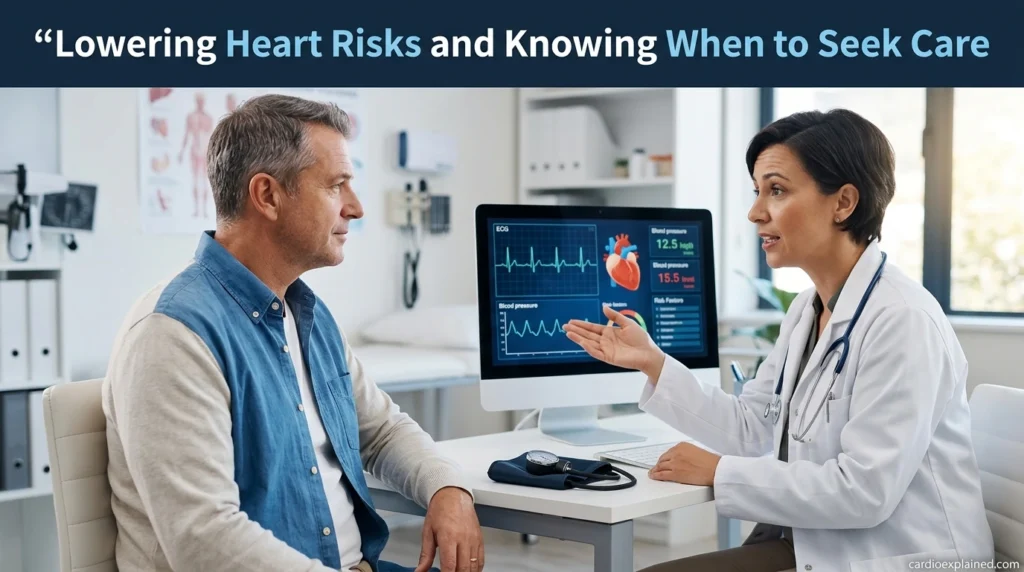
Not every heart problem can be prevented. Still, healthy habits may lower many risks.
Doctors encourage simple daily choices that protect the heart.
### Healthy Habits
You can support heart health by:
- ✅ Staying active most days
- ✅ Eating fruits and vegetables
- ✅ Choosing whole grains
- ✅ Limiting foods high in salt
- ✅ Avoiding tobacco products
- ✅ Sleeping enough each night
- ✅ Taking medicines as directed
Small changes over time often make a big difference.
### Know the Warning Signs
Some symptoms need quick medical attention.
Call emergency services right away if someone has:
- ⚠️ Chest pain lasting several minutes
- ⚠️ Trouble breathing
- ⚠️ Pain spreading to the arm, neck, jaw, or back
- ⚠️ Sudden fainting
- ⚠️ Severe sweating with chest discomfort
Fast treatment may reduce heart damage.
### Keep Good Medical Records
Good records help both patients and doctors.
Consider keeping:
- A list of medicines
- Recent test results
- Allergy information
- Emergency contacts
- Doctor visit summaries
These records may also become helpful if medical questions arise later.
A Final Patient Example
A middle-aged man ignored mild chest pressure for several days.
His family urged him to see a doctor. Testing found early heart disease before a major heart attack occurred.
Stories like this remind people that early medical care often leads to better results.
A cardiology expert witness may later review cases involving delayed care. Still, the best goal is always early diagnosis and timely treatment whenever possible.
Frequently Asked Questions
❓ Q: What does a cardiology expert witness do?
A: A cardiology expert witness reviews heart-related medical records and gives an independent medical opinion. They explain complex heart care in simple language. They may write reports or testify in court. Their opinion should always be based on medical evidence.
❓ Q: Does an expert witness decide who wins a case?
A: No. The judge or jury makes the legal decision. The expert only explains the medical facts. Their role is to help others understand the evidence.
❓ Q: Who can hire a cardiology expert witness?
A: Lawyers, insurance companies, hospitals, or government agencies may hire one. Sometimes patients or families also request expert reviews through legal counsel. The expert should remain fair regardless of who hires them.
❓ Q: Can a cardiologist testify in court?
A: Yes. A qualified cardiologist may testify if the court accepts them as an expert. They explain medical records, tests, and treatment choices. They answer questions using medical facts and accepted standards.
❓ Q: What records does a cardiology expert witness review?
A: They often review hospital notes, clinic records, blood tests, imaging reports, medicine lists, and heart test results. They may also review ambulance reports and surgery notes. Looking at the complete record helps them form an accurate opinion.
❓ Q: How long does an expert review usually take?
A: The timeline depends on the case. A simple review may take days, while a large case may take several weeks. Experts carefully study every important record before reaching an opinion.
❓ Q: Can patients contact a cardiology expert witness directly?
A: Sometimes yes, but many legal cases begin through an attorney. The expert first determines whether they can review the case fairly. They do not promise a specific outcome before reviewing the evidence.
Conclusion
Heart-related legal cases often involve complex medical questions. A cardiology expert witness helps explain those questions using medical knowledge and real clinical experience. Their work supports fair decisions by reviewing records, explaining heart tests, and comparing care with accepted medical standards.
Patients and families should remember that every heart condition is different. Medical records tell the full story, and careful review matters. Early medical care, healthy habits, and regular follow-up visits can also support better heart health.
If you have concerns about a heart condition or questions about your care, talk to a licensed cardiologist. They can guide you based on your personal health needs.