
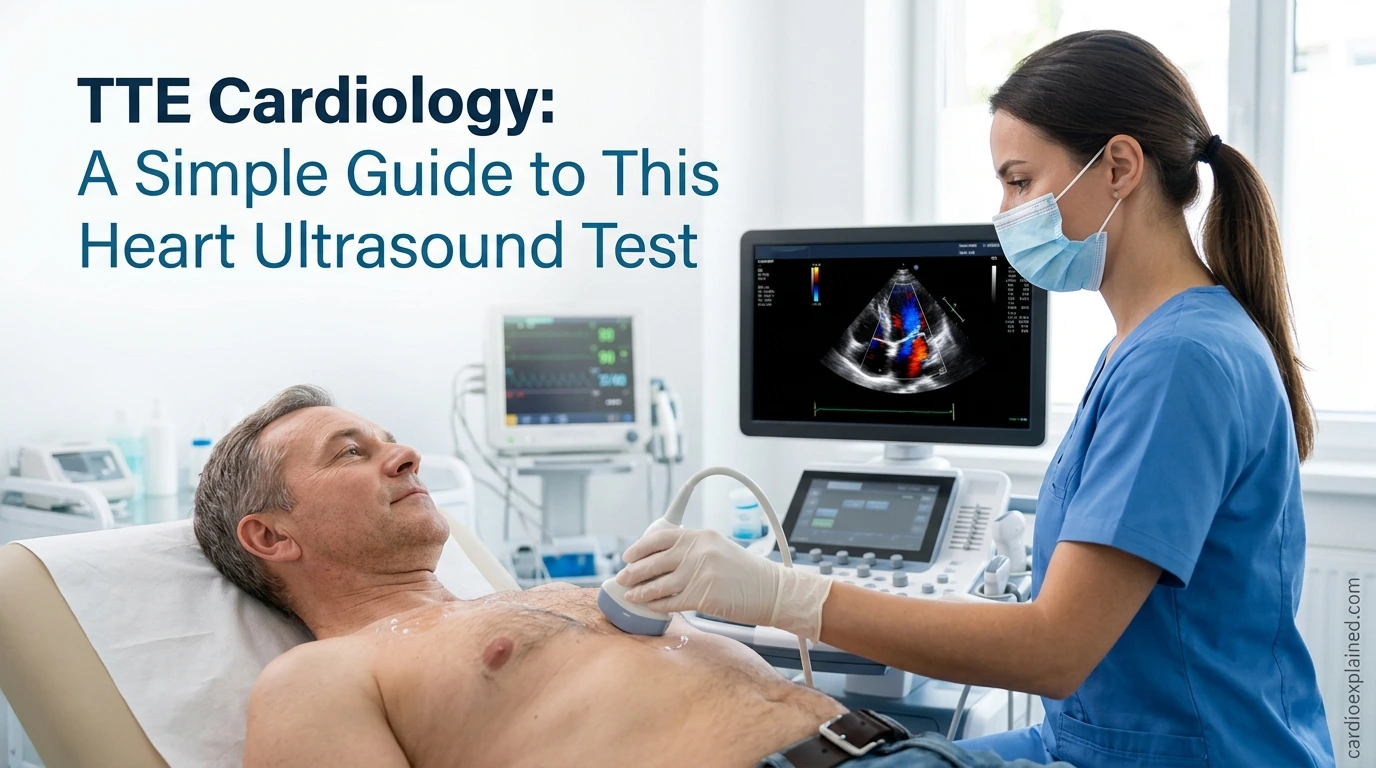

TTE cardiology refers to a transthoracic echocardiogram, a common heart ultrasound test. It helps doctors see how the heart looks and works in real time. Doctors use it to check heart valves, heart chambers, blood flow, and overall heart health.
Have you ever had a doctor order a heart test and felt unsure why?
Many people hear new medical terms and feel worried. One common test is tte cardiology. Despite the long name, the test is simple and painless. It uses sound waves to create moving pictures of your heart.
This test can help doctors learn why you have symptoms. These may include chest pain, shortness of breath, or a fast heartbeat. It can also help track known heart conditions.
Knowing what happens during the test can ease stress. A little information often makes the experience much easier.
❤️ Understanding TTE Cardiology
A transthoracic echocardiogram, often called a TTE, is a heart ultrasound.
The word “transthoracic” means through the chest. The word “echo” means sound waves. Together, they describe a test that sends sound waves through your chest to create heart images.
Doctors often use this test because it is safe and does not use radiation.
A trained technician places a small device on your chest. This device is called a transducer. It sends and receives sound waves.
A computer turns those sound waves into moving pictures of your heart.
What Does a TTE Test Show?
A TTE can show many important details about your heart.
✅ It may show:
- Heart size
- Heart muscle movement
- Heart pumping strength
- Heart valve function
- Blood flow through the heart
- Fluid around the heart
- Some birth-related heart differences
Doctors often combine TTE results with your symptoms and medical history.
No single test tells the whole story.
What Is a Transthoracic Echo TTE Complete?
You may see the term “TTE complete” on paperwork.
A complete study means the care team checks several heart areas during one exam.
This often includes:
- Heart chambers
- Heart valves
- Blood flow patterns
- Pumping function
- Heart wall movement
The exact details may vary between patients.
🩺 Why Do I Need a Transthoracic Echocardiogram?

Doctors order this test for many reasons.
Sometimes symptoms lead to testing. Other times, a routine exam finds something unusual.
Common reasons include:
- Chest discomfort
- Shortness of breath
- Heart murmurs
- Swelling in the legs
- Dizziness
- Irregular heartbeats
A heart murmur is an extra sound heard through a stethoscope.
Real-Life Example
Many patients feel nervous before their first visit.
For example, a person may notice breathlessness while climbing stairs. Their doctor may order a TTE to check heart function. The test may help explain the symptoms.
Monitoring Existing Heart Conditions
Doctors also use this test after a diagnosis.
A patient with a valve problem may need repeat scans. These follow-up exams help track changes over time.
Groups such as the American Heart Association (AHA) and the American College of Cardiology (ACC) support echocardiography as a standard heart evaluation tool when appropriate.
📋 What Happens During the Test?
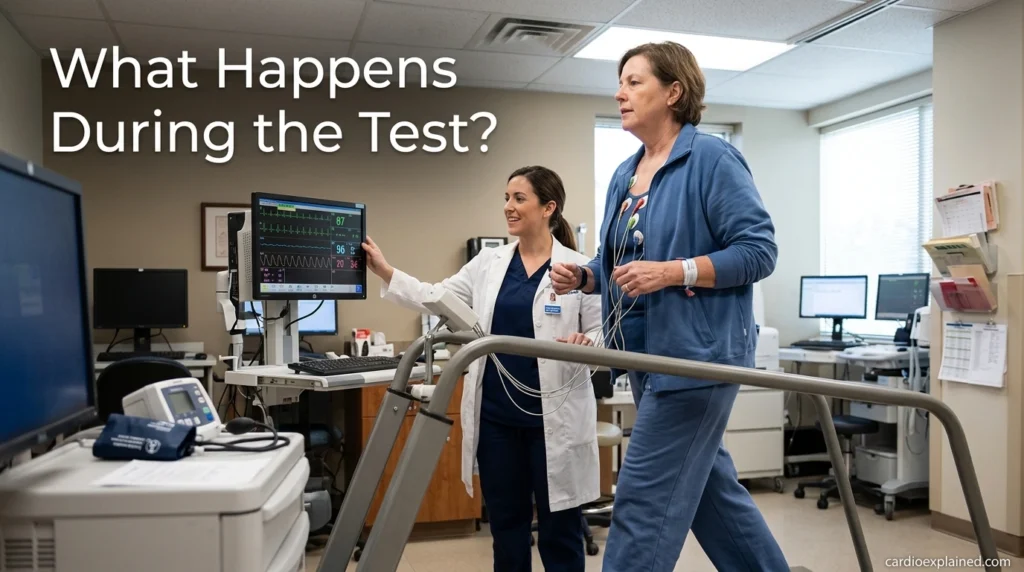
Many people worry about discomfort.
Most patients find the test easy.
Before the Test
You usually do not need special preparation.
Your doctor will tell you if instructions differ.
You may wear a hospital gown during the exam.
During the Test
The technician places gel on your chest.
The gel helps sound waves travel better.
The technician moves the transducer across several chest areas.
You may need to:
- Change positions
- Hold your breath briefly
- Lie on your left side
The test is painless for most people.
You may feel light pressure from the device.
After the Test
You can usually return to normal activities right away.
A heart specialist reviews the images.
Your doctor will discuss the results with you.
⏱️ How Long Does a TTE Test Take?
Most TTE exams take about 30 to 60 minutes.
The exact time depends on several factors.
These include:
- Image quality
- Heart condition being studied
- Need for extra measurements
Some exams finish sooner.
Others take longer if more images are needed.
Many patients are surprised by how quickly the appointment passes.
❤️ TTE vs TEE: What Is the Difference?
People often hear about TTE and TEE together.
TEE stands for transesophageal echocardiogram.
A TEE uses the same ultrasound technology. However, the probe goes into the food pipe, also called the esophagus.
Doctors choose between the tests based on the information needed.
| Feature | TTE | TEE |
| Test location | Outside chest | Inside esophagus |
| Comfort level | Usually very comfortable | More involved |
| Sedation needed | Usually no | Often yes |
| Image detail | Very good | Often more detailed |
| Recovery time | Minimal | Longer |
TEE Cardiology and the TEE Medical Abbreviation
In cardiology, TEE means transesophageal echocardiogram.
Doctors may recommend TEE when they need closer views of certain heart structures.
The esophagus sits behind the heart. This position can provide clearer images in some cases.
Not everyone needs a TEE.
Many heart concerns can be evaluated with a standard TTE.
📊 TTE vs ECG: Understanding the Difference
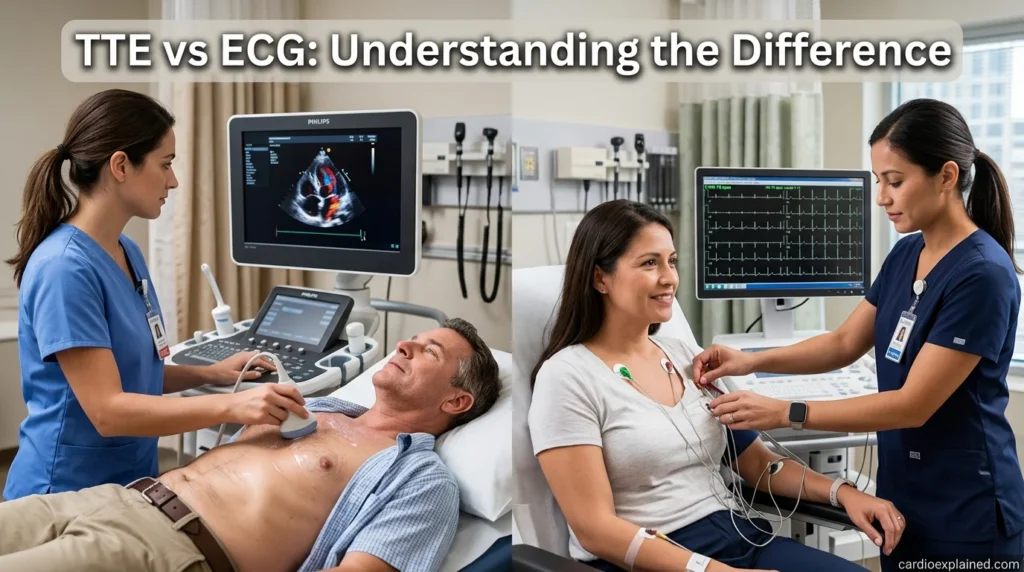
People sometimes confuse these tests.
They serve different purposes.
An ECG, also called an electrocardiogram, records the heart’s electrical activity.
A TTE creates pictures of the heart.
| Test | Main Purpose | What It Shows |
| ECG | Records electrical signals | Heart rhythm and timing |
| TTE | Creates heart images | Structure and function |
| TEE | Creates closer heart images | Detailed heart views |
Doctors often order both tests together.
Each test provides different information.
When Both Tests Help
Imagine someone has palpitations.
Palpitations are feelings that the heart skips or races.
An ECG may identify rhythm changes. A TTE may show whether a heart structure problem exists.
Together, they give a fuller picture.
✅ Benefits and Limits of TTE
Like any medical test, TTE has strengths and limits.
Benefits
✅ Benefits include:
- Noninvasive
- No radiation
- Widely available
- Painless
- Useful for many heart conditions
- Fast recovery
Limits
⚠️ Some limits include:
- Image quality may vary
- Body shape can affect images
- Some structures are harder to see
- Extra testing may sometimes be needed
Doctors may order additional tests if questions remain.
That does not always mean something is wrong.
It often means they want more information.
❤️ Understanding Your Results
Waiting for results can feel stressful.
Keep in mind that many findings are mild.
Some results show a normal heart.
Others may reveal issues such as:
- Valve problems
- Heart muscle weakness
- Enlarged heart chambers
- Changes in blood flow
Only your healthcare provider can explain what findings mean for you.
Avoid trying to diagnose yourself from the report alone.
Another Common Patient Example
A caregiver may accompany an older parent to testing.
The report may mention a valve change. The doctor then explains whether monitoring or treatment is needed.
Many findings can be managed successfully with proper care.
📌 Preparing for Your Appointment
A little preparation can make the visit smoother.
Consider these simple tips:
✅ Before your appointment:
- Bring your insurance information
- Carry a medication list
- Arrive a few minutes early
- Ask questions if unsure
- Wear comfortable clothing
Good communication helps you get the most from your visit.
FAQ
Q: Is tte cardiology painful?
A: No. The test is usually painless. You may feel mild pressure from the device on your chest, but most people stay comfortable throughout the exam.
Q: Why do I need a transthoracic echocardiogram?
A: Doctors order this test to learn more about heart function. It may help evaluate symptoms, monitor heart conditions, or check heart valves and blood flow.
Q: What does a TTE test show?
A: A TTE can show heart size, pumping strength, valve function, and blood flow. It gives doctors moving images of the heart.
Q: What is a transthoracic echo TTE complete?
A: A TTE complete is a detailed heart ultrasound study. It examines several heart structures and functions during one exam.
Q: How long does a TTE test take?
A: Most tests take about 30 to 60 minutes. The time may vary based on the images needed.
Q: What is the difference between TTE and TEE?
A: TTE uses a probe on the chest. TEE places a probe in the esophagus for closer heart images. Doctors choose the test based on the clinical need.
Conclusion
A tte cardiology exam is a safe and common way to evaluate heart health. It uses sound waves to create detailed heart images. The test can help doctors check heart structure, valve function, and blood flow.
Most people find the exam comfortable and easy to complete. Results help doctors make informed decisions about care. If you have symptoms or questions about your heart, talk to a cardiologist. They can explain whether this test may be right for you.