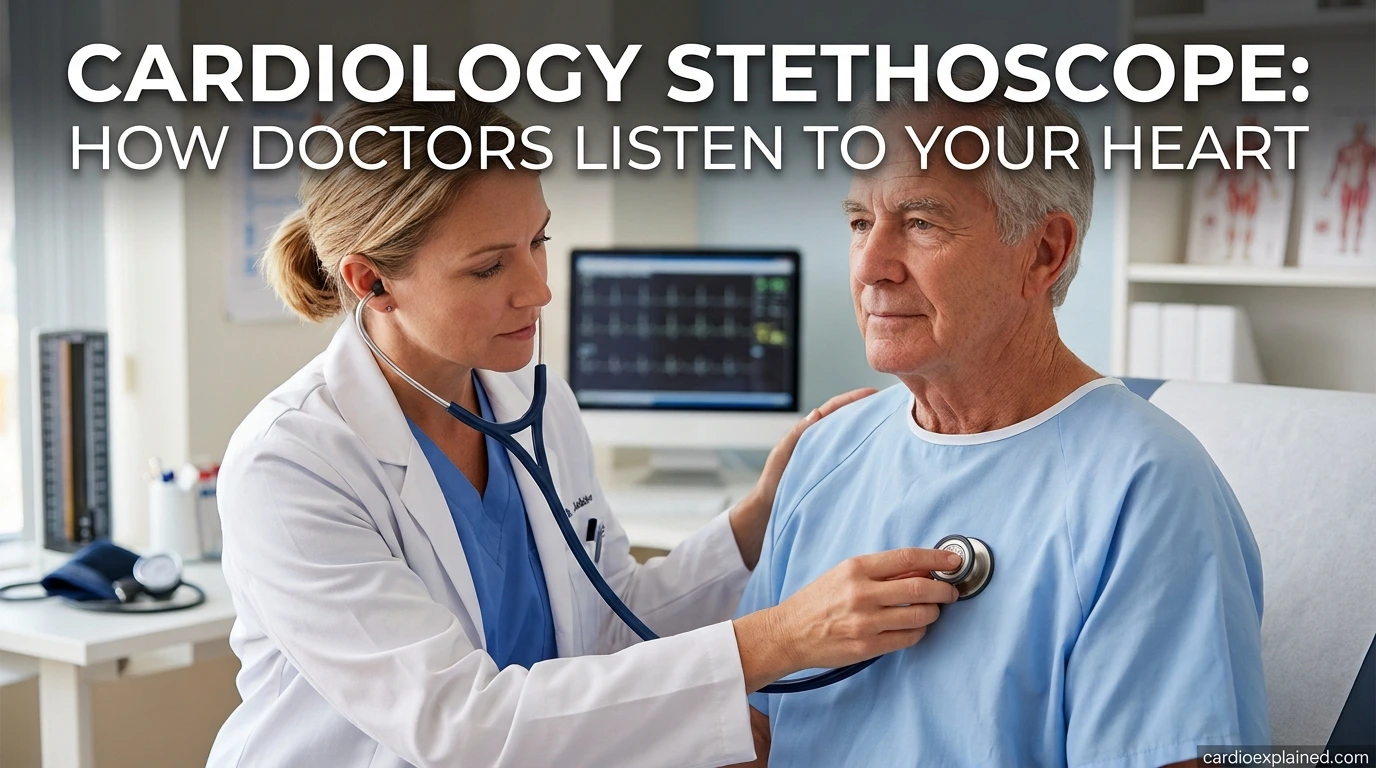

A cardiology stethoscope is a medical tool that helps doctors hear heart sounds clearly. It helps find changes in your heartbeat, heart valves, and blood flow. Doctors often use it during heart checkups because it gives fast and helpful clues about your heart health.
Have you ever wondered why a doctor places a stethoscope on your chest? That simple step can tell a lot about your heart. A cardiology stethoscope helps doctors hear sounds that may point to a healthy heart or a possible problem. It is often the first tool used during a heart exam.
Many people feel nervous during their first heart visit. That feeling is normal. A quick listen with a stethoscope is painless and only takes a few minutes. The sounds can help doctors decide if more tests are needed. Knowing how this tool works can help you feel more relaxed and ready for your visit.
❤️ What Is a Cardiology Stethoscope?
A cardiology stethoscope is a special type of stethoscope made for listening to the heart. It picks up soft heart sounds better than many basic models. Doctors use it every day in clinics, hospitals, and emergency rooms.
The heart makes several sounds as it pumps blood. These sounds tell doctors how well the heart works. A high-quality stethoscope helps make those sounds easier to hear.
How It Works
The stethoscope has three main parts:
- 🩺 Chest piece: Touches your skin and collects sound.
- 🩺 Tube: Carries the sound to the earpieces.
- 🩺 Earpieces: Let the doctor hear the sounds clearly.
The chest piece often has two sides.
- The diaphragm hears higher sounds.
- The bell hears lower sounds.
Doctors switch between both sides during a heart exam.
Why It Is Different
A regular stethoscope works well for many health checks. A cardiology model offers better sound quality. It helps doctors hear very soft heart sounds that may be easy to miss.
This does not mean every patient needs a special exam. It simply gives the doctor more detail during a routine visit.
Who Uses It?
Many healthcare workers use cardiology stethoscopes, including:
- ✅ Cardiologists
- ✅ Family doctors
- ✅ Emergency doctors
- ✅ Medical students
- ✅ Nurse practitioners
- ✅ Physician assistants
Each provider may use the same tool for different reasons.
A Real-Life Example
Many patients visit a heart clinic because of chest discomfort. The doctor first listens to the heart before ordering tests. In many cases, the heart sounds seem normal. That quick check helps guide the next step without causing pain or stress.
🩺 Why Doctors Listen to Your Heart
Listening to your heart is often the first step during a heart exam. It gives helpful clues within seconds. Doctors combine these sounds with your symptoms and medical history.
A stethoscope alone cannot confirm every heart problem. Still, it often points doctors in the right direction.
Heart Sounds
A healthy heart makes a steady “lub-dub” sound.
These sounds come from heart valves closing. Heart valves are small flaps that keep blood moving in the right direction.
Doctors listen for:
- ❤️ Normal rhythm
- ❤️ Fast heartbeat
- ❤️ Slow heartbeat
- ❤️ Extra heart sounds
- ❤️ Missing sounds
Each sound tells part of the story.
Heart Murmurs
A heart murmur is an extra sound during the heartbeat. Blood moving through the heart causes it.
Some murmurs are harmless. Others may suggest a valve problem or another heart condition.
Doctors often hear murmurs before patients notice symptoms.
Heart Rhythm Problems
The doctor also checks your heart rhythm.
Rhythm means the pattern of your heartbeat.
An uneven rhythm may suggest an irregular heartbeat. Doctors call this an arrhythmia. An arrhythmia means the heart beats too fast, too slow, or unevenly.
Some rhythm changes need more testing. Others may not cause serious problems.
Patient Example
A middle-aged man visited his doctor because he felt tired while walking. The doctor heard an unusual heart sound during the exam. That finding led to more tests, which found a heart valve problem early. Early care helped prevent bigger issues later.
📋 Signs That May Lead to a Heart Check
Doctors use a stethoscope during routine visits. They also use it when people have symptoms that may involve the heart.
Many symptoms have harmless causes. Still, it is smart to get checked.
Common Signs
Watch for symptoms such as:
- ⚠️ Chest pain
- ⚠️ Shortness of breath
- ⚠️ Fast heartbeat
- ⚠️ Slow heartbeat
- ⚠️ Feeling dizzy
- ⚠️ Fainting
- ⚠️ Swollen feet or ankles
- ⚠️ Extreme tiredness
These symptoms do not always mean heart disease. They may have many causes.
Family History
Your family history also matters.
Tell your doctor if close relatives had:
- Heart disease
- Heart failure
- Valve disease
- Sudden heart death
- Heart rhythm problems
This information helps the doctor understand your risk.
High Blood Pressure
High blood pressure often causes no symptoms.
Doctors check blood pressure and listen to your heart during the same visit. Together, these checks give a better picture of your health.
During a Regular Checkup
Many people feel healthy before a routine exam.
Sometimes the doctor hears a new murmur or rhythm change. That does not always mean serious disease. It simply means more information may help.
⏱️ How Doctors Use a Cardiology Stethoscope During an Exam
A heart exam is simple and painless. Most visits take only a few minutes.
Your doctor may ask you to sit, stand, or lie down. Each position helps the doctor hear different sounds.
Step-by-Step Heart Exam
- The doctor asks about your symptoms.
- Your blood pressure gets checked.
- The doctor places the stethoscope on several chest areas.
- You may take slow, deep breaths.
- The doctor listens for heart sounds and rhythm.
- The exam ends with a discussion about the findings.
What the Doctor May Hear
| Heart Sound | What It May Mean | Next Step |
| Normal sounds | Heart appears healthy | Regular care |
| Heart murmur | Blood flow sounds different | More testing may help |
| Fast rhythm | Heart beats quickly | Check symptoms and history |
| Extra sound | Heart needs closer review | Imaging or other tests |
The doctor does not rely only on sound. Heart sounds are one piece of the full picture.
Other Tests May Follow
If needed, the doctor may suggest more tests.
| Test | Purpose | What It Shows |
| Electrocardiogram (ECG) | Records heart signals | Heart rhythm |
| Echocardiogram | Uses sound waves | Heart structure and valves |
| Stress test | Checks the heart during exercise | Blood flow and heart function |
| Heart monitor | Records rhythm over time | Irregular heartbeats |
The American Heart Association (AHA) and the American College of Cardiology (ACC) support careful physical exams along with other tests when needed. Doctors choose tests based on your symptoms, health history, and exam findings.
A young college student once visited a clinic because of a racing heartbeat after exercise. The doctor listened carefully before ordering an ECG. The heart sounds were normal, and the ECG helped rule out a serious problem. The student left with peace of mind and advice for follow-up care.
🩺 Treatment and Management After the Heart Exam
A heart exam helps doctors choose the right care. The best treatment depends on the cause of your symptoms. Some people need no treatment at all. Others may need medicine, healthy habits, or more care.
A cardiology stethoscope helps doctors find early clues. They use those clues with test results before making a treatment plan.
If Your Heart Sounds Are Normal
Many people hear, “Your heart sounds normal.”
This often means no unusual sounds appeared during the exam. Your doctor may still suggest healthy habits and regular checkups.
Normal heart sounds do not always rule out every heart problem. Your doctor will also consider your symptoms and medical history.
If the Doctor Hears a Murmur
A heart murmur does not always mean disease.
Many children and healthy adults have harmless murmurs. Doctors call these innocent murmurs.
Some murmurs may point to:
- ✅ Heart valve disease
- ✅ A hole in the heart present from birth
- ✅ Changes in blood flow
- ✅ Other heart conditions
Your doctor may order an echocardiogram. This test creates pictures of your heart with sound waves.
Medicines May Help
Some heart problems improve with medicine.
Your doctor may prescribe medicine to:
- ❤️ Lower blood pressure
- ❤️ Slow a fast heartbeat
- ❤️ Control an irregular heartbeat
- ❤️ Reduce strain on the heart
Take medicine exactly as directed. Never stop it without talking to your doctor.
Procedures or Surgery
Some heart valve problems need more than medicine.
Treatment may include:
- Repairing a damaged heart valve
- Replacing a heart valve
- Placing a pacemaker to help control the heartbeat
A pacemaker is a small device that helps keep your heartbeat steady.
Patient Story
An older woman noticed shortness of breath while gardening. Her doctor heard a new murmur during a routine visit. An echocardiogram showed a narrowed heart valve. She received treatment before serious heart failure developed. Early care helped her return to many daily activities.
✅ Healthy Habits That Protect Your Heart
Good heart health starts with daily choices.
Healthy habits support your heart at every age. They also lower the risk of many heart problems.
Eat Heart-Healthy Foods
Choose foods that help your heart.
Try to eat:
- 🥗 Fruits
- 🥗 Vegetables
- 🥗 Whole grains
- 🥗 Beans
- 🥗 Fish
- 🥗 Nuts
Limit foods high in:
- Salt
- Added sugar
- Saturated fat
- Trans fat
Small changes each day can make a big difference over time.
Stay Active
Exercise keeps your heart strong.
The American Heart Association suggests regular physical activity for most adults.
Good choices include:
- 🚶 Walking
- 🚴 Riding a bike
- 🏊 Swimming
- 💃 Dancing
Ask your doctor before starting a new exercise plan if you have heart disease.
Avoid Smoking
Smoking damages blood vessels and the heart.
If you smoke, ask your healthcare team for help quitting.
Many people need several tries before quitting for good. Every attempt is a step forward.
Keep Health Numbers in Check
Regular checkups help you know your:
- Blood pressure
- Cholesterol level
- Blood sugar
- Weight
These numbers help your doctor understand your heart health.
Manage Stress
Stress affects both the body and the mind.
Healthy ways to lower stress include:
- 🌿 Deep breathing
- 🌿 Walking outside
- 🌿 Talking with friends
- 🌿 Getting enough sleep
Simple habits can support both your heart and overall well-being.
⚠️ When Should You See a Doctor?

Do not ignore new heart symptoms.
Many symptoms have simple causes. Some need fast medical care.
Make an Appointment If You Notice
Call your doctor if you have:
- Ongoing chest discomfort
- Shortness of breath
- A racing heartbeat
- Frequent dizziness
- Swollen legs
- New tiredness during normal activities
Early care often leads to better results.
Get Emergency Help Right Away
Call 911 if you have:
- ⚠️ Severe chest pain
- ⚠️ Trouble breathing
- ⚠️ Fainting
- ⚠️ Chest pain with sweating
- ⚠️ Pain spreading to your arm, neck, jaw, or back
Do not drive yourself if symptoms seem severe.
What Happens During the Visit?
Your doctor will:
- Ask about your symptoms.
- Review your health history.
- Listen to your heart.
- Check your blood pressure.
- Decide if more tests are needed.
Many patients worry before their first heart visit. Most leave feeling better because they understand their health more clearly.
❓ Frequently Asked Questions
Q: What makes a cardiology stethoscope different from a regular stethoscope?
A: A cardiology stethoscope is made to hear softer heart sounds more clearly. It often blocks outside noise better than a basic model. Doctors use it when they need more detail during a heart exam.
Q: Can a doctor find heart disease by listening alone?
A: No. Listening gives helpful clues, but it cannot confirm every heart problem. Doctors often combine the exam with tests such as an ECG or echocardiogram.
Q: Does using a stethoscope hurt?
A: No. A stethoscope only rests gently on your skin. The exam is painless and usually takes just a few minutes.
Q: Why does my doctor listen to different parts of my chest?
A: Different areas let the doctor hear different heart valves and blood flow. Each position gives another piece of information. This helps create a better picture of your heart.
Q: Can children need heart exams with a stethoscope?
A: Yes. Doctors often listen to children’s hearts during routine checkups. Many heart murmurs in children are harmless, but some need more testing.
Q: Should I worry if my doctor hears a heart murmur?
A: Not always. Many murmurs are harmless. Your doctor may recommend more tests to learn the cause before deciding if treatment is needed.
Q: How often should my heart be checked with a cardiology stethoscope?
A: It depends on your age, health, and symptoms. Many people have heart sounds checked during routine physical exams. Your doctor may suggest more frequent visits if you have heart disease or risk factors.
Conclusion
A cardiology stethoscope is one of the first tools doctors use to check your heart. It helps them hear heart sounds, rhythms, and murmurs that may need more attention. The exam is quick, painless, and often gives valuable clues about your heart health. When needed, doctors combine those findings with tests such as an ECG or echocardiogram for a clearer answer.
Healthy habits, regular checkups, and early care all support a stronger heart. If you notice chest pain, shortness of breath, or a changing heartbeat, talk to a cardiologist. Early care can make a meaningful difference.
Medically reviewed for accuracy. Always consult a licensed cardiologist for personal advice.