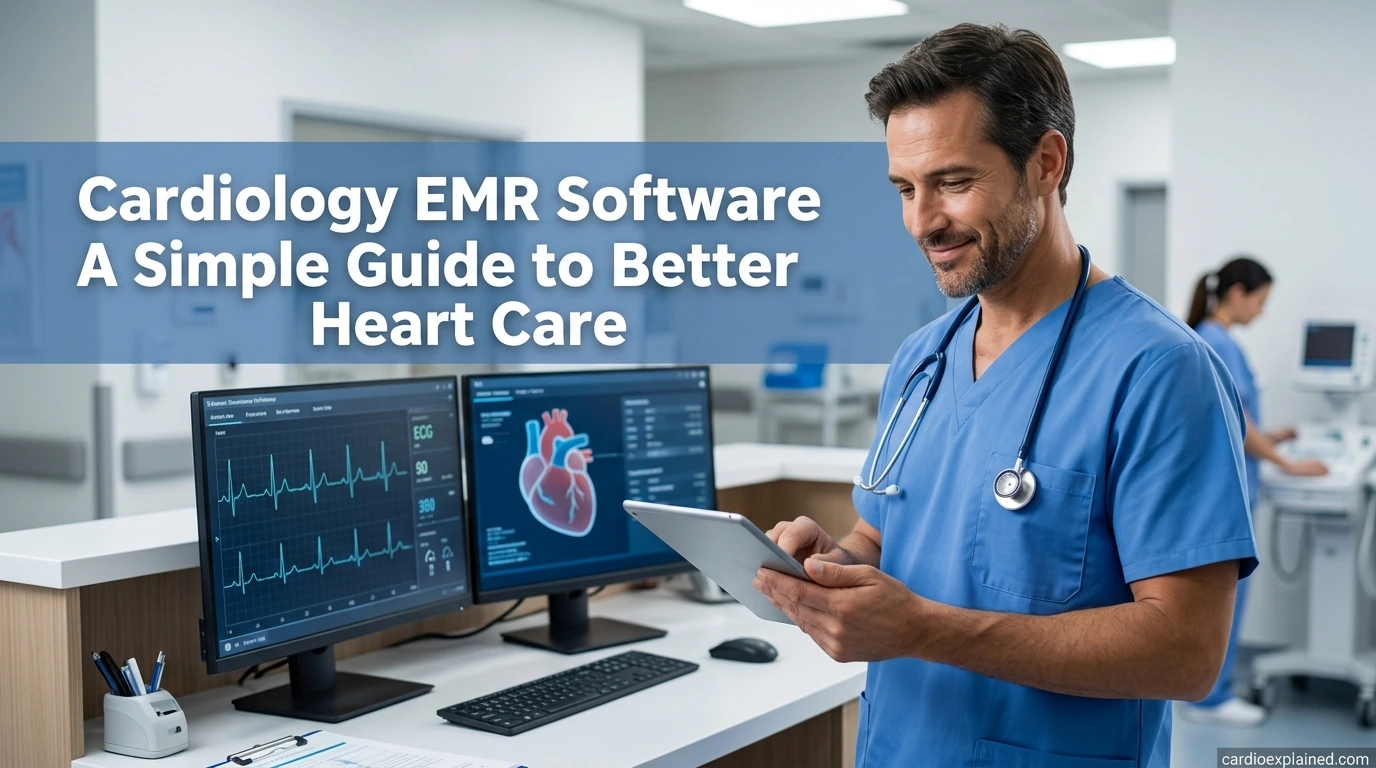

Cardiology EMR software is a digital record system made for heart specialists. It stores patient records, heart tests, medicines, and treatment plans in one secure place. Doctors use cardiology EMR software to improve care, save time, and support better decisions during every visit.
Have you ever wondered how heart doctors remember years of test results? Many patients visit the clinic several times each year. Every visit adds new notes, medicines, and heart tests.
Cardiology EMR software helps doctors keep all this information together. It replaces paper charts with secure digital records. As a result, doctors can review your health history faster and spend more time talking with you. Patients also feel more confident because important information stays easy to find.
Heart care often involves many tests and follow-up visits. So, organized records help everyone stay on the same page. Students, caregivers, and families can also learn how modern heart clinics work. Better records support safer care, smoother visits, and clearer communication between healthcare teams.
❤️ What Is Cardiology EMR Software?
Heart specialists care for patients with many different heart conditions. Because these conditions often need long-term treatment, doctors must keep accurate records.
Understanding the Basics
Cardiology EMR software is an Electronic Medical Record system made for heart clinics. An Electronic Medical Record is a digital version of a patient’s medical chart. Instead of paper files, doctors safely store health information on secure computers.
The software keeps many details together, including:
- 📋 Patient history
- 📋 Blood pressure readings
- 📋 Heart test results
- 📋 Medicine lists
- 📋 Doctor notes
- 📋 Follow-up plans
As a result, doctors can find important information within seconds.
How It Supports Daily Patient Visits
Every heart appointment adds new information. Therefore, doctors need a simple way to review old and new records together.
The software helps doctors:
- Review past visits
- Record new symptoms
- Compare test results
- Order heart tests
- Update medicines
- Plan future care
For example, a doctor can compare today’s ECG with one from last year. An ECG is a test that records the heart’s electrical activity. This quick comparison may help guide the next step.
Why Patients Benefit
Patients often visit several healthcare providers. Because every doctor needs accurate information, organized records support better teamwork.
Maria visits her cardiologist after feeling tired for several weeks. The doctor quickly reviews her older ECG results and recent medicine changes. Instead of searching through paper files, the doctor focuses on Maria’s symptoms and answers her questions.
Many patients feel calmer when their doctor has complete information.
Key Features
| Feature | How It Helps |
| Patient records | Keeps health history together |
| Heart test tracking | Stores ECG, echo, and lab reports |
| Medicine management | Reviews current prescriptions |
| Appointment scheduling | Organizes future visits |
| Secure messaging | Supports communication between care teams |
Overall, these features help clinics provide steady and organized heart care.
🩺 Why Heart Clinics Need Special EMR Software
General medical software works well for many clinics. However, heart specialists often need extra tools because heart care includes more detailed records.
Heart Care Creates More Information
Many heart patients receive several tests during one visit.
These may include:
- ❤️ ECG
- ❤️ Echocardiogram
- ❤️ Stress test
- ❤️ Blood tests
- ❤️ Blood pressure checks
An echocardiogram uses sound waves to create pictures of the heart. A stress test checks how the heart works during exercise or medicine.
Because these tests create large amounts of information, doctors need organized records.
Better Workflow Every Day
Workflow means how daily tasks move through the clinic.
Good software helps staff:
- Register patients.
- Record vital signs.
- Review older visits.
- Document today’s care.
- Schedule follow-up appointments.
As a result, every team member works more efficiently.
Faster Access During Appointments
Doctors sometimes need old records within seconds.
For example, James arrives with chest discomfort. His cardiologist compares today’s ECG with last year’s result. The doctor quickly notices small changes and decides which tests to order next.
Fast access may reduce delays and improve patient care.
Better Team Communication
Heart care often includes many healthcare professionals.
These may include:
- 📋 Cardiologists
- 📋 Nurses
- 📋 Medical assistants
- 📋 Imaging specialists
- 📋 Primary care doctors
When everyone reviews the same records, communication becomes clearer. Therefore, patients receive more consistent care.
Built Around Trusted Care Standards
Many heart clinics follow guidance from the American Heart Association (AHA) and the American College of Cardiology (ACC). These organizations publish trusted recommendations for heart care.
Good record systems help doctors follow these recommendations by keeping patient information complete and organized.
📋 Signs a Clinic May Need Better Record Software
Some heart clinics begin with paper charts or simple computer programs. At first, those systems may work well. However, growing patient numbers often create new challenges.
Records Take Too Long to Find
Staff may spend several minutes searching for patient files.
Instead, digital records help doctors review important information before each visit.
Notes Become Hard to Read
Handwritten notes may create confusion.
Digital notes stay clear, organized, and easy to understand.
Test Results Come From Many Places
Heart clinics often receive reports from hospitals, imaging centers, and laboratories.
Good software keeps these records together:
- 📋 ECG reports
- 📋 Echocardiogram reports
- 📋 Blood test results
- 📋 Hospital notes
As a result, doctors spend less time searching for information.
Follow-Up Visits Become Easier
Heart patients often need regular appointments.
The system can remind staff about:
- 📋 Future visits
- 📋 Medicine reviews
- 📋 Repeat testing
- 📋 Annual heart checkups
These reminders help patients stay on schedule.
A Real-World Example
Mr. Brown has heart failure and high blood pressure. Heart failure means the heart cannot pump blood as well as it should.
Before his clinic upgraded its records, staff searched through several folders before each appointment. After changing to cardiology EMR software, the doctor reviewed every medicine change, heart scan, and office visit within minutes. Because the information stayed organized, the appointment focused on Mr. Brown instead of paperwork.
Better Records Support Better Care
Doctors make treatment decisions using patient information.
Therefore, organized records help them:
- ✅ Review health history faster
- ✅ Compare older and newer results
- ✅ Track treatment over time
- ✅ Share updates safely with other providers
Technology never replaces medical knowledge. Instead, it helps doctors provide steady, informed, and patient-centered heart care.
⏱️ How Doctors Check Heart Health
Finding the cause of a heart problem often takes several steps. First, the doctor listens to your symptoms. Next, the doctor performs a physical exam and reviews your health history. Cardiology EMR software helps organize this information in one secure record.
Reviewing Your Medical History
Your first visit usually begins with questions about your health.
The doctor may ask about:
- 📋 Chest pain
- 📋 Shortness of breath
- 📋 Dizziness
- 📋 Family history of heart disease
- 📋 Current medicines
After that, the doctor records your blood pressure, heart rate, and weight. These details help build a complete health record.
Common Heart Tests
Doctors often order tests to learn more about your heart.
| Test | Purpose | What It Shows |
| ECG | Records heart’s electrical activity | Heart rhythm and possible damage |
| Echocardiogram | Uses sound waves | Heart size and pumping strength |
| Stress test | Checks the heart during activity | Blood flow during exercise |
| Blood test | Looks for heart-related markers | Signs of heart damage or other problems |
Each test gives doctors another piece of your health story.
Comparing Results Over Time
Heart conditions may change slowly. Therefore, doctors often compare older and newer records.
They may review:
- 📋 Blood pressure trends
- 📋 ECG reports
- 📋 Lab results
- 📋 Imaging reports
- 📋 Medicine changes
For example, Linda visits her cardiologist every six months. Recently, she noticed swelling in her ankles. The doctor compared her newest echocardiogram with one from last year. Because both reports stayed together, the doctor quickly adjusted her treatment plan.
Following Trusted Guidelines
Many cardiologists follow recommendations from the American Heart Association (AHA) and the American College of Cardiology (ACC). These groups encourage careful tracking of symptoms, test results, and treatments.
As a result, organized records support safe and consistent heart care.
❤️ Treatment and Daily Management

Every patient has different needs. Therefore, treatment depends on the person’s symptoms, test results, and overall health.
Medicines for Heart Health
Many people take medicine every day to protect their hearts.
These medicines may help:
- ❤️ Lower blood pressure
- ❤️ Control heart rhythm
- ❤️ Reduce cholesterol
- ❤️ Prevent blood clots
Doctors review medicine lists during every visit. This helps reduce confusion and supports safer care.
Procedures That May Help
Some patients need procedures instead of medicine alone.
Common examples include:
- Cardiac catheterization
- Pacemaker placement
- Heart valve repair
- Coronary stent placement
A cardiac catheterization uses a thin tube to examine the heart and blood vessels. A pacemaker is a small device that helps control the heartbeat.
Doctors record every procedure for future visits.
Using Cardiology EMR Software During Treatment
Good records help doctors follow each patient’s progress.
For example, Robert received a pacemaker two years ago. During his yearly visit, the doctor reviewed past procedure notes and recent heart rhythm reports. Because cardiology EMR software stored everything together, the visit focused on Robert’s recovery instead of paperwork.
Working Together
Patients also play an important role in heart care.
Doctors encourage patients to:
- ✅ Take medicines as directed.
- ✅ Keep follow-up appointments.
- ✅ Report new symptoms quickly.
- ✅ Ask questions during visits.
- ✅ Share updates from other healthcare providers.
Together, patients and healthcare teams build better long-term care.
✅ Healthy Habits That Support Heart Care
Technology helps organize records. However, healthy daily habits also protect your heart.
Eat Healthy Foods
A balanced diet supports heart health.
Good choices include:
- 🥗 Fruits
- 🥗 Vegetables
- 🥗 Whole grains
- 🥗 Fish
- 🥗 Beans
- 🥗 Nuts
At the same time, try to limit foods high in salt, sugar, and unhealthy fats.
Stay Physically Active
Regular movement helps many people.
Walking, swimming, and cycling are popular choices. However, always ask your doctor before starting a new exercise plan after a heart problem.
Take Medicines Every Day
Medicines work best when taken as prescribed.
Some patients use pill organizers or phone reminders. As a result, they may miss fewer doses.
Manage Stress
Stress can affect sleep and daily habits.
Healthy ways to lower stress include:
- ✅ Deep breathing
- ✅ Gentle exercise
- ✅ Talking with family
- ✅ Relaxing hobbies
- ✅ Good sleep habits
Keep Routine Checkups
Regular appointments help doctors monitor heart health.
During these visits, doctors can:
- 📋 Review symptoms
- 📋 Check blood pressure
- 📋 Compare test results
- 📋 Update treatment plans
Therefore, routine care supports healthier long-term outcomes.
⚠️ When Should You See a Doctor?
Many heart symptoms have harmless causes. However, some symptoms need prompt medical attention.
Schedule a Medical Visit
Talk with your doctor if you notice:
- ⚠️ Chest discomfort
- ⚠️ Shortness of breath
- ⚠️ Fast or irregular heartbeat
- ⚠️ Swelling in the legs
- ⚠️ Frequent dizziness
- ⚠️ Extreme tiredness
These symptoms do not always mean heart disease. Even so, they deserve medical evaluation.
Seek Emergency Care Right Away
Call emergency services immediately if you have:
- Severe chest pain
- Trouble breathing
- Sudden fainting
- Pain spreading to the arm, jaw, neck, or back
Quick treatment may improve outcomes during a heart emergency.
Listen to Your Body
Many patients feel nervous before their first cardiology visit. That feeling is common.
Still, sharing symptoms early helps doctors understand what is happening. Early evaluation may also help doctors begin treatment sooner when needed. Therefore, never ignore new or worsening heart symptoms. A trusted healthcare team can guide you toward the right care at the right time.
❓ Frequently Asked Questions
❓ Q: What is cardiology EMR software used for?
A: Cardiology EMR software helps heart specialists manage patient records, heart tests, medicines, and follow-up visits. It keeps important information in one secure place. As a result, doctors can review records faster and spend more time caring for patients.
❓ Q: Is cardiology EMR software different from a regular EMR?
A: Yes. A cardiology EMR includes tools designed for heart care. For example, it can organize ECGs, echocardiograms, stress tests, and heart imaging more efficiently. This supports better workflow in cardiology clinics.
❓ Q: Can patients view their health records?
A: Yes, in many cases. Many clinics offer secure patient portals. A patient portal is a protected website where patients can view appointments, medicines, and test results. However, access depends on each healthcare provider.
❓ Q: Is my medical information safe in an EMR system?
A: Yes. Healthcare providers use security tools to protect patient information. In addition, they follow federal privacy rules to help keep medical records confidential. Patients should also protect their account passwords.
❓ Q: Does cardiology EMR software replace a cardiologist?
A: No. The software only helps organize medical information. Doctors still examine patients, review symptoms, and make treatment decisions based on their education and experience. Technology supports care but never replaces medical judgment.
❓ Q: Can digital records help reduce medical mistakes?
A: Yes, in many cases. Organized records may help doctors review medicines, allergies, and past test results more easily. However, careful medical decisions and good communication remain very important.
❓ Q: Why are follow-up visits important for heart patients?
A: Follow-up visits help doctors monitor changes over time. During each visit, they compare symptoms, medicines, and test results. Therefore, regular appointments may help doctors adjust treatment when needed.
Conclusion
Heart care often includes many appointments, tests, and treatment plans. Because of this, organized records help both patients and healthcare teams. Cardiology EMR software keeps important information together, making it easier to review health history, compare test results, and manage ongoing care.
At the same time, good records support better communication between doctors, nurses, and other healthcare providers. Technology cannot replace medical expertise, but it can make daily care more organized and efficient. Many patients also feel more confident when their healthcare team has complete and accurate information.
If you have heart concerns or need ongoing treatment, talk with a licensed cardiologist. Together, you can create a care plan that supports your long-term heart health.