
Medical assistant cardiology is a healthcare role that supports heart doctors and helps patients before, during, and after visits. They take basic health checks, prepare patients, and keep the clinic running smoothly. Their work helps people get safe, timely, and caring heart care every day.
Have you ever wondered who greets you before you meet a heart doctor? That friendly person often plays a big part in your visit. A medical assistant cardiology professional helps patients feel ready and supports the care team from start to finish.
Many people feel nervous before a heart visit. A calm smile and clear guidance can ease those worries. These trained workers check your basic health, help with tests, and answer simple questions. They also keep patient records up to date. Their support helps heart clinics stay organized and helps doctors focus on patient care. Whether you are a patient, caregiver, or student, learning about this role can help you understand how modern heart care works.
❤️ What Is a Medical Assistant in Cardiology?
A medical assistant in cardiology works with doctors who treat heart and blood vessel problems. These healthcare workers help both patients and medical staff each day.
Their job mixes patient care with office work. This balance keeps the clinic running well.
Medical Assistant Cardiology Duties
A medical assistant cardiology worker may perform many daily tasks, including:
- 🩺 Check blood pressure, pulse, and temperature.
- 🩺 Measure height and weight.
- 🩺 Ask about current symptoms.
- 🩺 Update medical records.
- 🩺 Prepare exam rooms.
- 🩺 Help with heart tests.
- 🩺 Schedule appointments.
- 🩺 Answer patient phone calls.
- 🩺 Share simple care instructions from the doctor.
They work closely with cardiologists. A cardiologist is a doctor who treats heart conditions.
They Help Before the Doctor Arrives
Many patients first meet the medical assistant.
The assistant may:
- ✅ Welcome the patient.
- ✅ Review medicines.
- ✅ Ask about chest pain or shortness of breath.
- ✅ Record new health changes.
- ✅ Prepare the patient for the exam.
This information helps the doctor understand the patient’s health before entering the room.
They Support Heart Testing
Heart clinics often perform special tests.
A medical assistant may help prepare patients for:
| Heart Test | Purpose | Assistant’s Role |
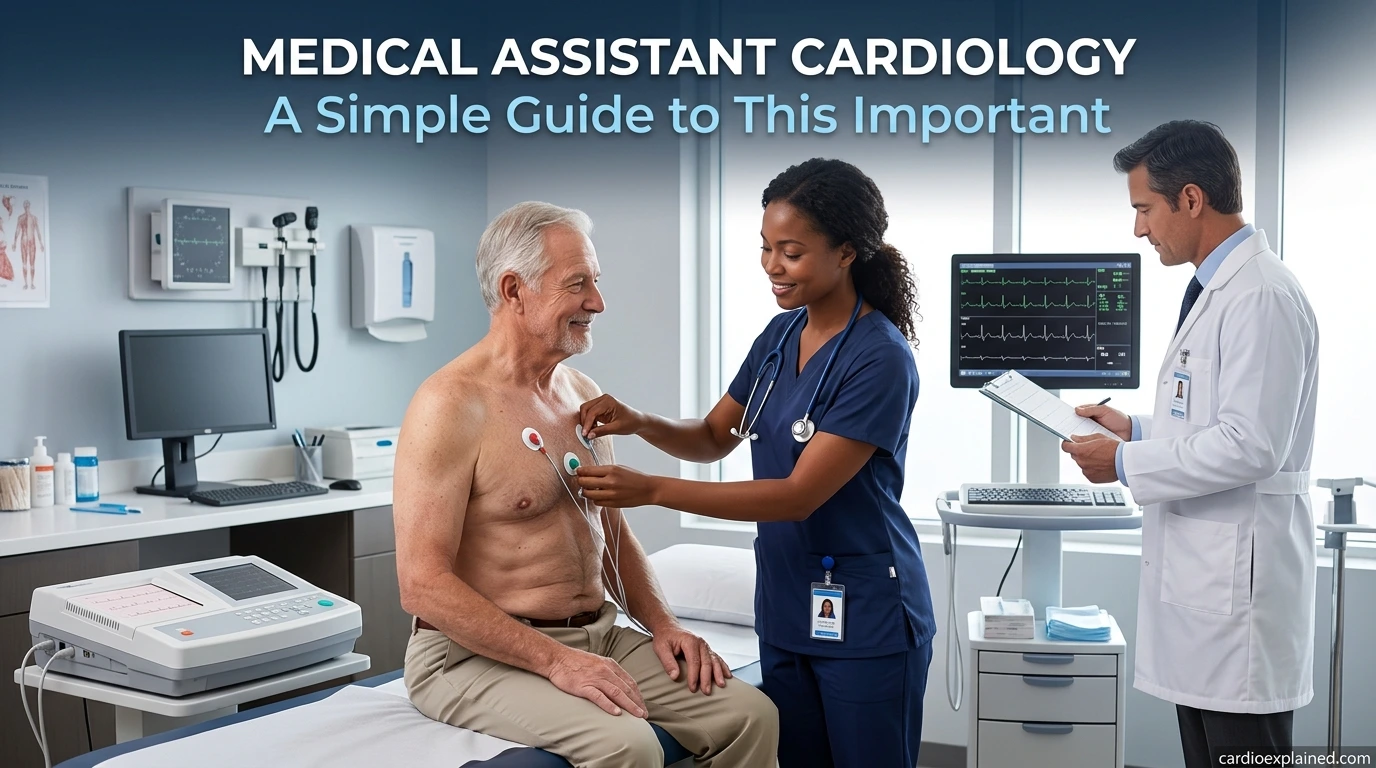
| Electrocardiogram (ECG or EKG) | Checks the heart’s electrical activity | Place sticky sensors and explain the test |
| Blood pressure check | Measures blood pressure | Take accurate readings |
| Holter monitor | Records heart activity for one or two days | Attach the monitor and explain home use |
| Stress test | Shows how the heart works during exercise | Prepare equipment and monitor the patient |
An ECG, also called an EKG, records the heart’s electrical signals. It helps doctors find rhythm problems.
A Real-Life Example
Many patients worry before their first ECG.
A medical assistant often explains that the test does not hurt. They show each step before it begins. This simple talk helps many patients relax and feel more comfortable.
🩺 Why Cardiology Clinics Need Medical Assistants
Heart clinics stay busy every day. Many patients need regular visits and follow-up care.
Medical assistants help the team work smoothly.
They Save Time for the Doctor
Doctors spend more time making treatment plans when assistants handle routine tasks.
These tasks include:
- 📋 Checking patient information.
- 📋 Recording vital signs.
- 📋 Preparing equipment.
- 📋 Updating health records.
This teamwork helps patients spend less time waiting.
They Improve Patient Comfort
Heart problems can make people feel scared.
Medical assistants often:
- Listen carefully.
- Answer simple questions.
- Explain what happens next.
- Help patients feel calm.
Small acts of kindness matter during medical visits.
They Help Keep Records Accurate
Every clinic needs correct patient records.
Medical assistants record:
- Current medicines.
- Allergies.
- Blood pressure.
- Heart rate.
- New symptoms.
- Follow-up plans.
Accurate records help doctors make better care decisions.
They Help With Follow-Up Care
Many heart patients return several times each year.
Medical assistants may:
- Call patients about appointments.
- Remind them about testing.
- Explain how to prepare for a visit.
- Help arrange referrals.
A referral means sending a patient to another healthcare provider for added care.
Another Real-Life Example
An older patient visits every three months for blood pressure checks.
The medical assistant notices the readings slowly rise over several visits. They alert the cardiologist before the exam. The doctor reviews the trend and adjusts the care plan. Early attention may help lower future heart risks.
Patients often remember these healthcare workers because they spend more time talking with them than anyone else during the visit. A friendly conversation, careful listening, and clear instructions can make a heart clinic feel much less stressful.
📋 Signs and Symptoms Patients May Share
People visit a heart clinic for many reasons. Some have new symptoms. Others come for regular care.
A medical assistant cardiology professional listens first. They gather facts for the doctor.
Common Symptoms
Patients may report:
- ❤️ Chest pain or pressure.
- ❤️ Shortness of breath.
- ❤️ Fast or slow heartbeat.
- ❤️ Dizziness.
- ❤️ Fainting.
- ❤️ Swollen feet or ankles.
- ❤️ Feeling very tired.
These symptoms do not always mean heart disease. They should still be checked by a doctor.
The First Conversation Matters
The medical assistant asks simple questions.
They may ask:
- 📋 When did the symptom begin?
- 📋 Does it happen often?
- 📋 What makes it better?
- 📋 What makes it worse?
- 📋 Have you had it before?
Clear answers help the doctor understand your condition.
Checking Vital Signs
Vital signs show how your body works.
The medical assistant checks:
- 🩺 Blood pressure.
- 🩺 Heart rate.
- 🩺 Body temperature.
- 🩺 Breathing rate.
- 🩺 Oxygen level.
Oxygen level shows how much oxygen your blood carries.
These numbers help guide the next steps.
A Real-Life Example
A middle-aged man comes to the clinic because he feels dizzy.
The medical assistant finds that his heart rate is much slower than normal. They quickly tell the cardiologist. The doctor examines him right away and orders more tests.
Quick teamwork helps patients receive faster care.
🩺 How Doctors Check Heart Health
Heart doctors use several tools to learn what is happening.
The medical assistant cardiology team prepares patients for many of these tests.
Common Heart Tests
Doctors may recommend different tests based on symptoms.
| Test | What It Shows | How the Assistant Helps |
| ECG (EKG) | Heart rhythm | Places sensors and explains the test |
| Echocardiogram | Heart structure and pumping | Prepares the patient and room |
| Stress test | Heart response during exercise | Reviews instructions and prepares equipment |
| Blood tests | Signs of heart damage or other problems | Confirms orders and prepares the patient |
An echocardiogram uses sound waves to create moving pictures of the heart.
Before the Test
Medical assistants help patients prepare.
They may:
- ✅ Confirm the patient’s name.
- ✅ Review medicines.
- ✅ Explain each step.
- ✅ Answer simple questions.
- ✅ Help patients feel relaxed.
Good preparation often makes testing easier.
During the Visit
The assistant watches the patient carefully.
They tell the doctor if someone:
- Feels faint.
- Has chest pain.
- Has trouble breathing.
- Looks uncomfortable.
Patient safety always comes first.
Following National Guidelines
Many heart clinics follow guidance from the American Heart Association (AHA) and the American College of Cardiology (ACC). These groups share trusted advice for heart care.
Medical assistants help clinics follow these standard practices every day.
Helping Patients Understand Results
Medical assistants do not diagnose heart problems.
Instead, they may explain:
- When results will be ready.
- How to schedule follow-up visits.
- How to prepare for the next test.
The doctor reviews the results and explains what they mean.
⏱️ Treatment and Daily Management
Heart treatment depends on each person’s health.
Doctors create the treatment plan. Medical assistants help patients follow it.
Supporting the Care Plan
After the doctor finishes the visit, the assistant may:
- 📋 Review printed instructions.
- 📋 Schedule the next visit.
- 📋 Explain when to take tests.
- 📋 Help arrange referrals.
- 📋 Answer simple office questions.
They help patients leave with clear directions.
Medicine Reminders
Many heart patients take daily medicine.
A medical assistant may remind patients to:
- Take medicine exactly as the doctor directs.
- Refill prescriptions before they run out.
- Tell the doctor about side effects.
- Bring medicine lists to each visit.
They do not change medicine without the doctor’s approval.
Helping Patients Build Healthy Habits
Good daily habits support heart health.
The care team may encourage patients to:
- ❤️ Eat more fruits and vegetables.
- ❤️ Choose foods lower in salt.
- ❤️ Stay active if the doctor approves.
- ❤️ Get enough sleep.
- ❤️ Avoid smoking.
- ❤️ Keep follow-up visits.
Small daily steps can make a big difference over time.
Another Real-Life Example
A woman recently learned she has high blood pressure.
She feels worried about managing everything. The medical assistant reviews her appointment papers and shows her how to track blood pressure at home. At her next visit, she feels more confident and asks better questions.
Simple guidance often helps patients stay involved in their care.
✅ Prevention and Healthy Lifestyle Tips
You can lower your risk of many heart problems. Small daily habits often help more than big changes.
A medical assistant cardiology professional may remind patients to follow the doctor’s advice between visits.
Eat for a Healthy Heart
Choose foods that support heart health.
- 🥗 Eat more fruits and vegetables.
- 🥗 Choose whole grains.
- 🥗 Pick lean meats and fish.
- 🥗 Limit foods high in salt.
- 🥗 Drink enough water.
These choices may help support healthy blood pressure.
Stay Active
Regular movement helps your heart stay strong.
Try to:
- 🚶 Walk most days.
- 🚶 Stretch often.
- 🚶 Stay active at home.
- 🚶 Ask your doctor before starting a new exercise plan.
Even short walks can help many people.
Keep Track of Your Health
Regular checkups matter.
Watch:
- ❤️ Blood pressure.
- ❤️ Blood sugar.
- ❤️ Cholesterol.
Cholesterol is a fatty substance in the blood. High levels may increase heart disease risk.
Manage Stress
Stress affects both the body and mind.
Healthy ways to lower stress include:
- Reading.
- Deep breathing.
- Talking with friends.
- Spending time outside.
- Getting enough sleep.
One More Patient Story
A busy father skipped several heart visits because of work.
His medical assistant called to remind him about his follow-up appointment. During that visit, the doctor found higher blood pressure and adjusted his care plan. Keeping regular visits helped him stay on track.
⚠️ When to See a Doctor

Do not ignore warning signs.
Some symptoms need medical care right away.
Make a Routine Appointment If You Have:
- 📅 Mild chest discomfort.
- 📅 High blood pressure readings.
- 📅 A family history of heart disease.
- 📅 Frequent tiredness.
- 📅 New swelling in your legs.
Early care often helps doctors find problems sooner.
Seek Emergency Care Right Away If You Have:
- ⚠️ Severe chest pain.
- ⚠️ Trouble breathing.
- ⚠️ Fainting.
- ⚠️ Sudden weakness on one side.
- ⚠️ Trouble speaking.
These symptoms may signal a medical emergency.
Do not drive yourself if symptoms seem severe. Call emergency services if needed.
Medical assistants help patients during clinic visits. Emergency teams provide care during urgent situations.
Frequently Asked Questions
❓ Q: Does a medical assistant cardiology worker diagnose heart disease?
A: No. Medical assistants do not diagnose heart conditions. They collect health information, prepare patients, and support the cardiologist. The doctor reviews test results and makes the diagnosis.
❓ Q: Do medical assistants perform ECG or EKG tests?
A: Yes, many do. They often place the sensors, explain the process, and help the patient prepare. The cardiologist reviews the final test results.
❓ Q: Is working in cardiology stressful for a medical assistant?
A: It can be busy at times. Good teamwork and training help many assistants handle daily tasks with confidence. Many enjoy helping patients during important moments.
❓ Q: What skills make someone successful in cardiology?
A: Good communication, careful attention, kindness, and organization all help. Basic knowledge of heart tests and patient safety also matters.
❓ Q: How long does it take to become a medical assistant cardiology professional?
A: It depends on the training program and state requirements. Many people complete a medical assisting program in about one year. Some gain cardiology experience after starting work.
❓ Q: Can a medical assistant work in other medical offices?
A: Yes. Many medical assistants work in family medicine, children’s clinics, urgent care, or specialty offices. Cardiology is one of several career paths.
❓ Q: Do I need a referral to see a cardiologist?
A: It depends on your health insurance plan. Some plans require a referral from your primary care doctor. Others allow you to schedule an appointment directly.
Conclusion
A medical assistant cardiology professional plays an important part in heart care. They welcome patients, collect health information, help with heart tests, and support doctors throughout the day. Their work helps clinics stay organized and helps patients feel more comfortable during visits.
If you or a loved one has heart concerns, do not wait to ask questions. Early care and regular checkups may help protect your heart. Talk to a cardiologist if you have any heart concerns.
Medically reviewed for accuracy. Always consult a licensed cardiologist for personal advice.