
Invasive cardiology is a heart care field that uses small tools inside blood vessels to find and treat heart problems. It helps doctors see blocked arteries and repair some heart issues. Doctors use these procedures to improve blood flow and protect heart health.
❤️ What Is Invasive Cardiology?
Have you ever wondered how doctors find a blocked heart artery? Many heart problems stay hidden until tests show a concern. Doctors use special tools to look inside the heart and blood vessels.
Invasive cardiology is a branch of heart care that uses small tubes and devices. Doctors place them through a blood vessel. This helps them check heart function and treat some conditions.
The most common procedure is called cardiac catheterization. A catheter is a thin, flexible tube. Doctors guide it through a blood vessel toward the heart.
The doctor may use this method to:
- Find narrowed or blocked heart arteries
- Measure pressure inside the heart
- Check heart valve function
- Open blocked arteries with a stent
A stent is a small mesh tube. It helps keep an artery open so blood can flow better.
Many patients feel nervous before their first procedure. A patient named Maria worried about pain before her heart catheter test. Her care team explained each step. She felt calmer after learning what would happen.
Doctors follow safety steps from groups like the American Heart Association (AHA) and the American College of Cardiology (ACC). These groups help guide heart care practices.
These procedures do not replace healthy habits. They work with medicines, diet changes, and regular checkups. Your doctor can help decide if this type of care fits your needs.
🩺 Why Do People Need Invasive Cardiology Procedures?
Heart disease can develop when blood vessels become narrow or blocked. This often happens because of plaque buildup. Plaque is a sticky material made from fat and other substances.
Over time, plaque can limit blood flow to the heart muscle. This condition is called coronary artery disease. It is one of the main reasons doctors perform heart procedures.
Several factors may raise the chance of heart problems. These include:
- High blood pressure
- High cholesterol levels
- Diabetes
- Smoking
- Lack of physical activity
- Family history of heart disease
- Older age
Some people have warning signs. Others may have few symptoms. A doctor may suggest testing when risk factors appear together.
Common Reasons Doctors Recommend Procedures
A doctor may recommend invasive cardiology when other tests show possible heart concerns. The goal is to learn more about the heart and blood vessels.
Common reasons include:
- Checking a possible artery blockage
- Treating a heart attack
- Studying unusual heart pressure
- Planning heart surgery
- Repairing certain heart valve problems
A patient named James had chest discomfort during exercise. His doctor first used noninvasive tests. These tests did not give a clear answer. A catheter test helped the team understand his heart condition better.
Doctors look at each person’s health history. They also consider symptoms, age, and test results. A procedure may help some people, but it may not fit everyone.
⚠️ Symptoms and Signs That May Lead to Heart Testing
Heart symptoms can appear in many ways. Some signs feel mild at first. Others need quick medical attention.
Common symptoms that may lead to heart testing include:
- Chest pressure or discomfort
- Shortness of breath
- Tiredness during normal activities
- Dizziness
- Fast or uneven heartbeat
- Pain that spreads to the arm, neck, or jaw
These signs do not always mean a serious heart problem. Many conditions can cause similar symptoms. A doctor can help find the cause.
Some people delay care because they think symptoms are small. This can be risky. Early medical advice may help find problems sooner.
Heart Attack Signs and Emergency Care
A heart attack happens when blood flow to part of the heart becomes blocked. Symptoms may include chest pressure, sweating, nausea, or trouble breathing.
Call emergency services if you notice signs of a possible heart attack. Quick care can make a major difference.
Doctors may use invasive cardiology during emergency care. For example, a catheter procedure may help doctors open a blocked artery after a heart attack.
A patient named Robert felt sudden chest pressure while at home. His family called for help right away. The hospital team checked his heart and created a treatment plan.
Never ignore new or severe heart symptoms. A healthcare professional can decide what steps you need.
📋 How Doctors Diagnose Heart Problems
Doctors use many tests before choosing a procedure. They first learn about your symptoms and health history.
Common heart tests include:
- Electrocardiogram (EKG): A test that records heart signals
- Echocardiogram: An ultrasound that shows heart movement
- Stress test: A test that checks the heart during activity
- Blood tests: Tests that look for signs of heart injury
If these tests show a concern, a doctor may suggest more detailed checks.
What Happens During a Catheter Test?
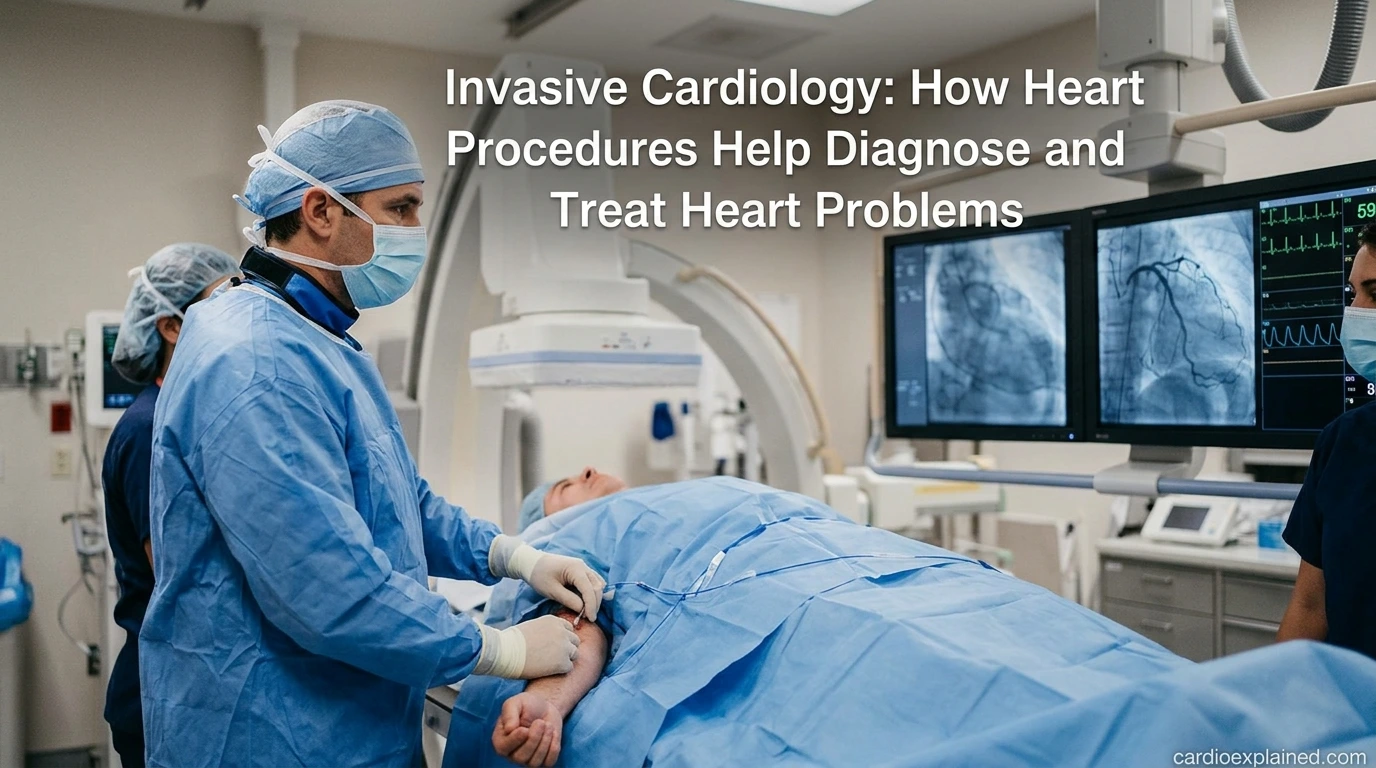
Cardiac catheterization is a common diagnostic procedure. The doctor inserts a thin tube into a blood vessel. The team often uses an artery in the wrist or groin.
The doctor guides the tube toward the heart. A special dye may help show blood flow on X-ray images.
The test can show:
- Blocked arteries
- Heart pressure levels
- Blood flow problems
- Valve concerns
Many patients stay awake during the procedure. The care team uses medicine to help with comfort.
The procedure area may feel like a small pinch. Most people do not feel the catheter moving inside the blood vessel.
Doctors review the results with you afterward. They explain what they found and discuss possible next steps.
❤️ Treatment Options in Invasive Cardiology
Treatment depends on the heart problem, symptoms, and overall health. Doctors choose options based on your personal needs.
Invasive cardiology may include both testing and treatment. Some procedures only gather information. Others help repair heart problems.
Common treatment options include:
- Angioplasty
- Stent placement
- Heart valve procedures
- Certain rhythm treatments
Angioplasty uses a small balloon to open a narrowed artery. The doctor may place a stent afterward. The stent helps keep the artery open.
Stents and Other Heart Procedures
A stent procedure can help improve blood flow in some patients. Doctors often perform it during a catheter procedure.
The care team checks your medicines after treatment. Many people need blood-thinning medicines for a period of time. These medicines help lower the chance of blood clots.
Some patients may need other treatments. Doctors may suggest medicines, lifestyle changes, or surgery.
A patient named Linda had a blocked artery found during testing. Her doctor explained several choices. Together, they chose a treatment plan that matched her health needs.
Good care continues after the procedure. Follow-up visits help doctors track progress. They also help manage future heart risks.
✅ Prevention and Heart Health Tips

Heart procedures can treat some problems. Daily habits can also support heart health.
Small changes may lower heart disease risk. They can also help protect your heart after treatment.
Helpful steps include:
- Eat more fruits and vegetables
- Choose foods lower in salt and unhealthy fats
- Stay active as your doctor allows
- Take medicines as prescribed
- Avoid tobacco products
- Keep regular doctor visits
Building Long-Term Heart Habits
Healthy habits work best when they become part of daily life. You do not need to change everything at once.
Start with simple goals. Take short walks if your doctor approves. Add more healthy foods to your meals. Track your blood pressure if your care team suggests it.
Stress control can also support heart health. Many people use sleep routines, gentle exercise, or relaxation methods.
Doctors often use guidance from the AHA and ACC when creating heart care plans. These recommendations focus on lowering risk and improving quality of life.
Remember that prevention looks different for each person. Your doctor can help you choose safe steps.
⚠️ When Should You See a Doctor About Heart Concerns?
You should contact a healthcare professional when you notice new or changing heart symptoms. Early advice may help prevent problems from becoming worse.
Make an appointment if you have:
- Ongoing chest discomfort
- New shortness of breath
- Changes in exercise ability
- Frequent dizziness
- New heartbeat changes
Seek emergency help for severe chest pressure or signs of a possible heart attack.
Questions to Ask Your Cardiologist
Many people feel unsure before a heart visit. Writing questions down can help.
You may ask:
- Why do I need this test?
- What will happen during the procedure?
- What risks should I know?
- What recovery steps should I follow?
Your doctor should explain your choices clearly. You deserve to understand your care plan.
Some people may need invasive cardiology because of serious heart concerns. Others may only need monitoring and lifestyle changes.
A heart specialist can guide you based on your symptoms and test results. Do not wait if something feels wrong.
Frequently Asked Questions About Invasive Cardiology
Q: Is invasive cardiology painful?
A: No, most procedures are designed to reduce discomfort. Doctors use numbing medicine and comfort measures. Many patients feel pressure or a small pinch but not severe pain.
Q: How long does a heart catheter procedure take?
A: The procedure often takes less than a few hours. The exact time depends on the reason for the test or treatment. Your care team can explain what to expect.
Q: Is invasive cardiology safe for older adults?
A: Yes, many older adults safely receive these procedures. Doctors review health history, medicines, and risks before making a plan. Each person needs an individual review.
Q: Do I need invasive cardiology if I have chest pain?
A: Not always. Chest pain has many possible causes. A doctor uses symptoms and tests to decide what care you need.
Q: Can lifestyle changes prevent the need for invasive cardiology?
A: Sometimes lifestyle changes may lower heart risks. They cannot prevent every heart problem. Regular care helps find the best approach.
Q: What should I expect after an invasive cardiology procedure?
A: Recovery depends on the procedure you receive. Many people return home the same day or after short observation. Your doctor will provide follow-up instructions.
Q: When should I ask a cardiologist about invasive cardiology?
A: You should ask when you have heart symptoms or questions about test results. A cardiologist can explain whether this care may help you.
Conclusion
Heart health can feel confusing, but clear information can help. Invasive cardiology gives doctors tools to find and treat some heart problems. It may help improve care for many patients.
Doctors use careful testing before recommending procedures. Healthy habits and regular visits also support long-term heart health.
If you have chest symptoms or heart concerns, talk with a cardiologist. A trusted healthcare team can help you understand your options.