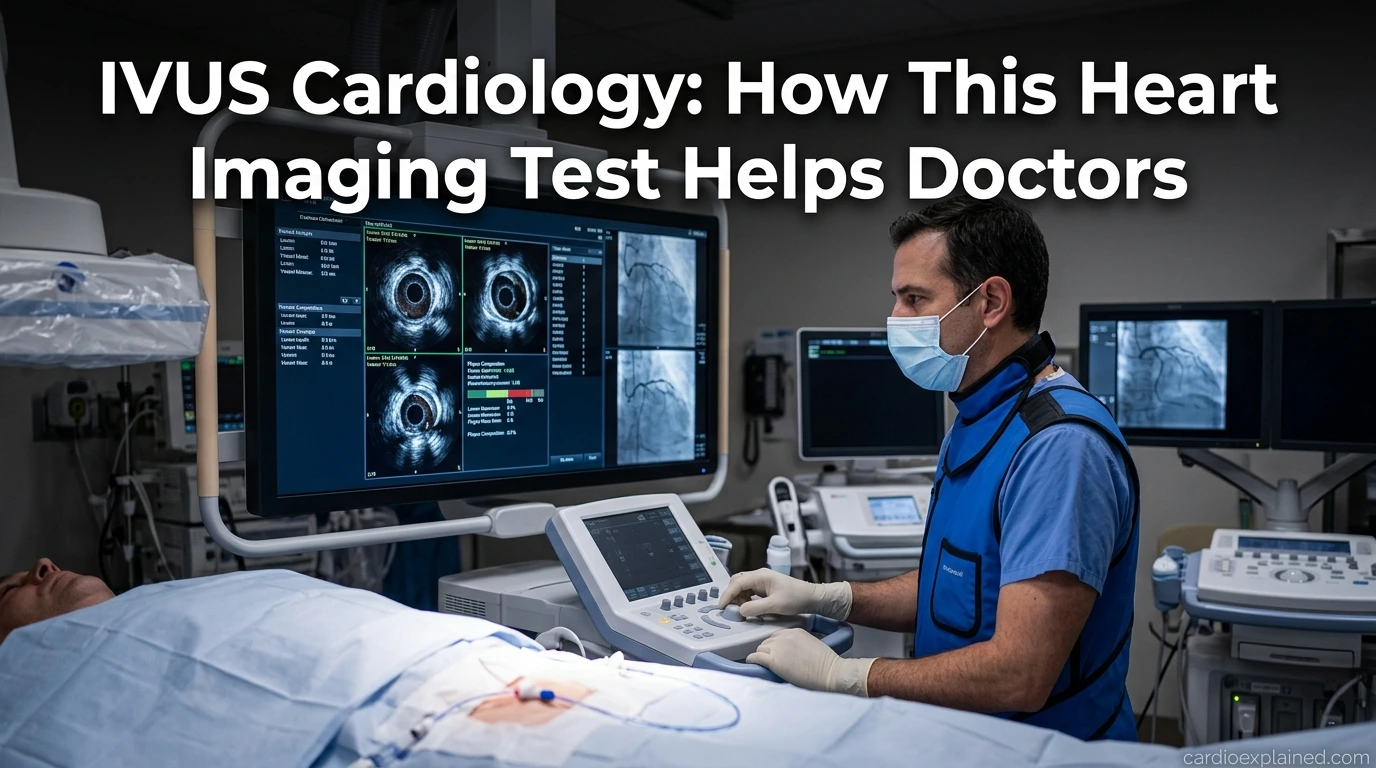

IVUS cardiology is a heart imaging method that lets doctors see inside your blood vessels. It uses a tiny ultrasound device on a thin tube to create clear pictures from inside the artery. Doctors use it to find blockages, guide treatment, and help improve heart care.
Have you or someone you love heard about a heart procedure? You may wonder how doctors find hidden artery problems. Many heart tests show useful details. Still, some tests cannot show the inside of the artery wall.
That is where ivus cardiology can help. This imaging method gives doctors a close look inside the blood vessels. The pictures help them make better treatment choices in many cases. Patients often feel more at ease when they understand what the test does. Knowing what to expect can also lower stress before a heart procedure. Learning about this tool helps patients, caregivers, and students feel more prepared for heart care.
❤️ What Is IVUS Cardiology?
IVUS stands for Intravascular Ultrasound. That means an ultrasound works from inside a blood vessel. Ultrasound uses sound waves to create pictures. It does not use radiation.
Doctors place a very small ultrasound probe on the end of a thin tube. This tube is called a catheter, which is a soft, flexible tube used inside the body. The catheter moves through an artery until it reaches the area that needs a closer look.
The ultrasound probe sends out sound waves. Those waves bounce back from the artery walls. A computer changes the echoes into detailed images.
Unlike many heart scans, IVUS shows the artery from the inside. This gives doctors a much clearer view.
What Makes IVUS Different?
Many heart tests show how blood moves. Others show the outside shape of the heart.
IVUS gives a different view because it shows:
- 🩺 The inside of the artery wall
- 🩺 The amount of plaque inside the artery
- 🩺 The size of the blood vessel
- 🩺 Whether a stent fits well after placement
Plaque is a fatty buildup inside the artery. Too much plaque can reduce blood flow.
Doctors often use IVUS during a procedure called cardiac catheterization. This procedure lets doctors examine and treat heart arteries through a thin tube.
Why Doctors Use This Test
Doctors want the clearest picture before making treatment decisions.
IVUS may help doctors:
- ✅ Find hidden artery narrowing
- ✅ Measure the blockage more accurately
- ✅ Choose the correct stent size
- ✅ Check stent placement
- ✅ Look for problems after treatment
The extra details may help lower the chance of future problems.
A Real-Life Example
Many patients feel nervous before their first heart procedure. One patient had chest pain even after normal stress test results. During cardiac catheterization, the doctor used IVUS. The pictures showed plaque hidden inside the artery wall. The doctor then placed the right-sized stent with greater confidence.
Stories like this show why doctors sometimes choose IVUS even when other tests already provide useful information.
🩺 How Does IVUS Cardiology Work?
The idea behind ivus cardiology is simple. The ultrasound device travels inside the artery instead of staying outside the body.
This gives doctors a much closer view.
Step-by-Step Process
Most people receive IVUS during cardiac catheterization.
The usual steps include:
- The care team cleans the skin.
- The doctor numbs the area.
- The doctor places a thin catheter into an artery.
- The catheter moves toward the heart.
- A tiny ultrasound probe travels through the catheter.
- The probe creates live images inside the artery.
- The doctor studies the pictures before treatment.
Most patients stay awake during the procedure. Medicine helps them relax.
The test usually adds only a short amount of time to the heart procedure.
What the Images Show
The pictures help doctors answer important questions.
They can see:
- 📋 How wide the artery is
- 📋 How thick the artery wall has become
- 📋 Where plaque sits
- 📋 Whether calcium is present
Calcium is a hard material that can build inside artery plaque. Hard plaque may need different treatment.
Doctors also check whether blood flows through the artery without major blockage.
IVUS Compared With Other Heart Tests
| Test | What It Shows | Main Use |
| IVUS | Inside of the artery | Guides treatment during procedures |
| Angiogram | Blood flow using dye | Finds narrowed arteries |
| Echocardiogram | Heart chambers and valves | Checks heart function |
| CT Heart Scan | Heart and blood vessels | Looks for heart disease |
Each test has a different job. Doctors often use more than one test to understand the whole picture.
Is IVUS Safe?
IVUS has been used for many years. Heart specialists around the world use it often.
Like any medical procedure, it has some risks. Most people do very well. Problems are uncommon when trained teams perform the procedure.
The American Heart Association (AHA) and the American College of Cardiology (ACC) recognize intravascular imaging as a helpful tool in many patients. Doctors decide when it offers the most value based on each person’s condition.
Another Patient Story
A man needed treatment after a mild heart attack. The angiogram showed one blockage. The doctor also used IVUS. The images found that the artery was larger than expected. The doctor chose a different stent size. The final result showed better stent expansion and blood flow.
This extra information may help improve long-term results in many patients.
📋 Symptoms That May Lead Doctors to Use IVUS
IVUS does not diagnose symptoms by itself. Instead, doctors may use it while checking symptoms that suggest heart artery disease.
Some people have clear warning signs. Others have only mild symptoms.
Common Symptoms
Watch for symptoms such as:
- ⚠️ Chest pain or pressure
- ⚠️ Shortness of breath
- ⚠️ Pain in the arm, jaw, neck, or back
- ⚠️ Tiredness during activity
- ⚠️ Feeling weak without a clear reason
These symptoms do not always mean heart disease. Many other health problems can cause them too.
Older adults, people with diabetes, and women may notice different symptoms. Some feel very tired instead of having strong chest pain.
When Doctors May Recommend IVUS
Doctors may choose IVUS if they need more information after other heart tests. It often helps during procedures when the artery picture is unclear or when they need to confirm the best treatment plan.
🩺 How Doctors Diagnose Heart Artery Problems
Doctors do not rely on one test alone. They collect information from your symptoms, health history, and several heart tests. Each step helps them decide if you need treatment.
Many people worry after hearing they may need more testing. That feeling is normal. The goal is to find the cause of your symptoms and choose the safest care.
Your Medical History
The doctor starts by asking simple questions.
These may include:
- 📋 When did the symptoms begin?
- 📋 What makes them better or worse?
- 📋 Do heart problems run in your family?
- 📋 Do you smoke or have diabetes?
- 📋 Have you had heart treatment before?
Your answers help guide the next steps.
Physical Exam
The doctor also checks your overall health.
They may:
- ❤️ Listen to your heart
- ❤️ Check your blood pressure
- ❤️ Measure your pulse
- ❤️ Look for swelling in your legs
- ❤️ Check your breathing
These findings help build a clearer picture.
Common Heart Tests
Doctors often order one or more tests before using ivus cardiology.
Some common tests include:
| Test | Purpose | What It Shows |
| Electrocardiogram (ECG) | Checks heart rhythm | Heart’s electrical activity |
| Blood tests | Looks for heart damage | Signs of a heart attack |
| Stress test | Checks the heart during activity | Blood flow during exercise |
| Coronary angiogram | Uses dye and X-rays | Narrowed heart arteries |
Each test adds useful information.
When IVUS Adds More Detail
Sometimes an angiogram shows a blockage. Still, the doctor needs a closer look.
IVUS may help answer questions such as:
- ✅ How severe is the blockage?
- ✅ How much plaque is present?
- ✅ Is the artery larger than it appears?
- ✅ Does the patient need a stent?
- ✅ Has the stent opened fully?
These answers help doctors make careful treatment choices.
A Patient Example
A woman had chest discomfort while walking. Her stress test suggested reduced blood flow. During her angiogram, one artery looked only slightly narrow.
The doctor used IVUS for a better view. The images showed much more plaque inside the artery wall than expected. The care team treated the blockage before it caused a larger problem.
Stories like this show why doctors sometimes choose extra imaging.
💙 Treatment Options After IVUS
IVUS does not treat heart disease by itself. It gives doctors better information. They then choose the treatment that fits each patient.
Some people need only medicine. Others may need a heart procedure.
Lifestyle Changes
Healthy habits remain the first step for many people.
Doctors often suggest:
- ✅ Stop smoking
- ✅ Eat more fruits and vegetables
- ✅ Choose whole grains
- ✅ Stay active most days
- ✅ Keep a healthy weight
- ✅ Sleep well each night
Even small changes can help your heart.
Medicines
Many patients take medicine after testing.
Your doctor may prescribe medicine to:
- Lower cholesterol
- Control blood pressure
- Reduce blood clot risk
- Ease chest pain
- Manage diabetes
Take medicine exactly as directed.
Never stop medicine without talking to your doctor.
Stent Placement
A stent is a tiny metal mesh tube. It helps keep an artery open.
Doctors often use IVUS before and after placing a stent.
Before placement, IVUS helps:
- Measure the artery size
- Find the exact blockage
- Choose the best stent
After placement, IVUS checks:
- The stent opened fully
- The stent touches the artery wall
- No major problems remain
Good stent placement may lower future complications.
Balloon Angioplasty
Some patients also receive balloon angioplasty.
This treatment uses a small balloon to widen a narrowed artery.
The balloon presses plaque against the artery wall. Blood can then flow more easily.
Doctors sometimes perform balloon angioplasty before placing a stent.
Heart Bypass Surgery
Some blockages are too large or involve several arteries.
In those cases, doctors may recommend coronary artery bypass surgery. This operation creates a new path for blood to reach the heart.
IVUS may help doctors understand artery disease before planning treatment.
Recovery
Recovery depends on your treatment.
Many patients return home the same day after catheter procedures.
Others stay longer if they had a heart attack or surgery.
Your doctor will explain:
- 📋 Activity limits
- 📋 Medicine schedule
- 📋 Follow-up visits
- 📋 Warning signs to watch for
Following these instructions helps support healing.
✅ Healthy Habits That Protect Your Heart

You cannot control every heart risk. Still, daily choices can make a big difference.
Many healthy habits work together.
Eat Heart-Friendly Foods
Choose foods that support healthy arteries.
Try to eat:
- 🥗 Fresh vegetables
- 🥗 Fresh fruit
- 🥗 Fish
- 🥗 Beans
- 🥗 Nuts
- 🥗 Whole grains
Limit foods high in salt, sugar, and unhealthy fats.
Small changes each week often last longer.
Stay Active
Exercise helps your heart stay strong.
Many adults aim for about 150 minutes of moderate activity each week.
Walking is a great place to start.
Always ask your doctor before starting a new exercise plan after heart treatment.
Keep Health Numbers in Range
Regular checkups help catch problems early.
Work with your doctor to manage:
- Blood pressure
- Cholesterol
- Blood sugar
- Body weight
These numbers affect heart health over time.
Avoid Tobacco
Smoking damages blood vessels.
It also increases plaque buildup.
If you smoke, ask your healthcare team about quitting programs.
Many people succeed with support and a clear plan.
Manage Stress
Stress alone does not always cause heart disease.
Still, long-term stress may affect healthy habits.
Try simple ways to relax.
These may include:
- Deep breathing
- Walking outside
- Reading
- Gentle stretching
- Talking with family or friends
One More Patient Story
A retired teacher learned she had early artery disease. She did not need a stent. Instead, she improved her diet, walked every day, took her medicines, and attended follow-up visits.
Months later, she felt stronger and could enjoy longer walks with her grandchildren.
Healthy habits often work best when practiced every day.
⚠️ When to See a Doctor
Some heart symptoms need medical care right away. Others should lead to a clinic visit soon. Never ignore warning signs that keep coming back.
Get Emergency Help
Call 911 or your local emergency service if you have:
- ⚠️ Severe chest pain that lasts several minutes
- ⚠️ Chest pain with shortness of breath
- ⚠️ Pain that spreads to the arm, jaw, neck, or back
- ⚠️ Fainting or loss of consciousness
- ⚠️ Cold sweat with chest discomfort
These signs may point to a heart attack. Fast treatment can save heart muscle.
Schedule a Medical Visit
Make an appointment if you notice:
- Chest discomfort during exercise
- Shortness of breath that is getting worse
- Unusual tiredness without a clear cause
- A strong family history of heart disease
- High blood pressure, diabetes, or high cholesterol
Early care often helps doctors find problems before they become more serious.
Questions to Ask Your Doctor
If your doctor recommends ivus cardiology, you may ask:
- 📋 Why do I need this test?
- 📋 Will it happen during my angiogram?
- 📋 What are the possible benefits?
- 📋 What risks should I know about?
- 📋 Will I need a stent?
- 📋 How long will recovery take?
Good questions help you understand your care plan. Most heart specialists welcome them.
❓ Frequently Asked Questions
❓ Q: What is ivus cardiology used for?
A: IVUS cardiology helps doctors see inside heart arteries. It can measure plaque, check artery size, and guide stent placement. Doctors often use it during cardiac catheterization. The extra images may help them choose the best treatment.
❓ Q: Is IVUS better than an angiogram?
A: Neither test is better in every situation. An angiogram shows how blood flows through the arteries. IVUS shows the inside of the artery wall. Doctors often use both tests together because they provide different information.
❓ Q: Does IVUS hurt?
A: Most people feel little discomfort. The doctor numbs the area before placing the catheter. You may feel some pressure, but many patients stay comfortable during the procedure. Your care team will watch you closely throughout the test.
❓ Q: Is IVUS safe?
A: Yes, IVUS is generally considered safe when trained heart specialists perform it. Like all medical procedures, it carries some risks. Serious problems are uncommon. Your doctor will explain the benefits and possible risks before the procedure.
❓ Q: How long does an IVUS procedure take?
A: The imaging itself usually takes only a few minutes. It is often performed during a cardiac catheterization. The total procedure time depends on whether you also need treatments such as angioplasty or stent placement.
❓ Q: Can IVUS find blocked arteries?
A: Yes, IVUS can help doctors evaluate blocked or narrowed arteries. It provides detailed images from inside the blood vessel. These pictures may reveal plaque that is difficult to measure with an angiogram alone.
❓ Q: Will I need IVUS for every heart problem?
A: No. Doctors recommend IVUS only when it may provide useful information. Many heart conditions can be diagnosed with other tests. Your cardiologist will choose the test that best fits your symptoms and medical history.
Final Thoughts
Heart care has improved greatly over the years. Better imaging helps doctors understand artery disease with more confidence. IVUS cardiology gives a detailed view from inside the artery. That information may help guide safer and more accurate treatment.
Remember these key points. IVUS does not replace every heart test. Instead, it adds valuable details during selected procedures. It may help doctors measure plaque, choose the right stent, and check treatment results.
If you have chest pain or other heart concerns, talk with a cardiologist. Early evaluation can make a real difference. Ask questions, follow your treatment plan, and keep up with regular checkups to support long-term heart health.